
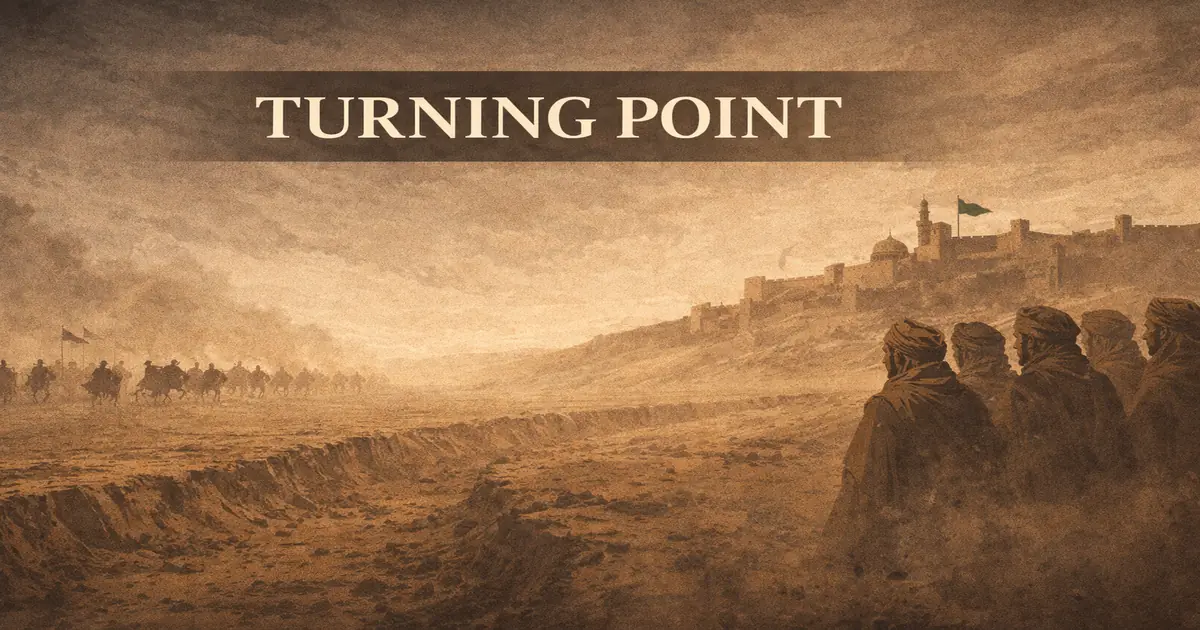
Battle of the Trench Aftermath: Why Khandaq Became a Seerah Turning Point
Battle of the Trench aftermath matters because the siege failed, the confederate retreat changed the balance of power, and Medina came out stronger than before. The battle did not end with one dramatic final clash. It ended with the enemy breaking, the city holding, and the whole seerah direction shifting after Khandaq. For the full battle background first, see Battle of the Trench.
If you only want the shortest answer: who won battle of the trench? The Muslims in Medina won because the confederates failed to break the city, retreated in frustration, and never again posed the same level of invasion threat in the same way.
✅ TL;DR – battle of the trench aftermath
Battle of the trench aftermath means this: the siege of Medina failed, the confederate retreat exposed a major Quraysh setback, internal danger inside Medina was dealt with, and the Muslim community moved from survival mode toward strength. That is why many readers see Khandaq as a real seerah turning point, not just a defensive episode.
📖 Qur’an and Hadith on the aftermath spirit
Arabic:
وَرَدَّ اللَّهُ الَّذِينَ كَفَرُوا بِغَيْظِهِمْ لَمْ يَنَالُوا خَيْرًا ۚ وَكَفَى اللَّهُ الْمُؤْمِنِينَ الْقِتَالَ
Transliteration:
Wa raddallāhu alladhīna kafarū bighayẓihim lam yanālū khayrā, wa kafallāhul-mu’minīnal-qitāl.
Translation:
“And Allah repelled those who disbelieved in their rage; they gained no good. And Allah spared the believers from fighting.”
Arabic:
الآنَ نَغْزُوهُمْ وَلَا يَغْزُونَنَا
Transliteration:
Al-āna naghzūhum wa lā yaghzūnanā.
Translation:
“Now we will go to them, and they will not come to us.”
What Was the Result of the Battle of the Trench?
Result of the battle of the trench? The direct answer is that the enemy coalition failed to capture Medina, the Muslims survived the siege, and the failed invasion became a major turning point in power, morale, and regional prestige. This is the simplest way to explain the battle of the trench outcome.
Who won Battle of the Trench?
Who won battle of the trench? The Muslims won in the strategic sense. They did not destroy the enemy army in a classic open-field battle, but they achieved the result that mattered: Quraysh and their allies failed, withdrew, and lost momentum.
What was the result of the Battle of the Trench?
What was the result of the Battle of the Trench? The siege broke without the confederates achieving their goal. Abu Sufyan and the allied coalition did not enter the city, did not crush the Muslim community, and did not produce the political collapse they had hoped for.
What was the battle of the trench outcome?
Battle of the trench outcome is bigger than “Medina survived.” The outcome was a changed political map. The city held. The attackers lost face. The story of Islam after Khandaq did not feel the same.
What Happened After Khandaq?
What happened after Khandaq? First, the coalition withdrew. Then internal danger inside Medina was confronted. After that, the Muslim community stood in a much stronger position than before the siege. That sequence is the real battle of khandaq aftermath.
What happened after Khandaq?
What happened after Khandaq? The pressure lifted, morale rose, and the city moved from emergency defense toward firmer control. The battle scene ended, but the real consequences started afterward.
What was the aftermath of the siege of Medina?
Aftermath of the siege of Medina means relief, recovery, internal security action, and a visible shift in how tribes now looked at Muslim power. It was not just “everyone went home.” The city came out harder to break.
What were the first consequences after the battle ended?
The first consequences were simple but huge: the enemy failed, the threat was removed, and confidence inside the Muslim community changed. That new confidence matters a lot in any outcome analysis of Khandaq.
📚 You Can Also Read:
Battle of the Trench Timeline • Causes of the Battle of the Trench • Who Suggested Digging the Trench?
The Confederate Withdrawal
Confederate retreat is the heart of the story. Many people remember the trench itself, but the larger point is that a massive alliance came, failed, and left without the victory it expected. That failure changed how Arabia viewed both Quraysh and the Muslims.
Why did the confederates retreat after Khandaq?
They retreated because the siege dragged on, the trench blocked progress, weather conditions worsened, morale fell, and the alliance could not turn pressure into victory. An alliance that looks terrifying at the start can still collapse if it cannot finish the job.
What did the confederate retreat mean for Medina?
It meant that Medina security looked more real than ever. The city had faced a giant coalition and remained standing. That changes how enemies think. It also changes how neutral tribes calculate risk.
Why was the battle of confederates result so important?
Battle of confederates result was important because it was not a small border clash. This was meant to be a crushing blow. When that kind of attack fails, the meaning travels far beyond the battlefield.
Why Surviving the Siege Mattered
Sometimes survival is the victory.
That is exactly what happened here.
Why did surviving the siege matter so much?
Because the attackers came to end the Muslim presence in Medina. If the city had broken, the entire seerah path could have looked very different. So when the siege failed, survival itself became a massive political and spiritual statement.
How did the failed attack strengthen Medina?
The failed attack strengthened Medina by proving it could absorb major pressure without collapsing. It also showed that leadership, planning, patience, and trust in Allah were not empty slogans. They worked under fear.
Why was this more than a defensive survival?
Because it did not end as a passive escape. It produced a real prestige shift. The city was no longer just the place trying to avoid destruction. It was becoming a center others had to take seriously.
How Medina’s Position Changed
How did battle of the trench change seerah? One major answer is this: Medina became harder to intimidate and easier to respect. That is not a small change. It is the kind that affects alliances, negotiations, and later expansion.
How did Medina’s security improve after Khandaq?
How did Medina’s security improve after Khandaq? The city removed the immediate external danger and then dealt with internal danger more firmly. That combination matters. A city becomes stronger when it is no longer squeezed from both outside and inside at once.
What prestige shift happened after the battle?
The prestige shift was sharp. Quraysh looked less unstoppable. The Muslims looked more durable. People watch strength. They also watch failed aggression. Both were visible after Khandaq.
How did Medina gain strength after the siege?
Medina strength grew through survival, restored confidence, clearer internal control, and the failure of the enemy’s biggest coalition attack. After Khandaq, Islam’s opponents could still resist, but they no longer looked untouchable.
Why Khandaq Is Called a Seerah Turning Point
Why Khandaq was a turning point is one of the biggest questions in this topic. The answer is not just “because Muslims won.” It is because the direction of pressure changed. After this, the old pattern of repeated large-scale danger from the same side lost force.
Why was Khandaq a turning point?
Why was Khandaq a turning point? Because it marked the end of one chapter: the chapter where Quraysh and allies could still dream of breaking Medina through one overwhelming strike.
How did battle of the trench aftermath change seerah?
Battle of the trench aftermath changed seerah by shifting the Muslim community from constant defensive fear toward growing initiative. Later events make much more sense when you understand this change first.
Why is this seen as an early Islam turning point?
It is seen as an early Islam turning point because the battle did not only preserve lives. It preserved the future path of the Muslim community. Some battles save a city. This one helped save the next phase of Islamic history.
📦 Outcome Snapshot
In one line: the confederates failed, Medina held, Quraysh lost momentum, internal security was tightened, and Khandaq became a true seerah turning point.
What the Battle Meant for Quraysh
What were the battle of the trench consequences for Quraysh? Loss of prestige, failed alliance leadership, and a visible inability to finish what they started. Those three things alone explain why this was a painful Quraish setback.
What were the battle of the trench consequences for Quraysh?
Khandaq consequences for Quraysh included damaged authority, weakened fear factor, and a strategic blow to the image that they could still dominate every confrontation with the Muslims.
How did the alliance failure hurt Quraysh?
The alliance failure hurt Quraysh because they had gathered major force and still came away empty. When a leader calls many groups into one big mission and the mission fails, the leader does not come out looking stronger.
Why was this a major Quraysh setback?
Because it was public, expensive, and pointless from their side. A Quraish setback here was not just military. It was psychological and political too. Their aura took a hit.
Immediate Aftermath Inside Medina
What changed in Medina after Khandaq? The city felt the relief of survival, but it also faced hard internal consequences. The siege had shown that outside attack and inside betrayal together could become deadly. That could not be ignored after the battle.
What changed inside Medina after the siege?
The atmosphere changed from fear to action. During the siege, the city was under pressure. After the siege, it could address what the pressure had exposed.
How did the aftermath affect internal security?
How did the aftermath affect internal security? It made internal loyalty and political trust far more urgent issues. Once a city survives a siege, it starts asking harder questions about who remained true and who did not.
What immediate post-siege impact did Muslims feel?
The immediate post-siege impact included relief, renewed confidence, and sharper clarity about enemies both outside and inside. Hard moments often strip illusions away. Khandaq did that.
The Banu Qurayza Episode in the Aftermath
Banu Qurayza are part of the battle of khandaq aftermath because their episode unfolded directly after the siege and was tied to internal security, pact loyalty, and the danger of betrayal during wartime. This section should be handled carefully and plainly, not dramatically.
What happened with Banu Qurayza after Khandaq?
What happened with Banu Qurayza after Khandaq? After the confederate threat ended, the Muslims moved against Banu Qurayza over the charge of treachery during the siege. Their case was then judged in a serious and consequential way within the norms of that time.
Why is Banu Qurayza part of the aftermath?
Because the external attack had exposed internal vulnerability. So the Banu Qurayza episode is not some unrelated side story. It belongs to the aftermath because it shaped what safety in Medina would look like going forward.
How did this episode affect Medina’s position?
It strengthened the city’s internal position after the siege. Whether a reader focuses on legal judgment, pact breach, or political consequence, the main point is the same: Medina security looked different after this.
📚 You Can Also Read:
Battle of the Trench in the Qur’an • Battle of the Trench vs Uhud • Battle of the Trench Lessons
Long-Term Seerah Impact
Battle of trench long term effects are why this topic deserves its own article. If you only retell the siege scene, you miss the larger transformation that followed it.
What were the long-term effects of Khandaq?
What were the long-term effects of Khandaq? More Muslim confidence, weaker enemy intimidation, stronger internal control, and a new road toward later political openings. The story after Khandaq moves differently because Khandaq happened.
How did the battle shape later political changes?
It shaped later political changes by weakening the old balance and preparing the ground for later negotiations, shifting tribal calculations, and a stronger Muslim public position in Arabia.
Why did this outcome matter beyond one siege?
Because it changed expectations. Before Khandaq, many could imagine the Muslim community being crushed. After Khandaq, that imagination became much harder to sustain.
What Readers Usually Miss About the Aftermath
What readers usually miss is that the battle scene and the aftermath are not equal. The aftermath is actually where the deeper meaning becomes visible.
Why is the aftermath more important than just the battle scene?
Because the battle scene shows pressure. The aftermath shows results. And in seerah, results often explain importance better than spectacle does.
What do people miss in outcome analysis of Khandaq?
They miss that battle consequences are not only about casualties or a retreat line. They are about prestige, security, leadership credibility, and whether the future now feels more open or more blocked.
Why does after Khandaq matter more than event retelling?
After Khandaq matters more because the real question is not “What happened during the siege?” It is “What changed because the siege failed?” That is where the stronger historical value sits.
Summary of Why Khandaq Mattered
Why the battle mattered long term is now clear: it preserved Medina, broke the invading coalition’s momentum, exposed a major Quraysh setback, and redirected the seerah story toward strength instead of collapse.
Why did the Battle of the Trench matter long term?
It mattered long term because it was not just a saved city. It was a saved future. The Muslim community remained standing, more respected, and more prepared for what came next.
What is the battle of the trench result and aftermath in one answer?
Battle of the trench result and aftermath in one answer: the confederate siege failed, Medina grew stronger, internal danger was addressed, and Khandaq became a clear seerah turning point.
Who won Khandaq and why did it matter?
Who won Khandaq and why it mattered? The Muslims won because they outlasted the greatest pressure the city had yet faced. It mattered because after that failure, the enemy could still oppose Islam, but it could no longer oppose it with the same confidence.
📊 battle of the trench aftermath: quick outcome table
Use this table to show the real meaning of Khandaq fast: not just a siege scene, but a power shift.
🛡️ Show Khandaq Aftermath Table
| Point | What it meant | Why it mattered |
|---|---|---|
| Confederate retreat | The alliance failed to break Medina | Showed the biggest invasion effort had collapsed |
| Medina security | The city survived and tightened internal control | Made Medina harder to intimidate later |
| Quraish setback | Quraysh lost prestige and momentum | Damaged their image as the side in control |
| Prestige shift | Muslims looked stronger after surviving | Changed how other tribes viewed both sides |
| Banu Qurayza episode | Internal betrayal issue was addressed | Reshaped post-siege security inside Medina |
| Seerah turning point | Pressure direction changed after Khandaq | Prepared the road for later growth and openings |
📘 battle of the trench aftermath FAQs
who won battle of the trench?
Show Answer
The Muslims in Medina won because the confederates failed to capture the city and retreated without achieving their main goal.
what happened after the battle of khandaq?
Show Answer
After the battle, the confederate siege ended, Medina regained stability, and internal security issues were dealt with. The city came out stronger than before.
why was khandaq a turning point?
Show Answer
Why Khandaq was a turning point is simple: the biggest coalition attack failed, Quraysh lost momentum, and the Muslim community moved from survival pressure toward greater strength.
what was the battle of confederates result?
Show Answer
The battle of confederates result was failure for the coalition. They could not breach Medina and eventually withdrew.
what changed in medina after khandaq?
Show Answer
Medina security improved, morale rose, and the city’s political position became firmer after the siege.
why does the confederate retreat matter so much?
Show Answer
Because the confederate retreat showed that even a huge alliance could not crush the Muslim community in Medina.
what were the khandaq consequences for quraish?
Show Answer
Khandaq consequences for Quraysh included lost prestige, failed alliance leadership, and a major blow to their image.
how did battle of the trench aftermath change seerah?
Show Answer
Battle of the trench aftermath changed seerah by shifting the Muslim community from repeated large-scale invasion fear toward greater initiative and stability.
why is the aftermath of the siege of medina more important than many readers think?
Show Answer
Because the real significance appears after the siege: prestige changed, security changed, and the political future changed.
who won khandaq and why it mattered?
Show Answer
The Muslims won Khandaq because the city held and the coalition failed. It mattered because this failure changed the direction of the seerah story.
Related Articles
Dhu al-Qadah
Dhu al-Qadah Meaning
Why Dhu al-Qadah Is Sacred
Virtues of Dhu al-Qadah
Treaty of Hudaybiyyah in Dhu al-Qadah
Major Events in Dhu al-Qadah

Farrukh Farooqi has been living in Sharaya, Makkah, Saudi Arabia since 2010. With over 14 years of firsthand experience witnessing the sacred journey of millions of pilgrims, Farrukh specializes in providing practical, insider tips for Hajj and Umrah travelers. His work blends real-world observations, the latest Saudi updates, and essential crowd management strategies — helping pilgrims and worshippers plan smarter, stay safer, and experience a spiritually fulfilling journey across the Holy Cities.


