
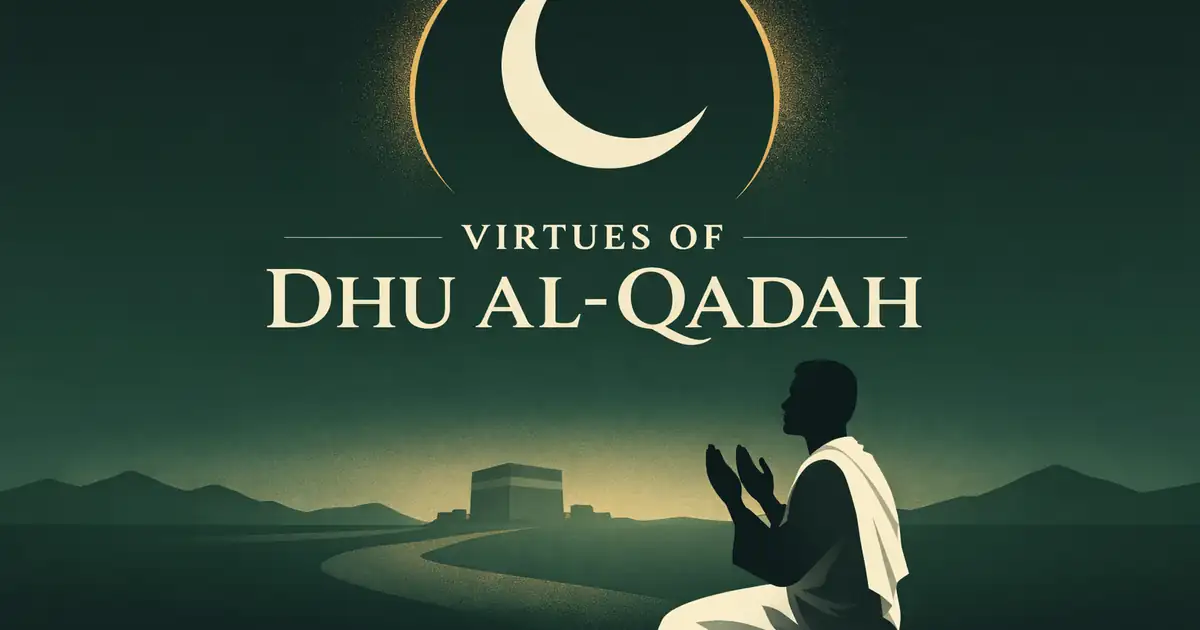
Virtues of Dhu al-Qadah: Peace, Worship, and Preparation Before Hajj
Virtues of Dhu al-Qadah begin with one simple fact: this is a Dhu al-Qadah sacred month, one of the four sacred months in Islam, and it comes right before Hajj season. That means this month is not just a calendar label. It is a month of peace, restraint, extra care with sin, and serious worship. If you want the broader month background first, read Dhu al-Qadah.
Most people know what is Dhu al-Qadah.
Far fewer know how to use it well.
✅ TL;DR – virtues of Dhu al-Qadah
Dhu al-Qadah virtues come from its status as a sacred month and its place right before Dhul Hijjah. It is a strong month for peace, repentance, good deeds in Dhu al-Qadah, voluntary fasting, charity, Qur’an, and spiritual focus. Its message is simple: slow the heart down, leave sins faster, and prepare seriously for Hajj.
What Are the Virtues of Dhu al-Qadah?
What are the virtues of Dhu al-Qadah? The direct answer is this: it is a Dhu al-Qadah sacred month, a time when sacred time itself asks you to behave better. The month carries peace before pilgrimage, stronger warning against sin, stronger motivation for worship, and a natural chance to reset yourself before Dhu al-Qadah before Hajj turns into Dhul Hijjah.
Dhu al-Qadah is one of the four sacred months in Islam
Virtues of Dhul Qadah begin here. Allah made four months sacred, and Dhu al-Qadah is one of them. This alone gives it honor, even before you speak about history, Hajj, or Umrah.
Why Dhu al-Qadah is sacred before Hajj
Why is Dhu al-Qadah sacred? Because Allah honored it, and because its place before Hajj teaches peace, readiness, and restraint. It is like the quiet room before a great journey. You do not shout there. You prepare there.
Why good deeds matter more and sins are more serious in this month
This is one of the biggest parts of the significance of Dhu al-Qadah. Scholars explained that in the Ashhur al-Hurum, wrongdoing becomes more serious and righteous action carries greater weight. Not because sin is fine in other months. Never. But because sacred time deserves sacred behavior.
What Is Dhu al-Qadah?
What is Dhu al-Qadah? It is the 11th month of Hijri calendar, the first of three sacred months in a row, and the month before the rites of Hajj draw near. Its feel is different from a random month in the year. It asks you to sit down inwardly before the season of movement begins.
Dhu al-Qadah month meaning in Islam
Dhu al-Qadah month meaning in Islam is tied to stillness, restraint, and pausing from conflict. Think of it as the month that tells the soul, “Sit. Don’t rush into ugliness.” That is much easier to remember than a stiff dictionary sentence.
Why it is called the month of sitting in Islam
It is called the month of sitting in Islam because people would sit back from war and aggression. The word itself carries that feeling of not rushing into battle. A month of lowered swords. A month of quieter hands.
Why it is known as the month of truce in Islam
It is also known as the month of truce in Islam because sacred months were times when fighting was restrained. That theme fits this month especially well because it leads into the season of pilgrimage.
Where Dhu al-Qadah sits in the Hijri calendar
It is the 11th month of Hijri calendar, after Shawwal and before Dhul Hijjah. That position is not a small detail. It is part of the month’s whole message.
📚 You Can Also Read:
Why Is Dhu al-Qadah a Sacred Month?
Why is Dhu al-Qadah a sacred month? Because Allah named four months as sacred, and the Prophet ﷺ identified them clearly. That is the root of the whole topic. Not culture. Not habit. Revelation.
📖 Sacred Months in Qur’an 9:36
Arabic:
إِنَّ عِدَّةَ الشُّهُورِ عِندَ اللَّهِ اثْنَا عَشَرَ شَهْرًا فِي كِتَابِ اللَّهِ يَوْمَ خَلَقَ السَّمَاوَاتِ وَالْأَرْضَ مِنْهَا أَرْبَعَةٌ حُرُمٌ ۚ ذَٰلِكَ الدِّينُ الْقَيِّمُ فَلَا تَظْلِمُوا فِيهِنَّ أَنفُسَكُمْ
Transliteration:
Inna ‘iddata ash-shuhūri ‘inda Allāhi ithnā ‘ashara shahran fī kitābi Allāhi yawma khalaqa as-samāwāti wal-arḍa minhā arba‘atun ḥurum, dhālika ad-dīnu al-qayyim fa-lā taẓlimū fīhinna anfusakum.
Translation:
Indeed, the number of months with Allah is twelve months in the record of Allah since the day He created the heavens and the earth; of these, four are sacred. That is the correct religion, so do not wrong yourselves during them.
Four sacred months in Islam and where Dhu al-Qadah fits
The four sacred months in Islam are Rajab, Dhu al-Qadah, Dhul Hijjah, and Muharram. Three come one after another, and Dhu al-Qadah is the first of that three-month sacred run.
Ashhur al-Hurum and the place of Dhu al-Qadah
Ashhur al-Hurum means the sacred months. Dhu al-Qadah sits inside that honored group, which is why Muslims should not treat it like a throwaway month between Ramadan and Hajj.
Sacred months in Quran 9:36 explained simply
Sacred months in Quran 9:36 are months Allah specially honored. The easiest way to understand that is this: if a place can be sacred, and a person can be sacred, then time can be sacred too. Islam teaches all three.
Do not wrong yourselves during them and what it means
Do not wrong yourselves during them means do not sin, do not oppress, do not act like sacred time changes nothing. My students always ask whether this only means fighting. No. Fighting is one clear part of it, but the warning is broader than that.
What Makes the Virtues of Dhu al-Qadah So Important?
Dhu al-Qadah importance is not built on one flashy ritual. It is built on atmosphere, discipline, and direction. That is why some people miss it. The month changes you quietly if you let it.
Peace and reflection in Dhu al-Qadah
Peace and reflection in Dhu al-Qadah are not decorative ideas. They are the core spirit of the month. Less noise. Less anger. Less ego. More muraqabah. More looking inward.
Greater seriousness of sins in sacred months
Why sins are more serious in Dhu al-Qadah is tied to the honor of sacred time. When Allah honors a month, a believer should fear staining that month with careless disobedience. A backbiting tongue sounds uglier in a sacred month, not prettier.
Increased rewards for good deeds in Dhu al-Qadah
Why good deeds matter more in sacred months is because Allah gives certain times a higher rank. This month is one of those chances. Miss one chance, and you can still repent. But why keep missing them?
Why this month teaches restraint before Dhul Hijjah
This month teaches restraint because Hajj is not only about travel. It is also about inner readiness. A person who cannot control anger in Dhu al-Qadah may struggle to carry the adab of Dhul Hijjah properly.
Why Dhu al-Qadah Matters Before Hajj
Importance of Dhu al-Qadah before Hajj is huge because this is the month where serious people begin cleaning the road inside the heart. Tickets matter. Packages matter. Planning matters. But the heart matters first.
Dhu al-Qadah before Hajj and spiritual preparation
Dhu al-Qadah before Hajj is like wudu before salah. The prayer is later, yes, but the preparation starts now. Sacred journeys begin before the body moves.
How to prepare for Hajj in Dhu al-Qadah
How to prepare for Hajj in Dhu al-Qadah starts with sincerity, tawbah, rights of people, and practical readiness. A suitcase without repentance is still a suitcase.
Why the month before Hajj should not be wasted
Because wasted sacred time often becomes regret. And regret after the month leaves has a different taste. Bitter. Quiet. Hard to explain.
How Dhu al-Qadah prepares the heart for Dhul Hijjah
It prepares the heart by slowing it down first. A rushing heart does not listen well. A softened heart does.
🕋 Preparation Box: Dhu al-Qadah before Hajj
Use this month to do what many people delay until too late.
Clean your intention, seek forgiveness, repair relationships, learn Hajj properly, and reduce sins that harden the heart. That is real Hajj preparation, not only shopping.
Best Acts of Worship in Dhu al-Qadah
Acts of worship in Dhu al-Qadah are not complicated. The month is honored, so ordinary obedience done sincerely becomes more precious. That is the beauty of sacred months. You do not need to invent anything strange.
Good deeds in Dhu al-Qadah to increase
Good deeds in Dhu al-Qadah should be increased with consistency, not drama. Small done daily beats emotional bursts that vanish after two nights.
Dhikr in Dhu al-Qadah and repentance in Dhu al-Qadah
Dhikr in Dhu al-Qadah and repentance in Dhu al-Qadah fit this month perfectly. A quiet tongue saying istighfar is more in tune with this month than loud religious excitement with no self-correction behind it.
Charity in Dhu al-Qadah and helping others
Charity in Dhu al-Qadah matters because sacred months should soften you toward people, not make you spiritually selfish. If your worship makes you harsher, something went wrong.
Reading Quran and making dua in Dhu al-Qadah
Reading Qur’an and making du‘a here help reset the soul before Dhul Hijjah preparation. I used to mix this up years ago and think only the “big named” days mattered. They do matter. But the months around them are what prepare you to benefit from them.
What should Muslims do in Dhu al-Qadah
What should Muslims do in Dhu al-Qadah? Keep the month simple and serious:
- Pray on time and guard your salah.
- Read Qur’an daily even if the amount is small.
- Make dhikr with a present heart.
- Give charity in a hidden way.
- Repent often and leave known sins.
- Prepare for Hajj spiritually if you are going.
📚 You Can Also Read:
Why Dhu al-Qadah Is Sacred • Four Sacred Months • Niyyah for Hajj and Umrah
Can You Fast in Dhu al-Qadah?
Can you fast in Dhu al-Qadah? Yes, fasting in Dhu al-Qadah as voluntary fasting is good, and it matches the spirit of sacred months. But it should be understood as nafl fasting, not as a fixed special obligation unique to this month.
Fasting in Dhu al-Qadah and voluntary fasting
Fasting in Dhu al-Qadah is part of the wider encouragement to fill sacred months with worship. If fasting helps your heart and discipline, this is a beautiful month for it.
Mondays Thursdays and Ayyam al-Beed in Dhu al-Qadah
Many Muslims use the familiar Sunnah patterns here: Mondays, Thursdays, and Ayyam al-Beed. That keeps the month practical instead of vague.
Why fasting fits the spirit of this sacred month
Because fasting trains restraint, and restraint is one of the deepest lessons of this month. Hunger can teach the nafs to sit down too.
Performing Umrah in Dhu al-Qadah
Performing Umrah in Dhu al-Qadah is one of the strongest living examples of this month’s honor, because the Prophet ﷺ performed most of his Umrahs in this month.
📜 Hadith Box: The Prophet’s ﷺ Umrahs
Arabic:
اعْتَمَرَ رَسُولُ اللَّهِ صَلَّى اللهُ عَلَيْهِ وَسَلَّمَ أَرْبَعَ عُمَرٍ، كُلُّهُنَّ فِي ذِي القَعْدَةِ، إِلَّا الَّتِي مَعَ حَجَّتِهِ
Transliteration:
I‘tamara Rasūlullāhi ṣallallāhu ‘alayhi wa sallam arba‘a ‘umarin, kulluhunna fī Dhī al-Qa‘dah, illā allatī ma‘a ḥajjatihi.
Translation:
The Messenger of Allah ﷺ performed four Umrahs, all of them in Dhu al-Qadah, except the one that was with his Hajj.
Performing Umrah in Dhu al-Qadah virtue
Performing Umrah in Dhu al-Qadah virtue is not based on guesswork. It is tied to the Prophet’s own pattern, and that makes people pay attention to this month differently.
Why the Prophet’s Umrahs in Dhu al-Qadah matter
Prophet’s Umrahs in this month show that Dhu al-Qadah importance is not abstract. The month was lived, traveled in, and honored through real worship.
What this teaches about the importance of the month
It teaches that Dhul Qa’dah virtues are practical. Worship, peace, patience, and readiness all meet in one month here.
Historical Events in Dhu al-Qadah
Historical events in Dhu al-Qadah help explain why this month feels like a month of patience, truce, and inner strength. The events tied to it are not random. They match its character.
Treaty of Hudaybiyyah Dhu al-Qadah
Treaty of Hudaybiyyah Dhu al-Qadah is one of the clearest examples. What looked painful at first became a clear opening later. That lesson alone can carry someone through a hard season in life.
Bay’at al-Ridwan and lessons of trust and patience
Bay’at al-Ridwan in this period also teaches trust, loyalty, and calm firmness. Not every victory comes with loud celebration. Some victories arrive wearing the clothes of patience first.
Historical events in Dhu al-Qadah that show its significance
The month holds together truce, pledge, Umrah, and sacred travel. That is why the significance of Dhu al-Qadah feels so rich when you actually study it instead of just mentioning that it is “the 11th month.”
Common Mistakes in Dhu al-Qadah
This is the part many people need most.
Not because they hate the month. Because they overlook it.
Treating Dhu al-Qadah like an ordinary month
This is the first mistake. A Dhul Qa’dah sacred month should not be treated like a blank waiting room before Hajj news starts trending.
Ignoring repentance and self-correction
Another mistake is using sacred months to collect Islamic quotes while refusing to leave the same old sins. Repentance in Dhu al-Qadah is not optional decoration. It is part of the month’s soul.
Missing the chance to prepare for Hajj
Even people who are not going to Hajj should still use the month for Hajj preparation in a broader spiritual sense. The season belongs to the Ummah, not only to travelers.
Forgetting that sacred months require more care
That forgetfulness is costly. If sacred time does not slow you down at all, you may be living too rough inside.
Simple Action Plan for Dhu al-Qadah
How to benefit from Dhu al-Qadah becomes much easier when you stop speaking in big emotional slogans and just build a daily plan.
A daily worship plan for Dhu al-Qadah
Here is a simple working plan:
- Start the day with istighfar and sincere intention.
- Read Qur’an daily, even a small amount.
- Keep one daily dhikr habit you do not skip.
- Give regular charity, even if it is small.
- Fast some days if you are able.
- Review your sins nightly and repent before sleep.
How families can benefit from Dhu al-Qadah
Can families benefit from Dhu al-Qadah? Absolutely. A family can read together, reduce fighting, prepare children for the Hajj season, speak about sacred months, and build one home habit of worship together.
How to avoid wasting Dhu al-Qadah
How to avoid wasting Dhu al-Qadah is simple: treat it like it matters. Because it does.
🌙 Show Dhu al-Qadah Virtues Table
View the one-page summary
| Virtue | What it means | Practical response |
|---|---|---|
| Dhu al-Qadah sacred month | One of the four sacred months | Treat the month with extra care |
| Peace and reflection in Dhu al-Qadah | A month of restraint and calm | Reduce conflict and control speech |
| Increased rewards | Good deeds carry extra honor | Increase Qur’an, dhikr, and charity |
| Greater seriousness of sins | Wrongdoing in sacred time is uglier | Repent fast and avoid known sins |
| Dhu al-Qadah before Hajj | Spiritual runway before pilgrimage | Prepare the heart before the rites |
| Performing Umrah in Dhu al-Qadah | Linked to the Prophet’s Umrahs | Value the month as lived Sunnah |
📘 virtues of Dhu al-Qadah FAQs
what are the virtues of Dhu al-Qadah?
Show Answer
Virtues of Dhu al-Qadah in Islam include its status as a sacred month, stronger warning against sin, increased value of righteous deeds, peace before Hajj, and a natural chance for repentance and spiritual preparation.
why is Dhu al-Qadah a sacred month?
Show Answer
Because Allah named four months as sacred, and Dhu al-Qadah is one of them. It is part of the Ashhur al-Hurum.
what should Muslims do in Dhu al-Qadah?
Show Answer
Increase worship, dhikr, Qur’an, charity, repentance, and peace-making. It is a month to clean the heart, not just collect information.
can you fast in Dhu al-Qadah?
Show Answer
Yes. Voluntary fasting in this month is good and fits the spirit of sacred time, especially Mondays, Thursdays, and the white days.
what is the significance of Dhu al-Qadah before Hajj?
Show Answer
Significance of Dhu al-Qadah before Hajj is that it prepares the heart for Dhul Hijjah, teaches restraint, and gives pilgrims and non-pilgrims alike a sacred runway before the Hajj season peaks.
is Dhu al-Qadah a month of peace?
Show Answer
Yes. Its meaning and sacred status both point toward peace, restraint, and pulling back from aggression.
what are the best deeds in Dhu al-Qadah?
Show Answer
Best deeds in Dhu al-Qadah include regular salah, repentance, dhikr, Qur’an, charity, voluntary fasting, and repairing relationships.
does worship increase in sacred months?
Show Answer
Believers are encouraged to increase worship in sacred months because these are honored times, and scholars explained that righteous deeds in them carry greater weight.
performing Umrah in Dhu al-Qadah virtue — why does it matter?
Show Answer
It matters because the Prophet ﷺ performed most of his Umrahs in this month, which gives the month a lived prophetic connection to Umrah.
is Dhu al-Qadah overlooked?
Show Answer
Often, yes. Many people jump straight to Dhul Hijjah talk and miss the sacred preparation month that comes right before it.
Conclusion: Why the Virtues of Dhu al-Qadah Deserve More Attention
Dhu al-Qadah virtues and worship deserve more attention because this month teaches things many Muslims badly need: peace, patience, restraint, repentance, and readiness. It is a month of softening before the next sacred climb.
Why Dhu al-Qadah is a month of peace worship and preparation
Why is Dhu al-Qadah sacred and why does it matter? Because Allah honored it, the Prophet ﷺ lived its significance, and the month itself trains the believer to move from noise into focus.
How to leave Dhu al-Qadah better than you entered it
Leave it with fewer sins, more dhikr, steadier salah, repaired relationships, and a softer heart toward Allah. That is how a sacred month should leave its mark.
📚 You Can Also Read:
Hajj and Umrah: A Complete Guide • How to Perform Hajj • Hajj Checklist • Umrah al-Tamattu • Masjid al-Hudaibiyah • Holy Sites in Makkah
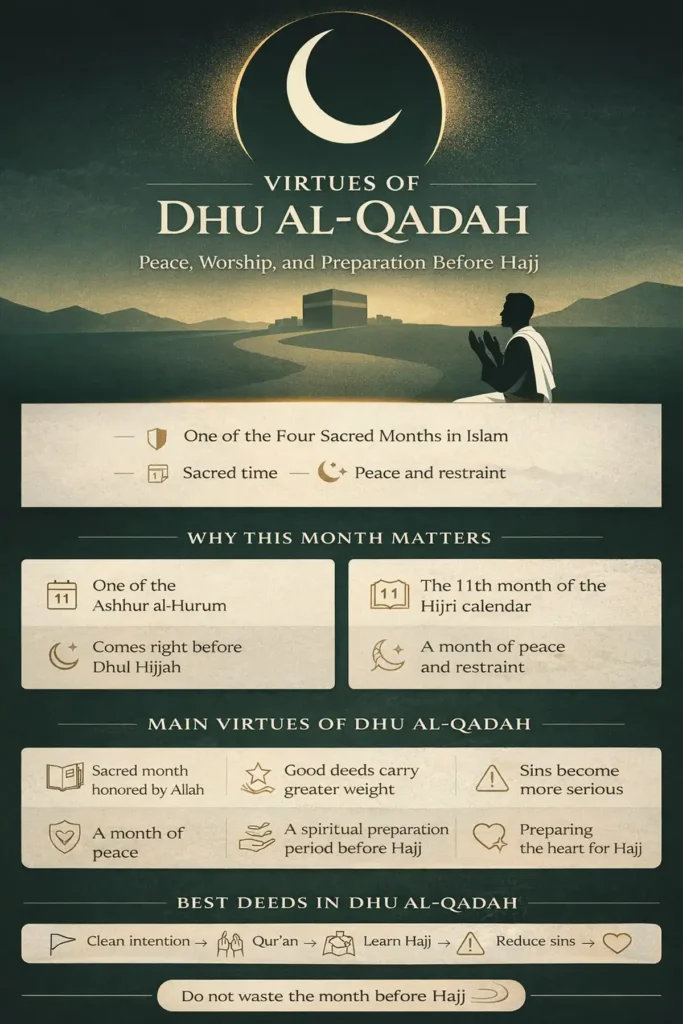
Virtues of Dhu al-Qadah Infographic: Peace, Worship, and Preparation Before Hajj

Farrukh Farooqi has been living in Sharaya, Makkah, Saudi Arabia since 2010. With over 14 years of firsthand experience witnessing the sacred journey of millions of pilgrims, Farrukh specializes in providing practical, insider tips for Hajj and Umrah travelers. His work blends real-world observations, the latest Saudi updates, and essential crowd management strategies — helping pilgrims and worshippers plan smarter, stay safer, and experience a spiritually fulfilling journey across the Holy Cities.


