
Suhoor Hydration Tips: Avoid Thirst (Caffeine + Salt Traps)
Most dehydration Ramadan problems don’t start at Suhoor.
They start the night before.
People eat salty food, drink very little water, stay up late, then try to fix everything with one giant glass at the end. That’s not a hydration plan. That’s panic.
✅ TL;DR – suhoor hydration tips
The best suhoor hydration tips are simple: spread water across the night, cut the salt/sugar traps, and keep caffeine in suhoor controlled. Add a hydrating side like laban/yogurt or fruit, and do a gentle Iftar rehydration routine so you don’t start the next day already behind.
If you’re in Saudi heat, this matters even more. Not because you need fancy supplements—just because routine matters.
And yes, thirst control fasting is mostly routine, not guesswork.
The real thirst traps (salt, sugar, caffeine)
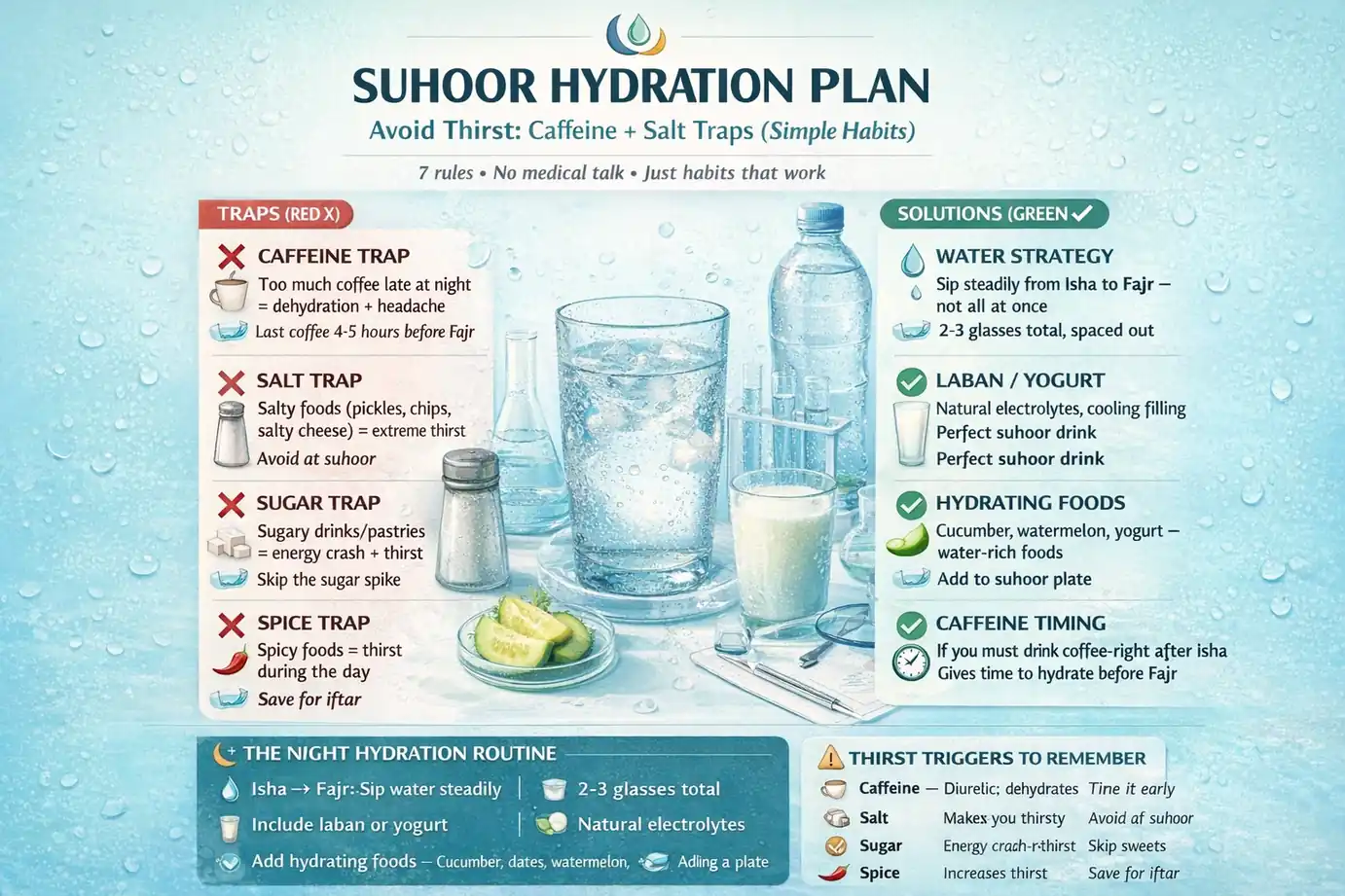
What to drink in suhoor to avoid thirst is a useful question, but the bigger question is what makes thirst worse. The main traps are easy to miss: too much salt, heavy sugar, and messy coffee timing Ramadan. Fix those first, and your water plan works much better.
Think of your body like a sponge before a long day. If you dump salt and sugar on it, then pour water fast, it doesn’t feel “steady.” It feels like a rush and crash.
Salt trap: does salty food make thirst worse fasting? For many people, yes. Extra salty leftovers, chips, pickles, and salty cheeses can make the next day harder.
Sugar trap: Sweet drinks and dessert-heavy Suhoor can cause a quick boost, then a drop. That drop often feels like hunger plus thirst together.
Caffeine trap: should i drink coffee at suhoor? Maybe, depending on your body. But too much caffeine in suhoor can worsen thirst feelings, disturb sleep, or trigger a morning headache pattern.
Caffeine withdrawal is the other side of the problem. Some people cut coffee suddenly, then think they’re “dehydrated” when it’s really a caffeine headache.
My students ask this every Ramadan: “Is coffee forbidden at Suhoor?” No. The better question is, “Does my coffee routine help me or hurt me?”
Micro-scenario: You drink two strong coffees at Suhoor, sleep poorly after Fajr, wake up dry, and blame the weather. Sometimes the weather is real. Sometimes it’s the coffee plan.
A simple night hydration routine
suhoor hydration plan simple means you stop trying to “win hydration” in the last 10 minutes. The easiest method is steady water from Iftar rehydration onward, plus a balanced meal. This supports hydration before fasting without stress.
Use this repeatable routine:
- At Iftar: Start gently with water. Don’t chug everything at once.
- With your evening meal: Keep drinking in a normal, steady way.
- After Taraweeh / later night: Have another water window, even if you’re not thirsty yet.
- At Suhoor: Drink calmly, not in panic mode.
- Before Fajr: Stop the “one last giant gulp” race. A calm routine beats a last-second rush.
how much water at suhoor (general guidance)? There isn’t one perfect number for everyone. Body size, weather, food, and activity all matter. A safer, simpler rule is spread your water across the night and check how your body responds the next day.
Urine color (general) can be a rough clue outside fasting hours, but don’t obsess over it. Use it as a simple check, not a science project.
One-sentence rule: sip through the night, don’t sprint at the end.
If your Ramadan timing routine is messy, keep one city page open in the iftar & suhoor timer so your Suhoor cutoff and Iftar routine stay consistent.
What to drink + what to avoid
What to drink in suhoor to avoid thirst is mostly about choosing simple drinks and avoiding the common traps. You don’t need “special Ramadan drinks” to do this well. You need drinks that don’t fight your sleep, stomach, or thirst control.
Better choices for many people:
Water: still the main drink. Basic wins.
Laban / yogurt drinks: suhoor drink ideas often work better when they include something familiar like laban. Many people find it gentle and satisfying with food.
Milk (if you tolerate it): Can work as part of a meal, not as your only hydration plan.
Light soup at Iftar: A warm soup at iftar can help rehydration and makes it easier to drink steadily later.
What drinks to avoid at suhoor (or at least reduce if they make you struggle):
Soda: is soda at suhoor bad? For many people, it’s not a great idea. It can bloat you, push out better choices, and doesn’t usually help thirst control.
Very sugary drinks: They can worsen the sugar trap.
Too much coffee/tea: Again, some is okay for some people, but “more” is not always “better.”
Micro-scenario: If your Suhoor is a salty sandwich + cola, don’t be shocked by thirst at work. That combo sets up the exact problem you’re trying to avoid.
Suhoor food add-ons that help
Suhoor foods that reduce thirst usually help because they support hydration and digestion, not because they are magic. Pair your drinks with foods that are less salty, less sugary, and easier on the stomach. That’s the real trick.
Good add-ons for many people:
Yogurt/laban: Easy, familiar, and works well with oats, bread, or eggs.
Fruit: Great for a simple hydration-friendly side. Keep it normal, not a giant fruit bowl.
Oats: Help with fullness and make your Suhoor feel more stable.
Eggs: Protein support, especially if your Suhoor is usually too carb-heavy.
Low-salt choices: This is the underrated part. People focus on drinks and ignore the salt.
If you want food combinations, your foods that keep you full page is the natural next step (good internal link here). Also, the Ramadan habit tracker helps you notice which foods cause next-day thirst.
I used to think thirst was only about water. It wasn’t. It was my salty leftovers pretending to be “easy Suhoor.”
Iftar rehydration (first 20 minutes)
How to rehydrate at iftar safely is simple: go gentle first, then steady. Don’t turn Iftar into a speed challenge. The first 20 minutes set up your whole night, including tomorrow’s hydration before fasting.
Try this easy Iftar rehydration routine:
Minute 1–5: Water first. Small sips are fine.
Minute 5–10: Light break-fast food (whatever is normal in your home).
Minute 10–20: Keep drinking steadily, not all at once. If you use soup, this is a good time.
Then continue normal hydration through the evening. That’s it.
How to avoid headache from dehydration often comes down to this same pattern plus fixing caffeine in suhoor and salt intake. Headaches can have more than one cause, so don’t blame water only.
Electrolytes Ramadan (general) comes up a lot. For most people, balanced meals + steady water + less salt/sugar is enough. If someone has a medical issue, that’s a doctor question, not a blog shortcut.
If you want a Ramadan dua page for Iftar moments, use Ramadan duas. For planning the month dates, the Hijri calendar guide is also useful.
FAQs
📘 suhoor hydration tips FAQs
what to drink in suhoor to avoid thirst?
Show Answer
Water is the main drink. Many people also do well with laban or yogurt drinks as part of a balanced Suhoor. The bigger win is your full routine, not one special drink.
suhoor hydration plan simple — what is the easiest version?
Show Answer
Drink steadily from Iftar to Suhoor, avoid salty/sugary traps, and keep Suhoor food balanced. Don’t try to fix everything with one giant drink before Fajr.
should i drink coffee at suhoor?
Show Answer
Should i drink coffee at suhoor? It depends on your body. If it worsens thirst, sleep, or headaches, reduce it or shift your coffee timing Ramadan routine.
does salty food make thirst worse fasting?
Show Answer
For many people, yes. Avoid salty foods suhoor is one of the most helpful changes you can make if you struggle with thirst the next day.
how much water at suhoor (general guidance)?
Show Answer
There’s no one number for everyone. Use a steady nighttime water routine and adjust based on your body, weather, and activity instead of copying random numbers online.
what drinks to avoid at suhoor?
Show Answer
Many people do better with less soda, fewer very sugary drinks, and less caffeine overload. These often work against thirst control fasting.
electrolytes for fasting (general info) — do i need them?
Show Answer
Most people can do fine with balanced meals and steady water. If you have a health condition, follow your doctor’s advice instead of generic internet tips.
how to avoid headache from dehydration in Ramadan?
Show Answer
Use a steady water routine, reduce salt and sugar, and check your caffeine habits. Headaches are often a mix of dehydration + caffeine + poor sleep.
best drink before fajr (concept)?
Show Answer
Usually plain water is the best base choice. Many people also like laban as part of a full Suhoor, not as a replacement for water.
how to rehydrate at iftar safely?
Show Answer
Start gently with water, break fast calmly, then keep drinking steadily during the evening. Don’t rush all your fluids in the first minute.
📊 suhoor hydration tips: thirst-control routine table
Use this simple table as your daily hydration checklist. The goal is steady habits, not “perfect” numbers.
🌙 Show Hydration Plan Table
| Time | Do this | Avoid this |
|---|---|---|
| Iftar (start) | Begin with water, go gently | Huge chug in one go |
| Evening meal | Drink steadily with food | Extra salty/sugary food traps |
| Late evening | Second water window, calm pace | Forgetting fluids completely |
| Suhoor | Balanced meal + water + low salt | Salty leftovers + soda |
| Caffeine | Keep amount/timing controlled | Overdoing coffee/tea |
| Before Fajr | Finish calmly and stop on time | Last-second panic drinking |
You Can Also Check
You Can Also Read
- Suhoor and Iftar in Ramadan (Saudi): Rules, Meaning, Mistakes, Meals
- What is Suhoor?
- What is Iftar?
- Suhoor Vs Sehri vs Suhur vs Sahur
- Can I Eat During Fajr Adhan?
- Accidentally Ate After Fajr
- Missed Suhoor
- Suhoor Rules Checklist
- Suhoor Foods that Keep You Full

Farrukh Farooqi has been living in Sharaya, Makkah, Saudi Arabia since 2010. With over 14 years of firsthand experience witnessing the sacred journey of millions of pilgrims, Farrukh specializes in providing practical, insider tips for Hajj and Umrah travelers. His work blends real-world observations, the latest Saudi updates, and essential crowd management strategies — helping pilgrims and worshippers plan smarter, stay safer, and experience a spiritually fulfilling journey across the Holy Cities.


