
Missed Suhoor: Can You Still Fast? (A Simple Day Plan)
You woke up. You checked the time. And your stomach dropped.
missed suhoor.
First, breathe. A lot of people panic here, then make the day harder than it needs to be.
✅ TL;DR – missed suhoor
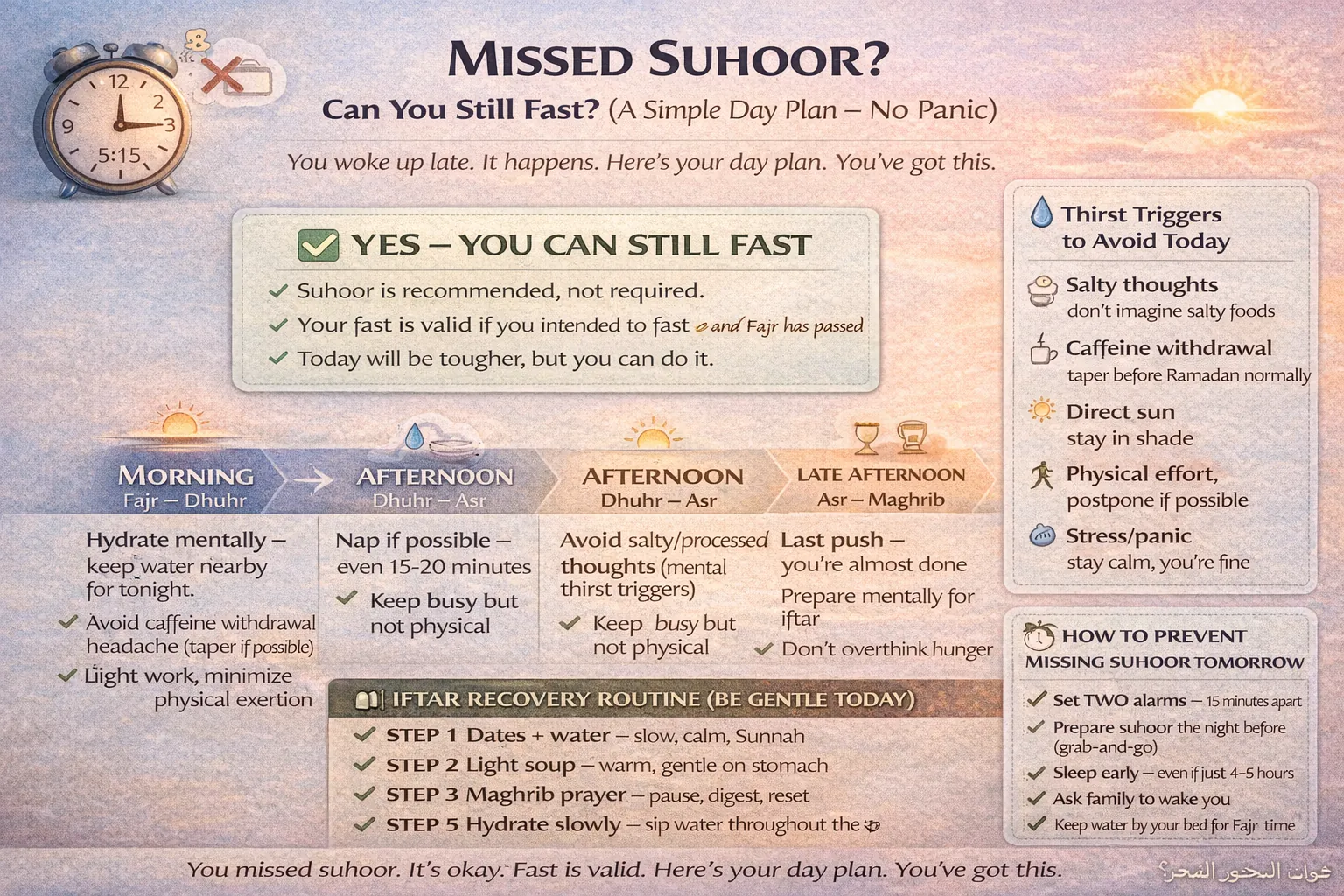
Yes—missed suhoor doesn’t automatically cancel your fast. Suhoor importance is real for stamina, but the fast still continues. Today, manage energy, avoid thirst triggers, and do a gentle iftar recovery plan. Tonight, set a simple alarm + water setup so you don’t miss Suhoor tomorrow.
I’ve seen two types of people on a “missed suhoor” day: the calm one, and the one who turns it into a punishment. Choose calm.
Is the fast valid without suhoor? (simple)
Is fasting valid without suhoor? In general, yes—missed suhoor does not automatically cancel the fast. Suhoor is strongly encouraged because it supports stamina and worship, but it’s not treated as a required condition for the fast itself in mainstream practice.
Some details can vary by school and personal situation, so if you follow a specific teacher or masjid guidance, stick with that. No need to start a family debate at 6:10 AM.
can i fast without suhoor is really two questions: “Is it allowed?” and “Will it be hard?” Allowed, yes. Hard, sometimes.
And that “sometimes” depends on your sleep, your work, the weather, and your body.
Your day plan (morning → afternoon)
what if i miss suhoor what to do today? Follow a simple plan: reduce effort, protect your energy, and avoid thirst traps. The goal isn’t to “win” the fast by suffering. The goal is to complete it with steadiness and good character.
Here’s the practical plan I give beginners when they message me in a panic.
Morning routine: move slowly. If you can, lower your physical load. A missed-suhoor day is not the day to carry ten shopping bags up three floors.
Work day fasting without suhoor: treat your energy like money in your pocket. Spend it only on what matters.
Mid-morning: avoid salty snacks “just in case you can taste them.” (Yes, people do this. They regret it.) Salt increases thirst later.
Commute tip: if you can choose shade, choose it. Heat is a loud thirst trigger.
Afternoon: when the hunger wave hits, don’t answer it with rage. This is where people snap at coworkers, then feel guilty at Maghrib. Protect your manners like you protect your fast.
should i nap when i miss suhoor? If you can, a short nap helps many people. Not a four-hour crash that ruins your night. A short one.
One more thing—caffeine withdrawal is sneaky. If you usually drink coffee in the morning, your “hunger” might actually be a caffeine headache.
My students always ask: “So what do I do about that?” You don’t drink coffee, obviously. You reduce the triggers: bright screen glare, loud noise, and pushing your body too hard.
Thirst triggers to avoid
avoid dehydration tips on a missed suhoor day are mostly about what NOT to do: don’t heat yourself up, don’t salt yourself up, and don’t exhaust yourself early. Thirst is often created by choices, not just by time.
Watch these common thirst triggers:
- Very salty foods at Iftar (they bite you later at night and the next day too)
- Too much caffeine after Iftar (it can disturb sleep and make tomorrow worse)
- Over-exertion in the first half of the day
- Hot sun + long walking when you could choose shade or shorter routes
- Spicy meals late at night if they usually make you thirsty
electrolytes get mentioned a lot online. Keep it simple: regular balanced foods and steady water intake between Maghrib and sleep usually do the job for most people. If you have a medical condition, follow your doctor’s guidance.
hydration before fajr (next day) starts tonight. Not tomorrow morning. Tonight.
Iftar recovery routine
what to eat at iftar after missing suhoor matters because your body is tired and your hunger can push you into overeating. Your goal is a gentle landing, not a food stampede. Start light, pause, then eat a normal meal.
Try this simple iftar recovery plan:
Step 1: break fast gently. Water first. Then a small bite of something easy. Pause.
Step 2: pray calmly if you’re going to pray. Don’t rush like you’re being chased.
Step 3: eat a balanced meal with protein + carbs + something with water content (like salad, soup, or fruit). This helps energy management for the night and the next day.
portion control matters more today because your brain says, “I suffered, so I deserve a feast.” That’s how people crash, feel sleepy, then miss Taraweeh and even miss the next Suhoor.
Micro-scenario: If you inhale a huge heavy plate at Maghrib, you may feel “fixed” for 20 minutes… then sleepy, thirsty, and regretful. Gentle is smarter.
Want a simple dua reminder page for Ramadan evenings? Use Ramadan duas (just as a reminder list).
How to prevent missing suhoor tomorrow
how to prevent missing suhoor tomorrow is not about motivation. It’s about removing friction. Set up your night like you’re helping a sleepy future-you.
Here’s a plan that works even for stubborn sleepers (I’ve taught plenty).
Step A: Put water where you’ll see it first. Not in a cupboard. Not behind ten things. Right there.
Step B: Two alarms, two places. One near you, one across the room. It forces movement.
Step C: Make “simple foods next night.” Don’t plan a full cooking show at 4:15 AM.
best foods next night for suhoor are usually boring foods that don’t fight you: oats, yogurt, eggs, soup, bananas, rice leftovers, or anything you know your stomach accepts.
missed suhoor guilt Ramadan is also real. Don’t spiral. Fix the system, not your self-worth.
If you want a clean daily timing screen, you can use the iftar & suhoor timer and keep it on the same city every day.
And if your sleep schedule is messy, tracking helps. The Ramadan habit tracker can make the pattern obvious in a few days.
One more practical link people forget: if you’re traveling and unsure about direction, the Qibla Finder is quick. Also, for date planning in Ramadan, the Hijri calendar guide is useful.
If medication timing is part of your day, keep it general and safe: follow your doctor’s plan and don’t change doses because of a blog post. If you need a charity calculation later in the month, the fitrana calculator is there.
Short ending.
Missing Suhoor doesn’t mean you failed Ramadan.
It means today needs a smarter plan.
You Can Also Check
You Can Also Read
- Suhoor and Iftar in Ramadan (Saudi): Rules, Meaning, Mistakes, Meals
- What is Suhoor?
- What is Iftar?
- Suhoor Vs Sehri vs Suhur vs Sahur
- Can I Eat During Fajr Adhan?
- Accidentally Ate After Fajr

Farrukh Farooqi has been living in Sharaya, Makkah, Saudi Arabia since 2010. With over 14 years of firsthand experience witnessing the sacred journey of millions of pilgrims, Farrukh specializes in providing practical, insider tips for Hajj and Umrah travelers. His work blends real-world observations, the latest Saudi updates, and essential crowd management strategies — helping pilgrims and worshippers plan smarter, stay safer, and experience a spiritually fulfilling journey across the Holy Cities.


