
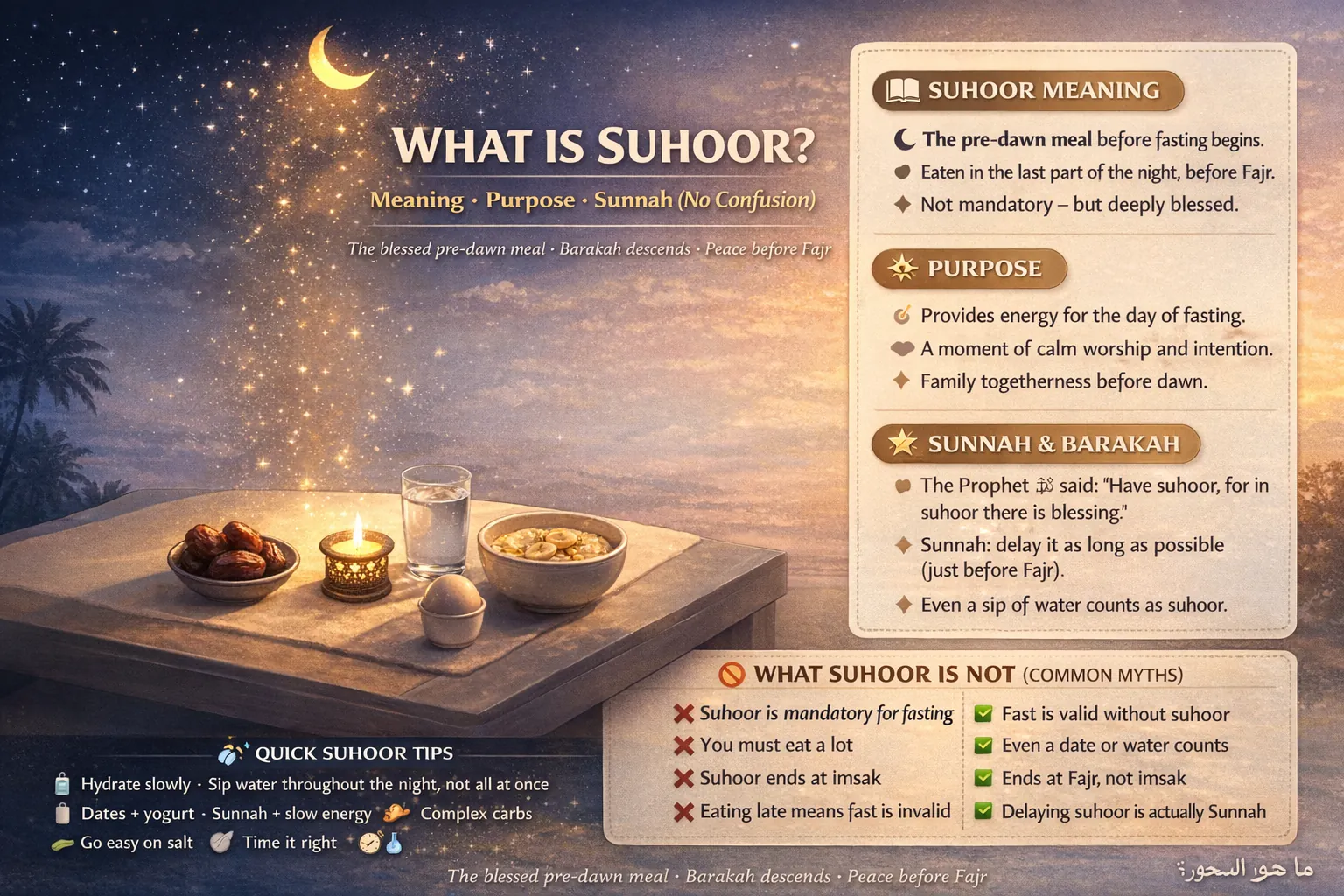
What is Suhoor? Meaning, Purpose, and Sunnah (No Confusion)
Suhoor is small, but it changes your whole fasting day.
Most people don’t struggle with hunger first.
They struggle with confusion—words, timings, and “is this required?” questions.
✅ TL;DR – what is suhoor
what is suhoor? Suhoor is the pre-dawn meal Islam recommends before fasting starts. It’s not a strict “condition” for your fast to count, but it’s strongly encouraged because it supports fasting and carries barakah (blessing). Keep it calm: eat and hydrate before fajr begins—without turning it into an adhan panic.
If you want city-based timings, use the iftar & suhoor timer. For the bigger picture, link to the suhoor & iftar guide.
Suhoor meaning in one line
Suhoor meaning in one line: it’s the meal you eat before dawn, so you begin the fast steady, not shaky.
I explain it like this: suhoor is your “morning fuel top-up” before a long drive. You’re not eating for fun. You’re preparing your body to worship without crashing.
People spell it many ways: suhur meaning, sehri meaning, even sahur spelling. Same thing.
Low-intent note: If someone searches sehri meaning in Urdu, they usually want the word meaning, not a fatwa. In plain terms: sehri = suhoor (pre-dawn meal).
Why Muslims eat suhoor (purpose)
Why is suhoor important? The purpose of suhoor is simple: it helps you fast better—physically and emotionally—so your worship doesn’t feel like punishment.
It also supports your routine. Families wake up together. Kids see the rhythm. You remember your intention (niyyah) reminder without making it a complicated speech.
Micro-scenario: you skip suhoor, then you’re snapping at people by 10 a.m. That’s a real pattern. Suhoor won’t make you “superhuman,” but it can reduce the edge.
Another micro-scenario: long fasting hours feel tougher. A steady suhoor helps more than a random snack at midnight.
Sunnah & barakah (simple, practical)
What is the sunnah of suhoor? The safest practical Sunnah points are: take suhoor, keep it simple, and don’t treat it like a feast. Many scholars also mention the idea of having it closer to dawn (late suhoor sunnah as a concept) without playing games with timings.
Blessing in suhoor is not only “more energy.” It’s also the calm routine: waking up for worship, keeping family together, and starting the day with intention.
Small aside: I used to think “barakah” always means “you’ll feel full all day.” Not always. Sometimes the barakah is that you don’t lose your manners when you’re tired.
Beginner-safe etiquette (suhoor etiquette) can be kept very light:
If you want a quick place to store duas for the month, link to Ramadan duas.
What suhoor is NOT (common myths)
What suhoor is NOT: it’s not a “required ritual meal” that makes the fast valid. Many people ask: is suhoor required for fasting? The fast can still be valid without it.
Two one-sentence reality checks.
Skipping suhoor doesn’t automatically break your fast.
But skipping it often breaks your mood.
Another myth: that you must do a huge meal or you’ll “faint.” Most people do better with a balanced, simple plate.
And a timing myth: people think suhoor ends at “imsak” in every case. In practice, most confusion is really can i drink water after suhoor before fajr and “where is the cutoff?” The clean rule: stop when fajr enters for your location.
If you want the word confusion solved, link to sehri vs suhoor.
Quick planning tips (food + water)
Suhoor for long fasting hours works best when you plan for “steady energy + steady hydration.” You don’t need fancy recipes. You need consistency.
My tea-time advice to beginners: build suhoor like a school lunch. It should carry you. It shouldn’t crash you.
Simple Saudi-friendly ideas (choose what suits you):
Micro-scenario: you’re rushing. Don’t chase perfection. Even water and a small bite can be better than nothing.
Say it once, then do it: set two alarms. One to wake, one to stop eating calmly before fajr. This removes the “last-second chewing” habit.
If you want a quick “don’t mess up” scan, link to suhoor rules checklist.
FAQs
📘 what is suhoor FAQs
what is suhoor in Islam?
Show Answer
what is suhoor in Islam? It’s the pre-dawn meal Islam encourages before fasting starts, so you begin the day steady and prepared.
is suhoor required for fasting?
Show Answer
No, is fasting valid without suhoor is a common worry. The fast can still be valid, but suhoor is strongly recommended.
why is suhoor important?
Show Answer
The purpose of suhoor is to help you fast better and keep your routine calm. Many also speak about blessing in suhoor (barakah) in a practical, lived way.
what is the sunnah of suhoor?
Show Answer
The sunnah of suhoor is to take suhoor, keep it simple, and protect fajr. Many people also follow the idea of having it closer to dawn (late suhoor sunnah as a concept) without timing games.
suhoor meaning in English?
Show Answer
suhoor meaning in English is simply: the pre-dawn meal before the fast begins.
suhur meaning vs suhoor meaning?
Show Answer
suhur meaning and suhoor meaning usually point to the same thing. People spell it differently based on language and habit.
can i drink water after suhoor before fajr?
Show Answer
You can drink until the fast starts. The practical cutoff is when fajr enters for your location.
sleep after suhoor — is it okay?
Show Answer
Yes, sleep after suhoor is common. Just protect your fajr prayer and don’t build a routine that makes you miss it.
kids suhoor — should they wake up?
Show Answer
With kids suhoor, keep it gentle. Short practice fasts and good sleep matter more than forcing a full adult routine.
suhoor vs iftar difference?
Show Answer
suhoor vs iftar difference: suhoor is before dawn to prepare for fasting; iftar is at sunset to break the fast at Maghrib.
You Can Also Check
You Can Also Read

Farrukh Farooqi has been living in Sharaya, Makkah, Saudi Arabia since 2010. With over 14 years of firsthand experience witnessing the sacred journey of millions of pilgrims, Farrukh specializes in providing practical, insider tips for Hajj and Umrah travelers. His work blends real-world observations, the latest Saudi updates, and essential crowd management strategies — helping pilgrims and worshippers plan smarter, stay safer, and experience a spiritually fulfilling journey across the Holy Cities.


