
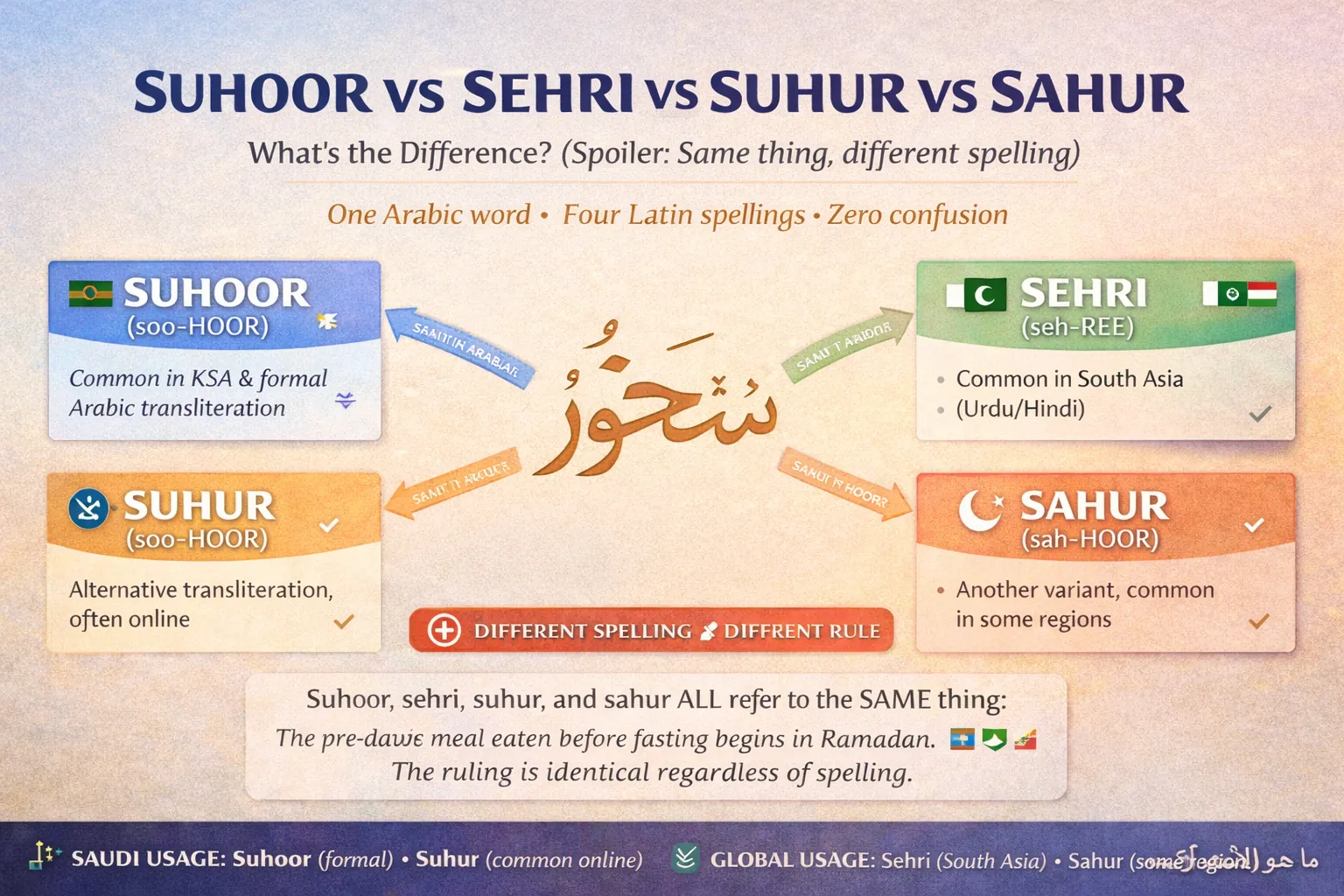
Suhoor Vs Sehri vs Suhur vs Sahur: What’s the Difference?
Four words. One meal.
And yet people argue like it’s four different rulings.
If you’ve ever searched suhoor vs sehri at 2:30 a.m., you’re not alone.
✅ TL;DR – suhoor vs sehri
suhoor vs sehri usually isn’t a real “difference” in practice. Suhoor, sehri, suhur, and sahur typically point to the same thing: the pre-dawn meal Islam encourages before fasting begins. The change is spelling and regional usage, not a different rule. Don’t let search results trick you into thinking there are different “times.”
If you want the full Ramadan meal context, link to the suhoor & iftar guide. If your confusion is really about cutoffs, the iftar & suhoor timer keeps city timing clear.
Why spellings differ (transliteration)
Why are there different spellings of suhoor? Because people are writing a spoken word into English letters. That’s called transliteration. There isn’t one single “perfect” way to spell a word when you move it across languages.
It’s like writing a Saudi name in English. Two people can spell it differently, but they’re still talking about the same person.
This is why you’ll see spelling variants suhoor such as suhur vs suhoor, sahur time spelling, and even sahoor spelling online.
Small aside: I used to think search engines were “smart enough” to group them. They try. But at 3 a.m., results still look messy.
What each word usually refers to
What is pre-dawn meal called in Islam? In everyday usage, these terms usually point to that same meal window before fasting starts.
Here’s the plain map:
If someone asks what is sehri or what is suhur, most of the time they’re not asking for a deep linguistic lecture. They want to know: “Is this the same as suhoor?”
In most normal use, yes.
Common confusion: “different word = different rule”
Does spelling change the ruling? No. Spelling doesn’t create a new practice. The fast still starts at Fajr and ends at Iftar at sunset.
The confusion usually comes from two things:
1) People think “sehri time” is a separate religious timing. Often it just means the suhoor meal window.
2) People mix word differences with timing differences. That’s when you see “imsak confusion” online and people panic about minutes.
Micro-scenario: a friend says, “My app says ‘suhur’ ends earlier than ‘suhoor’.” What’s really happening is the app is showing a different timetable setting—not a different word with a different rule.
Micro-scenario: you search suhoor vs sahoor and the page talks about “special sehri time.” Most of the time that’s just a regional way of talking, not a new Sunnah.
Saudi usage vs global usage
What do Saudis call sehri? In Saudi Arabia, you’ll most often hear people say suhoor. The word sehri shows up more in South Asian households and online searches, especially among Urdu speakers.
That’s why Saudi readers see SERP noise: you’re searching from KSA, but you’re landing on pages written for different regions.
And that’s how a simple question turns into confusion.
Quick examples (search phrases decoded)
This section is for real-life searches people type when sleepy. Read the intent, not the spelling.
One sentence you can tell anyone: “Same meaning, different spelling.”
📊 suhoor vs sehri: spelling, region, and what it means
Use this table when search results make it look like four different practices.
🌙 Show Spelling Comparison Table
| Term | Usually means | Common region/use | Beginner-safe takeaway |
|---|---|---|---|
| Suhoor | pre-dawn meal before fasting | global English usage, common in KSA talk | standard spelling; use it consistently |
| Suhur | same meaning as suhoor | apps, calendars, short spellings | suhur vs suhoor is usually spelling only |
| Sehri | same pre-dawn meal window | Urdu/South Asia wording | sehri meaning usually points to suhoor |
| Sahur | same meaning as suhoor | Southeast Asia + mixed English | is sahur same as suhoor? usually yes |