
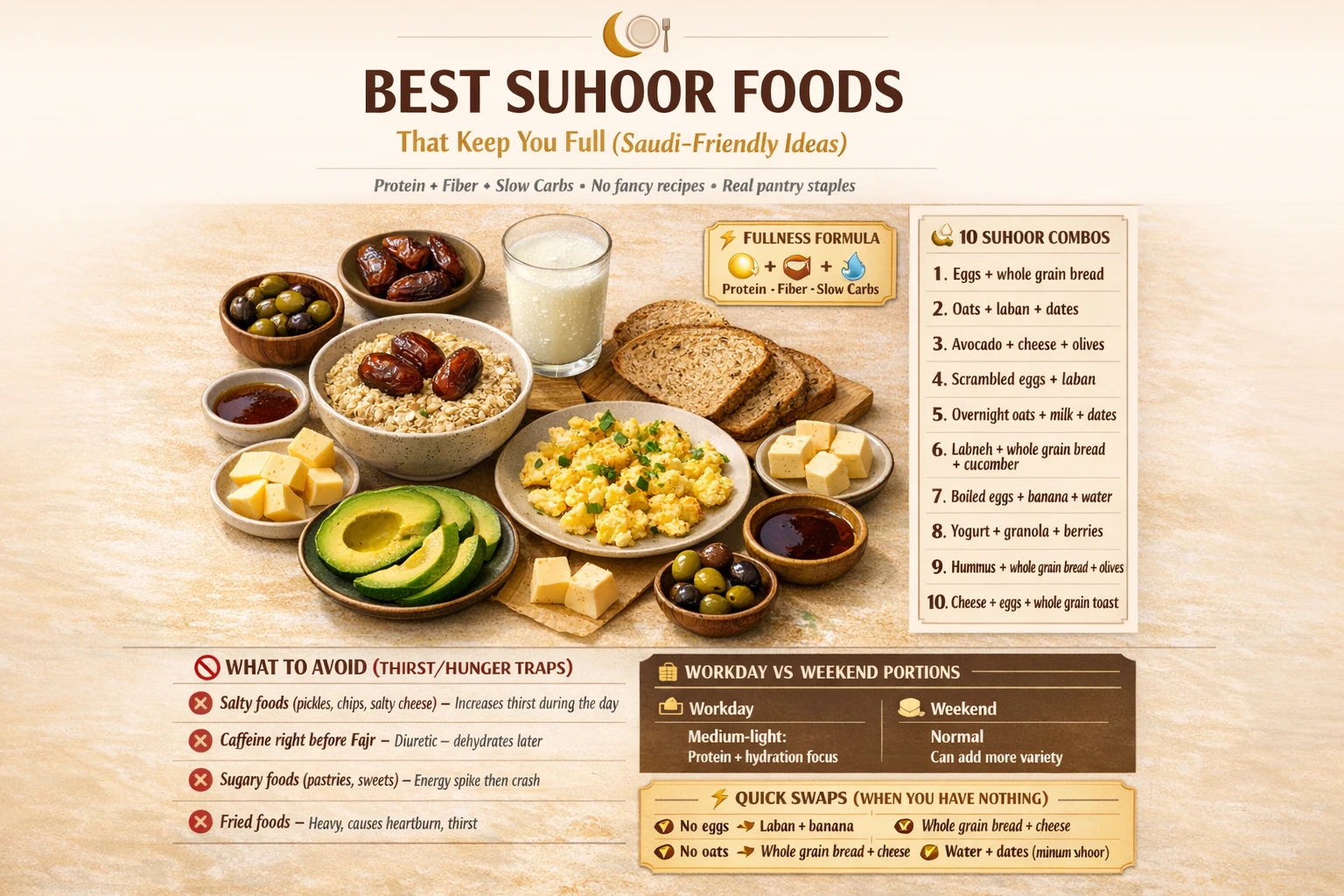
Suhoor Foods that Keep You Full (Saudi-Friendly Ideas)
Most people don’t get hungry early in Ramadan because they “did Suhoor wrong.”
They get hungry early because the meal looked full… but it was built like a snack.
A sweet tea, white bread, and a few bites while standing in the kitchen can feel like “enough” at 4 AM. By 10 AM, it feels like betrayal.
✅ TL;DR – suhoor foods that keep you full
The best suhoor foods that keep you full follow one simple pattern: protein + fiber suhoor foods + slow carbs + steady water. Think eggs suhoor or yogurt laban suhoor with oats suhoor or whole grains. Avoid the salt-and-sugar trap if you want to avoid hunger Ramadan and reduce thirst.
If you’re here, you probably want real food ideas, not fancy “wellness” recipes with 14 ingredients.
Good. Saudi kitchen style works perfectly for this.
The fullness formula (protein + fiber + slow carbs)
What to eat in suhoor to avoid hunger? Use a simple plate formula: high protein suhoor food for staying power, fiber suhoor foods for slower hunger, and slow carbs for steady energy. Then add water in a calm way. That’s the whole game.
Think of Suhoor like building shade for a hot afternoon. If the roof is weak (only sugar), the heat gets through fast. If the roof has layers (protein + fiber + slow carbs), the day feels more manageable.
Protein helps you feel steady. Fiber slows things down. Slow-digesting carbs give you a smoother energy line instead of a quick rise and crash.
This is why a balanced Suhoor often works better than “just eat more.” More food is not always better food.
Micro-scenario: Two people eat at the same time. One has sweet pastry + tea. The other has eggs + oats + laban. By late morning, the first person is hunting the clock. The second person is still functioning.
Hydration foods matter too, but people overthink it. You don’t need magic ingredients. You need steady water between Iftar and sleep, plus foods that don’t increase thirst.
One sentence rule: build a boring plate that supports your day. Ramadan mornings reward boring.
10 Saudi-friendly suhoor combos
Healthy suhoor ideas work best when they repeat. You should be able to rotate them all month without stress. These are not “diet meals.” These are practical suhoor meal plan ideas for normal homes, normal budgets, and sleepy people.
My students always laugh when I say this, but it’s true: the best Suhoor is the one you’ll actually make at 4 AM.
-
Eggs + whole wheat bread + laban + cucumber
A classic high protein suhoor option. Eggs suhoor gives protein, bread gives steady carbs, and yogurt laban suhoor adds a gentle side that many people tolerate well. -
Oats with yogurt/laban + chia or flax (optional) + banana
Great oats suhoor option for people who want quick prep. This is one of the easiest quick suhoor that keeps you full ideas if you prep the bowl the night before. -
Ful (fava beans) + olive oil (light) + bread + tomato
Beans can be excellent fiber suhoor foods when portioned well. Keep spice low if you get heartburn triggers. -
Labneh or thick yogurt + oats + dates (1–2) + nuts
This works well for suhoor for long fasting hours because it mixes protein, fat, fiber, and slow carbs. Keep the dates suhoor portion moderate so it stays balanced. -
Scrambled eggs + leftover rice (small portion) + plain yogurt
Good workday suhoor combo when you don’t want bread. Leftover rice can work fine if the portion is controlled and not too salty. -
Peanut butter (or nut butter) on whole grain toast + milk/laban + fruit
Easy simple suhoor for beginners. This is helpful when you’re too sleepy to cook but still want a proper plate. -
Chicken leftovers (small) + bread + yogurt + fruit
Very good high protein suhoor ideas option if you already have cooked chicken. Just watch the salt if last night’s food was heavily seasoned. -
Oats + eggs combo plate (savory eggs, sweet oats side)
This answers the common question: oats vs bread suhoor what’s better? Honestly, both can work. The better choice is the one you digest well and can repeat. -
Greek-style yogurt/laban + granola (light) + apple + boiled egg
People often do only yogurt + granola and get hungry fast. Adding the egg changes the day. -
Emergency combo: laban + banana + oats + handful of nuts
This is your backup for chaotic nights. Keep these in the house and you’ll never be forced into junk food. It’s a solid suhoor foods Saudi pantry move.
Micro-scenario: You get home late from Taraweeh and there’s “nothing ready.” Don’t order fried fast food at midnight. Use your emergency combo and sleep on time.
Kids-friendly suhoor usually means smaller portions and simpler textures. Children often do better with yogurt, eggs, oats, fruit, and toast than spicy leftovers.
And yes, eggs at suhoor good or not? For many people, yes—very good. They’re simple, filling, and easy to pair with other foods.
What to avoid (thirst/hunger traps)
What not to eat at suhoor for fullness? Foods that spike you fast, dehydrate you, or irritate your stomach. Most people already know this, but they ignore it when they’re sleepy.
The biggest trap is the “comfort plate” that feels good for 12 minutes and then leaves you thirsty by Dhuhr.
These are the usual troublemakers:
Salt trap: very salty foods can make suhoor foods that reduce thirst impossible, because they do the opposite. Chips, very salty cheese, extra pickles, and salty leftovers are common problems.
Sugar spike: a dessert-heavy Suhoor may feel fast and easy, but the sugar spike can lead to a hunger crash. A little sweet is fine. Building the whole meal on sweets is the issue.
Caffeine overload: strong tea/coffee can be okay for some people, but too much can worsen thirst feelings, sleep quality, or headache patterns later. This is why suhoor foods that reduce thirst is not just about food—it’s also about drinks.
Heartburn plate: spicy, oily, heavy meals can ruin your morning. If you already know your trigger, don’t test it at Suhoor. Ramadan is not the month for “let’s see what happens.”
Portion chaos: overeating at Suhoor can also backfire. People think “more food = more fullness,” but too much can mean discomfort, poor sleep, and messy digestion.
I used to eat too much bread at Suhoor because it felt “safe.” I stayed full for a bit, then got thirsty fast. The fix was simple: add protein and cut the salt.
Workday vs weekend portions
Suhoor portion size tips are not about strict numbers. They’re about matching your day. A workday Suhoor should feel steady and light enough to move with. A weekend Suhoor can be a little slower and more relaxed, but still balanced.
Think “enough to support,” not “enough to knock me out.”
Workday suhoor usually works better when you keep the plate moderate, easy to digest, and low-drama. If you have a commute, don’t build a meal that fights your stomach on the road.
Weekend Suhoor is where people overdo it because there’s more time. Then they sleep badly and feel worse the next day anyway.
a short story of a beginner mistake (and the simple fix)
A brother working in Jeddah told me he kept getting hungry early and thought he needed “special Ramadan foods.” I asked what he ate before work. He said, “Tea, white bread, and whatever is left on the table.”
So we changed only three things: he added eggs, swapped in oats or whole grain bread, and cut the salty leftovers. No expensive products. No dramatic plan.
A week later he said, “I still get hungry, but now it comes later and I can function.” That’s the real goal—not superhuman fasting, just a smoother day.
That small change is what most people need.
Quick swaps (when you have nothing)
Quick prep matters because real life happens. Some nights you’ll be tired, guests stay late, or the kitchen is empty. You still need a decent Suhoor.
Here are easy swaps that rescue the morning without turning into junk food:
No eggs? Use yogurt/laban + oats + nuts.
No bread? Use oats, leftover rice (small portion), or even plain potatoes with protein if that’s what you have.
No fruit? Use 1–2 dates suhoor and focus on protein + fiber. Don’t make dates the whole meal.
No time? Use your emergency combo: laban + oats + banana + nuts. This is still better than tea and biscuits.
Nothing prepped? That’s your sign for meal prep suhoor full week basics: boiled eggs, washed fruit, oats ready, yogurt stocked.
Micro-scenario: You open the fridge and it looks empty. Then you remember: oats, laban, and one banana. That’s a usable Suhoor. Don’t panic-order.
If you like structure, the Ramadan habit tracker helps you spot which healthy suhoor ideas keep you steady, and the iftar & suhoor timer keeps your timing routine clean. For Ramadan dates and planning, the Hijri calendar guide is useful too.
FAQs
📘 suhoor foods that keep you full FAQs
what to eat in suhoor to avoid hunger?
Show Answer
Build your Suhoor with protein + fiber + slow-digesting carbs. A simple example is eggs or yogurt/laban with oats or whole grain bread, plus water and a small fruit.
best suhoor meal for long fasting hours?
Show Answer
The best suhoor for long fasting hours is usually a balanced plate: protein (eggs/yogurt/laban), fiber (oats/beans/fruit), and slow carbs (whole grains), with steady water through the night.
high protein suhoor ideas that are easy?
Show Answer
High protein suhoor ideas include eggs + bread + laban, yogurt + oats + nuts + egg, or small chicken leftovers with yogurt and a simple carb.
suhoor foods that reduce thirst — what helps most?
Show Answer
The main help is not one “special food.” It’s a pattern: less salt, less sugar, balanced portions, and steady water after Iftar and before sleep.
quick suhoor that keeps you full if i’m late?
Show Answer
Try laban or yogurt + oats + banana + nuts. It’s one of the easiest quick suhoor that keeps you full options and needs almost no cooking.
oats vs bread suhoor what’s better?
Show Answer
Both can work. Oats vs bread suhoor what’s better depends on what your stomach handles well and what you can repeat consistently. The bigger issue is balancing them with protein and fiber.
laban yogurt suhoor benefits (general)?
Show Answer
Yogurt laban suhoor is popular because it’s easy, gentle for many people, and pairs well with oats, eggs, or bread. It works best as part of a full plate, not by itself.
eggs at suhoor good or not?
Show Answer
For many people, yes. Eggs suhoor is a strong option because eggs are simple, filling, and easy to combine with fiber and slow carbs.
suhoor portion size tips for workday mornings?
Show Answer
Keep portions moderate and balanced. You want a plate that supports your commute and work routine—not a heavy meal that causes discomfort or sleepiness.
what not to eat at suhoor for fullness and comfort?
Show Answer
Very salty, very sugary, or heavy spicy meals often backfire. They can increase thirst, cause hunger crashes, or trigger heartburn.
meal prep suhoor full week — what should i prep first?
Show Answer
Start with the basics: boiled eggs, stocked yogurt/laban, oats, nuts, and washed fruit. Small prep wins beat big plans you won’t keep.
📊 suhoor foods that keep you full: simple combo guide
Use this table to build a fast plate without overthinking. Pick one item from each column and keep the salt and sugar moderate.
🌙 Show Suhoor Combo Table
| Build this part | Easy options (Saudi-friendly) | Common mistake |
|---|---|---|
| Protein | Eggs, yogurt/laban, labneh, beans, chicken leftovers | Skipping protein completely |
| Fiber | Oats, fruit, beans, vegetables | Only white bread + tea |
| Slow carbs | Oats, whole grain bread, moderate rice, potatoes | Pastry-only Suhoor |
| Hydration support | Steady water, laban, water-rich foods | Panic-drinking at the end |
| Flavor | Mild seasoning, low salt | Salt trap + spicy overload |
| Portion size | Moderate, balanced plate | Huge heavy meal before sleep |
You Can Also Check
You Can Also Read
- Suhoor and Iftar in Ramadan (Saudi): Rules, Meaning, Mistakes, Meals
- What is Suhoor?
- What is Iftar?
- Suhoor Vs Sehri vs Suhur vs Sahur
- Can I Eat During Fajr Adhan?
- Accidentally Ate After Fajr
- Missed Suhoor
- Suhoor Rules Checklist

Farrukh Farooqi has been living in Sharaya, Makkah, Saudi Arabia since 2010. With over 14 years of firsthand experience witnessing the sacred journey of millions of pilgrims, Farrukh specializes in providing practical, insider tips for Hajj and Umrah travelers. His work blends real-world observations, the latest Saudi updates, and essential crowd management strategies — helping pilgrims and worshippers plan smarter, stay safer, and experience a spiritually fulfilling journey across the Holy Cities.


