
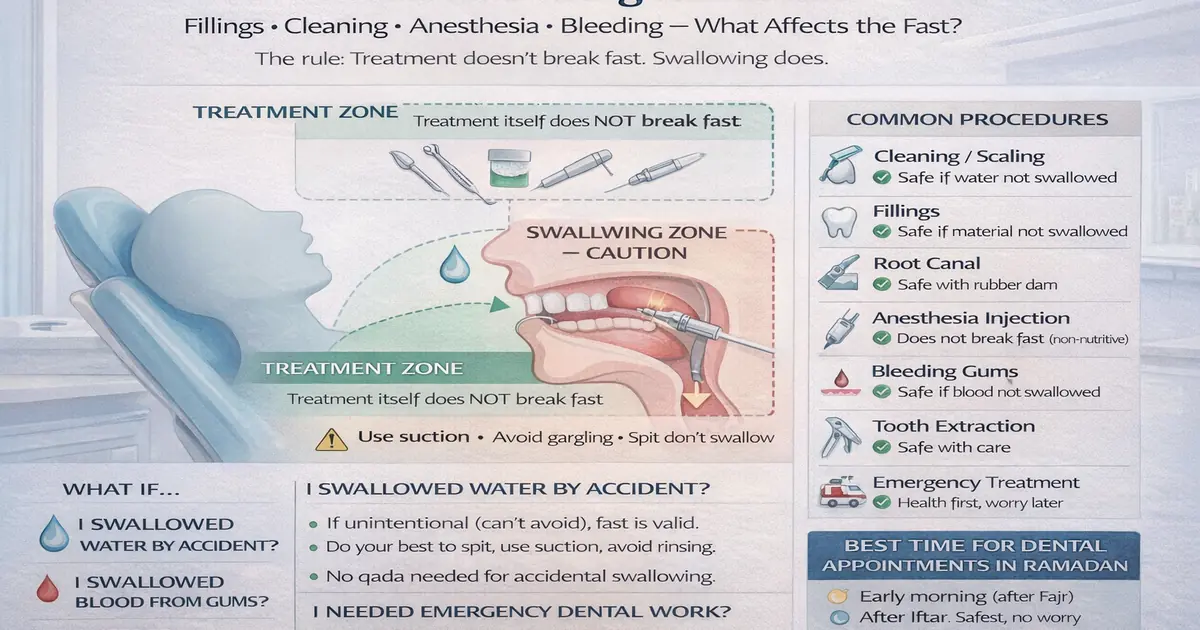
Dental Treatment While Fasting Ramadan: Dentist During Ramadan: Fillings, Cleaning, Anesthesia, and Bleeding — What Affects the Fast?
Tooth pain has terrible timing.
Ramadan makes that timing feel even worse.
If you’re searching dental treatment while fasting Ramadan, you’re probably not trying to debate online—you’re trying to keep your fast and fix your tooth.
✅ TL;DR – dental treatment while fasting Ramadan
dental treatment while fasting Ramadan usually doesn’t break the fast by itself. The main risk is swallowing water dentist fasting, blood, or treatment material. Procedures like teeth cleaning fasting, filling fasting, root canal fasting, and braces adjustment fasting can be done with care—use strong suction, avoid heavy rinsing, and choose safer timing when possible. gum bleeding fasting isn’t a fast-breaker unless you swallow blood on purpose.
the simple rule (swallowing vs treatment)
Answer-first: The core issue in dental treatment while fasting Ramadan is not “being at the dentist.” It’s what reaches your throat. Treatment in the mouth is one thing; swallowing water, blood, or paste is another. That’s why most guidance keeps repeating: be careful about swallowing.
Picture the mouth like a sink. You can clean the sink all day. The fast only becomes risky if stuff goes down the drain into the stomach.
Micro-scenario: the dentist sprays water, you feel it pooling, and you panic. Ask for more suction and sit up a little. Panic makes swallowing more likely.
cleaning/scaling: water and suction tips
Answer-first: teeth cleaning fasting is usually fine if you minimize water and use strong suction. The biggest mistake is vigorous rinsing and then accidentally swallowing. Tell the clinic you’re fasting and want “low-water + more suction.” They hear this every Ramadan.
Practical tips that actually help:
- Ask for use of suction often (don’t be shy).
- Request “small sips to spit” instead of a full rinse.
- Avoid flavored polish paste if it increases saliva and swallowing.
Micro-scenario: you taste mint foam and your throat reacts. Stop, spit, suction, breathe. Then continue.
One sentence reminder: Slow work is safer work.
fillings and root canal: what to watch
Answer-first: With filling fasting and root canal fasting, the main risks are swallowing water, tiny bits of material, or blood. Dentists can isolate the area and suction well, which makes the risk much lower. Tell them you want the field kept dry and you want to spit whenever needed.
Here’s what many beginners forget: you don’t need to “act tough” during a filling. If saliva builds up, signal the dentist. That’s why the suction tube exists.
A longer real-life story (I see this every year): A young man once rushed in before Asr with a bad cavity and insisted, “Finish fast, I’m fasting.” The dentist worked quickly, water pooled, and the patient swallowed without thinking. He left upset, convinced his fast was ruined. When we talked, the problem wasn’t the filling—it was the rush and the pride. Next day he booked after iftar, sat calmly, and everything went smooth. Simple fix, big peace.
Micro-scenario: you feel grit from drilling. Don’t swallow. Pause and spit. Ask for suction again.
local anesthesia: is it like injections?
Answer-first: local anesthesia fasting is commonly discussed like other non-nutritive medicine: it’s not food or drink, and it’s given for treatment. Many scholars allow it, especially because the goal is pain control so care can be done safely. The bigger worry is still swallowing water dentist fasting, not the numbness.
But here’s what people mix up: anesthesia is not the same as IV nutrition. It’s a small medicinal dose to numb a spot. (I used to confuse “anything injected” with “anything breaks fast” when I first learned. Many people do.)
Micro-scenario: after the injection, your mouth feels heavy, saliva feels “too much,” and you swallow more. Solution: keep tissues, spit gently, and ask to sit slightly upright.
bleeding gums and swallowing blood
Answer-first: gum bleeding fasting does not break the fast by itself. The issue is swallowing blood deliberately. If you notice bleeding, spit it out and rinse lightly only if you can avoid swallowing. If a tiny trace mixes with saliva without intention, that’s treated differently than knowingly swallowing.
Micro-scenario: you taste blood after scaling. Spit, suction, repeat. Don’t keep “testing the taste.”
Another micro-scenario: after tooth extraction fasting, bleeding continues a bit. The safe move is to schedule extraction after iftar if possible, because controlling bleeding and avoiding swallowing is easier.
One-sentence truth: The mouth can bleed without your worship breaking.
best timing for appointments
Answer-first: If you can choose, the safest timing for dentist while fasting Ramadan is after iftar, because you can rinse, swallow medication if needed, and handle bleeding without fear. If you can’t choose (urgent pain or infection), go in the day and use the practical controls: suction, minimal water, and slow pace.
Timing suggestions (simple and realistic):
- After iftar appointment for extractions, deep cleaning, and long procedures.
- Morning slots for quick checks or braces adjustment fasting.
- Avoid the hottest part of the day if you already struggle with dryness.
Micro-scenario: you’re on antibiotics and the dose time lands in the day. Don’t guess. Ask your dentist or doctor about a night schedule, because some meds can be timed around iftar and suhoor.
quick FAQ
Answer-first: Most Ramadan dentist questions come down to: “Did I swallow something?” and “Was it urgent?” The answers below cover cleaning, fillings, injections, bleeding, and accidental swallowing—without making you feel guilty for needing care.
If you’re planning around prayer and meal times, this is helpful: iftar-suhoor timer.
📊 dental treatment while fasting Ramadan: what’s usually safe vs what to watch
This table keeps the focus where it belongs: swallowing risk, not “being at the dentist.”
🦷 Show Dentist-in-Ramadan Table
| Procedure | Main fasting risk | Beginner-safe approach |
|---|---|---|
| teeth cleaning fasting | swallowing water dentist fasting | Low water + strong suction + spit often |
| filling fasting | Swallowing water/material | Ask to keep area dry; pause to spit |
| root canal fasting | Long procedure + dryness + water | Prefer after iftar if possible; strong suction |
| local anesthesia fasting | Indirect risk: extra saliva swallowing | Generally treated as medicine; control saliva, spit |
| tooth extraction fasting | gum bleeding fasting + swallowing blood | Best after iftar; if daytime, spit blood and use gauze |
| braces adjustment fasting | Minor water/saliva swallowing | Usually fine; request minimal rinse |
FAQs
📘 dental treatment while fasting Ramadan FAQs
can I go to the dentist while fasting Ramadan?
Show Answer
Yes. The visit itself isn’t the problem. The main risk is swallowing water dentist fasting, blood, or material during treatment.
what if I swallow water at the dentist while fasting?
Show Answer
Accidental swallowing can happen. That’s why suction and minimal rinsing matter. If it happened without intention, note it, avoid repeat, and ask a trusted scholar if you’re worried.
does teeth cleaning fasting break the fast?
Show Answer
teeth cleaning fasting usually doesn’t break the fast if you avoid swallowing water and paste. Ask for strong suction.
does a teeth filling break fast?
Show Answer
filling fasting is usually fine if you avoid swallowing. The key is controlling water and material with suction and pauses to spit.
root canal fasting: is it safe to do during the day?
Show Answer
root canal fasting can be done, but it’s longer and increases swallowing risk. If you can choose, do it after iftar.
local anesthesia fasting: does it break the fast?
Show Answer
local anesthesia fasting is commonly treated like a medicine injection, not food or drink. The bigger fasting risk is still swallowing water or blood during treatment.
anesthesia injection fasting: is it the same as IV nutrition?
Show Answer
No. A local numbing injection is small medicine for treatment. IV nutrition is different because it feeds the body.
does bleeding break the fast?
Show Answer
gum bleeding fasting doesn’t break the fast by itself. The concern is swallowing blood on purpose. Spit it out and use suction/gauze.
tooth extraction fasting: should I do it after iftar?
Show Answer
If you can choose timing, yes—extractions often bleed more, and avoiding swallowing is easier at night.
emergency dentist Ramadan: what if pain is severe?
Show Answer
Go. Infection and severe pain need treatment. Use suction and minimal rinse, and don’t delay care out of fear.
mouth rinse dentist Ramadan: can I rinse and spit?
Show Answer
Yes—rinsing and spitting is safer than swallowing. Keep it minimal and controlled, and ask for suction.
Related Articles
- Ramadan fasting rules for special cases:
- Does injection break fast Ramadan:
- Asthma inhaler break fast Ramadan:
- Does IV drip break fast Ramadan:
- Does Blood Test Break Fast Ramadan:

Farrukh Farooqi has been living in Sharaya, Makkah, Saudi Arabia since 2010. With over 14 years of firsthand experience witnessing the sacred journey of millions of pilgrims, Farrukh specializes in providing practical, insider tips for Hajj and Umrah travelers. His work blends real-world observations, the latest Saudi updates, and essential crowd management strategies — helping pilgrims and worshippers plan smarter, stay safer, and experience a spiritually fulfilling journey across the Holy Cities.


