
Does Blood Test Break Fast Ramadan: Blood Tests While Fasting in Ramadan: Does Drawing Blood Break the Fast?
Ramadan doesn’t stop the lab.
And your health checks can’t always wait.
If you searched does blood test break fast Ramadan, you probably have a real appointment, a real needle, and a real worry: “Did I just ruin my fast?”
✅ TL;DR – does blood test break fast Ramadan
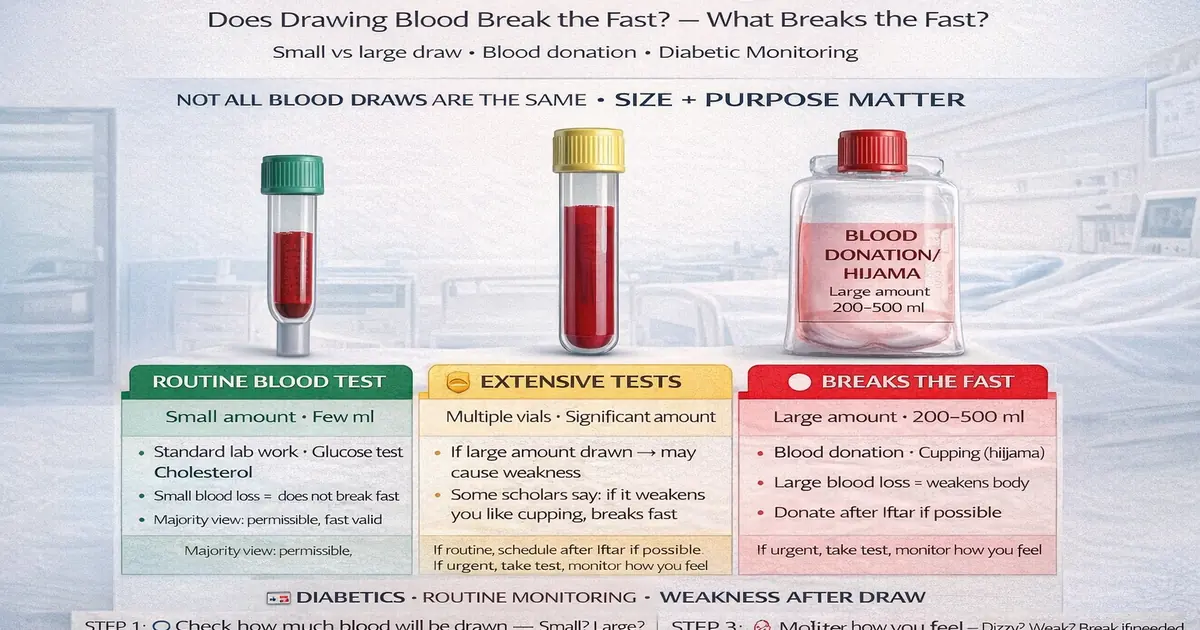
does blood test break fast Ramadan is usually answered like this: a normal blood draw fasting for a lab test fasting Ramadan does not involve eating or drinking, so many scholars do not treat it as breaking the fast. The main concern is harm and weakness—especially with larger blood loss like blood donation Ramadan ruling or cupping hijama fasting. If you become ill or must break the fast, make up the day later.
does taking blood break the fast? (principle)
Answer-first: A simple blood draw fasting takes blood out of the body; it doesn’t put food or drink in. For that reason, many scholars do not say a routine lab test fasting Ramadan breaks the fast. The caution point is not “invalid fast,” but “will this make me too weak or unsafe?”
Think of fasting like keeping the “fuel gate” closed for the day. A blood test is more like checking the oil level—nothing is being fed into you, but you might feel lightheaded if the day is hot and you’re already drained.
Micro-scenario: you do a quick CBC in the morning at the hospital lab Ramadan. It’s over in minutes. You continue fasting normally.
small blood draw vs large blood loss
Answer-first: The bigger the amount of blood, the more the discussion shifts from “rule” to “safety.” A small tube for tests is usually minor. But large blood loss can cause real weakness—so you treat it carefully, especially if you already have anemia fasting issues or you’re prone to dizziness.
Here are common signs your body is saying “slow down”:
- dizziness or near-fainting
- shaking, cold sweat, blurred vision
- you can’t stand safely or do basic tasks
Micro-scenario: you did labs, walked outside, and the heat hits. You feel spinning. Sit, rest, get help. Don’t prove anything to anyone.
I’ll admit something small: I used to think “feeling weak” automatically means “fast is broken.” It doesn’t. Weakness is a warning sign, not a fiqh stamp.
blood donation vs blood test
Answer-first: blood donation Ramadan ruling is discussed more strongly than a simple test because donation removes a larger amount and can leave you weak. Many scholars advise avoiding blood donation while fasting unless needed, and some treat donation as something that can lead to breaking the fast due to harm/weakness. A routine test is not the same case.
So if you’re choosing the timing yourself, the easiest path is: donate after iftar when you can hydrate and recover.
Micro-scenario: you planned to donate at noon to “be strong.” Then you feel faint and end up breaking your fast anyway. Better plan: donate at night and keep your fast calm in the day.
diabetics and routine monitoring
Answer-first: For many diabetic tests, monitoring is a safety need, not a luxury. Checking sugar, doing a glucose test fasting in a controlled way, and getting routine labs can protect you from real harm. Many scholars do not treat finger-pricks or needed monitoring as breaking the fast. The goal is safety and stable worship, not risk.
Micro-scenario: you feel unusual tiredness and your sugar may be low. You test. If it’s dangerous, you treat it. Your health is not a side quest in Islam.
And if your doctor says fasting is unsafe for your case, take that seriously. That falls under medical necessity, and Islam has mercy for hardship.
if you feel weak or ill afterward
Answer-first: Feeling a little tired after a test can happen, especially with dehydration. If it becomes real illness or unsafe weakness, you treat it like any health problem in Ramadan: rest, seek care, and if you must break the fast to prevent harm, you do so—then make up the day later.
Here’s a calm “what now” path if you’re unsure:
- Ask: was this a routine blood draw fasting or a large blood loss situation?
- If it was routine and you feel okay, continue fasting.
- If you feel unsafe weakness after blood test, stop, rest, and get medical help if needed.
- If you ended up breaking the fast due to illness, plan qada needed blood test day later (make up the fast).
Micro-scenario: you’re pregnant, you needed pregnancy tests and labs, and you feel faint in the afternoon. Sit down, drink if you must for safety, and make up later. No guilt-marathon.
quick FAQ
Answer-first: Most Ramadan lab questions fall into four buckets: routine blood tests, blood donation, cupping/hijama, and “I felt weak afterward.” The answers below help you pick your case fast, without turning the clinic into a debate hall.
If you’re planning suhoor/iftar around appointments, this tool can help: iftar-suhoor timer.
📊 does blood test break fast Ramadan: test vs donation vs hijama
Use this table to keep the difference clear: “small lab draw” is not the same as “large blood removal.”
🧪 Show Blood Scenarios Table
| Scenario | What it usually is | Beginner-safe approach |
|---|---|---|
| lab test fasting Ramadan | Small blood draw fasting for routine labs | Usually continue fasting; watch for weakness after blood test |
| blood donation Ramadan ruling | Larger blood removal | Better after iftar; if done while fasting and you become weak, plan make up fast |
| cupping hijama fasting | Blood removal by cupping (debated) | Avoid while fasting if you can; do after iftar or ask a trusted scholar for your case |
| glucose test fasting | Monitoring for safety (often diabetics) | Check as needed; safety first |
FAQs
📘 does blood test break fast Ramadan FAQs
does a blood test invalidate fasting?
Show Answer
A routine blood draw fasting for a lab test fasting Ramadan does not involve eating or drinking, so many scholars do not treat it as breaking the fast. The main concern is harm and weakness.
does blood draw fasting change if it’s a lot of blood?
Show Answer
Yes—large blood loss can cause real weakness. That’s where safety matters most, especially if you have anemia fasting or dizziness.
blood donation Ramadan ruling: is it the same as a blood test?
Show Answer
No. Donation removes more blood and can weaken you, so it’s discussed more strongly. If you can choose timing, donate after iftar.
cupping hijama fasting: does it break the fast?
Show Answer
It’s a known debated issue among scholars. A beginner-safe path is to avoid hijama while fasting if you can, and do it after iftar.
what if i feel weakness after blood test?
Show Answer
Rest, cool down, and get help. If it becomes unsafe illness and you must break the fast for safety, you can make up the day later.
glucose test fasting: can diabetics test while fasting?
Show Answer
Monitoring is often a safety need. Many scholars do not treat needed testing as breaking the fast. Protecting health matters.
hospital lab Ramadan appointment: should i schedule it at night?
Show Answer
If you have a choice and you worry about weakness, night appointments can make it easier since you can hydrate after.
does dehydration blood draw make fasting unsafe?
Show Answer
It can, especially in heat or if you’re already drained. That’s why watching safety signs matters more than arguing about labels.
qada needed blood test: do i need to make up the day?
Show Answer
For a normal blood test, many people do not make up the day. If you broke the fast due to illness or harm, then you make it up later.
what about emergency tests in Ramadan?
Show Answer
Emergency care comes first. If fasting puts you at risk, you take care of your health and make up days later.
Related Articles
- Ramadan fasting rules for special cases:
- Does injection break fast Ramadan:
- Asthma inhaler break fast Ramadan:
- Does IV drip break fast Ramadan:

Farrukh Farooqi has been living in Sharaya, Makkah, Saudi Arabia since 2010. With over 14 years of firsthand experience witnessing the sacred journey of millions of pilgrims, Farrukh specializes in providing practical, insider tips for Hajj and Umrah travelers. His work blends real-world observations, the latest Saudi updates, and essential crowd management strategies — helping pilgrims and worshippers plan smarter, stay safer, and experience a spiritually fulfilling journey across the Holy Cities.


