
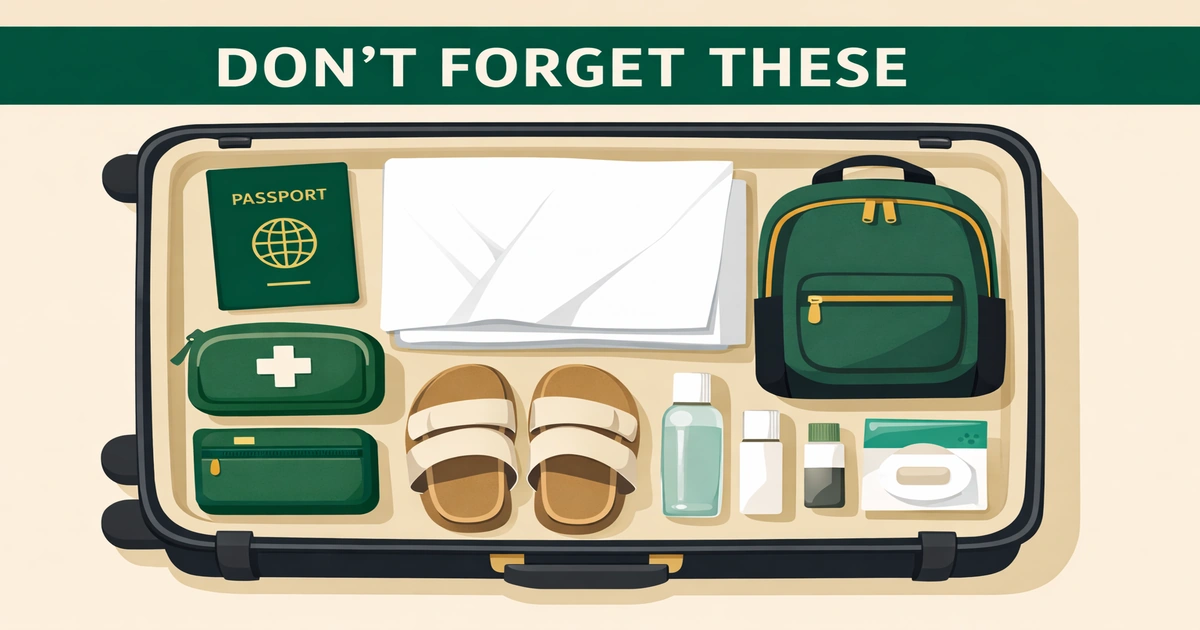
Hajj Packing List: 37 Essentials First-Time Pilgrims Should Not Forget
Hajj packing list answer first: pack your documents, two workable ihram sets, tested footwear, unscented toiletries, prescription medicine, and a small day bag for the hardest ritual days. Before you seal your bag, check the current health rules here: Hajj vaccine requirements 2026.
Pack for movement, not for your bedroom.
✅ TL;DR – hajj packing list
What to pack for Hajj? Start with passport, visa papers, vaccine proof, money, two ihram sets, comfortable sandals, unscented toiletries, medicines, phone gear, and a light Mina-Arafat-Muzdalifah bag. Most first-timers suffer from overpacking the suitcase and underpacking the small day bag.
A beautiful reminder for this topic is the Qur’anic command to prepare for the journey: “وَتَزَوَّدُوا فَإِنَّ خَيْرَ الزَّادِ التَّقْوَىٰ” — Wa tazawwadu fa-inna khayra az-zadi at-taqwa — “Take provisions, but the best provision is righteousness.”
🌙 A quiet reminder before you zip the bag
Packing matters. But Hajj is not a camping contest. You are not trying to carry your whole house to Makkah. You are trying to free your mind for worship, lower your stress, and protect your body from avoidable trouble.
What should you pack for Hajj?
What should you pack for Hajj? The short answer is this: carry your travel papers, vaccine proof, money, medicines, ihram basics, walking footwear, unscented hygiene items, simple worship tools, and a small ritual-day backpack. Think of your packing in three layers: hand luggage, main suitcase, and small Hajj day bag.
The short answer: documents, ihram, footwear, toiletries, medicines, and a small Hajj day bag
If you’re searching for what to pack for Hajj, don’t start with gadgets or fancy pouches. Start with the items that can stop your trip, protect your health, or make the rites easier. That is the heart of any real hajj checklist.
Your small Hajj day bag is like a lifeboat, not a wardrobe. It should carry only what helps you survive long hours in crowds, heat, and movement: water, tissues, a little food, medicine, and one or two backup clothing items.
What to keep in hand luggage vs checked baggage
The safest rule for any hajj travel checklist is simple: if losing it would ruin your first 24 hours, keep it with you. If it is replaceable and bulky, send it in the checked bag. And yes, I used to overpack cabin bags too.
📊 hand luggage vs checked baggage vs Hajj day bag
This is the one comparison most first-timers need. Use it as your quick hajj luggage checklist before departure.
🧳 Show Packing Table
| Bag | What belongs there | Why it matters |
|---|---|---|
| Hand luggage | Passport, visa papers, vaccine proof, wallet, phone, charger, one ihram set, basic medicines, glasses, hotel details | Covers delays, lost luggage, and miqat change needs |
| Checked baggage | Extra clothes, second ihram, toiletries, slippers, towel, spare shoes, laundry items, backup supplies | Stores bulk without weighing down your movement |
| Small Hajj day bag | Tissues, water bottle, snacks, blister care, simple medicine, spare sandals string bag, unscented wipes, ID copy | Helps on Mina, Arafat, Muzdalifah, and long crowded days |
What first-time pilgrims forget most
Most first-timers don’t forget the big suitcase. They forget the small rescue items that save the day when walking gets long, toilets are busy, and the sun gets hard.
- ID copies and one paper with hotel and group details
- Blister care before blisters actually happen
- Unscented wipes and tissues for crowded days
- A tested power bank, not a dead one from an old drawer
- Spare sandals bag for mosque entry and exit
- Simple snacks for delay, fatigue, or long transfers
Small items. Big relief.
Travel Essentials for Hajj
Travel essentials for Hajj come before comfort items. If your documents, money, or medical proof are missing, the rest of your bag becomes almost irrelevant. This part of your hajj travel documents list should be checked first, then checked again.
Passport, visa, tickets, hotel details, and emergency contacts
Your passport, visa paperwork, flight details, hotel confirmations, and emergency contact sheet should live together in one slim folder. Do not spread them across five different pockets like a treasure hunt. In a stressful airport moment, people forget what they themselves packed.
Carry one printed page with your full name, passport number, hotel name, group leader number, and one family emergency contact. When your phone battery drops, paper suddenly becomes clever.
📚 You Can Also Read: How to Register on Nusuk Hajj
Vaccination documents and medical papers
Keep your vaccination proof and any medical papers where you can reach them quickly. For Hajj 2026, Saudi guidance requires meningococcal vaccination for all pilgrims and adds extra polio or yellow fever rules for some travelers depending on country of origin or travel history.
If you take regular medicine, bring the prescription, the medicine in original packaging, and a short medical summary. Saudi guidance specifically advises pilgrims with chronic conditions to carry documentation and enough medicines while traveling.
Cash, bank cards, and a safe money pouch
Bring some Saudi riyals, a debit or credit card that works abroad, and a safe hajj money belt or waist pouch. Split money into two places. One main pouch. One backup amount tucked away separately.
Micro-scenario: if your main wallet goes missing after a long transfer, that backup money stops panic from taking over your day.
Hajj Documents Checklist
Your hajj documents checklist should be boring, neat, and impossible to mess up. Boring is good here. A calm pilgrim at the airport is usually the pilgrim who kept papers simple.
Passport copies, ID copies, and passport-size photos
Carry paper copies and phone copies of your passport, national ID if relevant, visa page, and a few passport-size photos. You may never use the extra photos. You will be very happy if you do need them.
Travel itinerary, booking confirmations, and group leader details
Save bookings offline and print them too. Your travel itinerary should include flights, hotel names, check-in details, bus or transfer notes, and your group leader’s number. That one-page summary can save an hour of confusion.
📚 You Can Also Read: Nusuk App for Hajj and Umrah
Prescription papers and medical history summary
If you have diabetes, heart issues, asthma, blood pressure issues, or any condition that could matter in heat or crowding, bring a short medical summary. Keep it plain: diagnosis, medicines, dose, allergies, and emergency contact. It should be readable in seconds, not written like a thesis.
Ihram and Clothing Checklist
A strong hajj ihram packing list is about comfort, coverage, and backup. Pilgrims often spend too much time choosing quantity and too little time choosing practical fabric, workable fit, and easy washing.
Ihram sets, belt, safety pins, and undershirt alternatives
Take at least two ihram sets for men so one can rest, dry, or replace the other if needed. Add a secure belt or pouch, a few safe fasteners if you use them, and whatever simple alternative helps you stay comfortable within the rules you follow. Test the setup before travel. Don’t discover your ihram problem in the middle of movement.
Loose clothes for non-ihram time
Outside ihram, pack loose, breathable, easy-to-wash clothes. Choose clothes that dry fast and don’t demand ironing. Hajj is not the week for complicated outfits. Your body will thank you.
Hajj packing list for men
Hajj packing list for men should focus on two or three priorities: workable ihram sets, comfortable non-ihram clothes, sandals that fit the rules for ihram, bathroom slippers, a shoe bag, underwear for non-ihram time, and one light layer if nights feel cool.
One beginner mistake I see a lot: buying brand-new sandals a few days before departure. Your feet then spend Hajj introducing themselves to pain.
📚 You Can Also Read: Niyyah for Hajj and Umrah
Hajj packing list for women
Hajj packing list for women should stay just as practical: loose abayas or other comfortable modest clothing, easy hijabs, underlayers as needed, comfortable walking shoes or sandals, personal care supplies, and a small system for keeping documents, phone, and money close without fuss.
Hajj packing list for ladies should not become a giant suitcase of “just in case” outfits. Pick comfort, repeat use, and easy laundry over variety.
Footwear and Walking Essentials
Your shoes can make your worship easier or make every step irritating. A wise hajj shoe bag essentials setup is not glamorous. It is simply tested, light, and kind to your feet.
Comfortable sandals for ihram
Choose comfortable sandals for Hajj that you have already worn. Good sandals should feel stable, not slippery, and should not rub harshly after long walking. If the first 30 minutes hurt at home, the fourth hour will be worse in Makkah.
Slippers for bathrooms and hotel use
Bathroom slippers deserve a real place in your hajj essentials list. Keep them separate from your main footwear. Wet bathroom floors and shared spaces are not the place for your walking sandals.
Sneakers for walking outside ihram
Pack sneakers for times when you are not in ihram and need better grip or support. They are especially helpful for long walks before or after ritual movement, and many pilgrims find them more forgiving on tired feet.
Toiletries and Hygiene List
Your hajj toiletries list should be small but thoughtful. The goal is not beauty-routine perfection. The goal is staying clean, comfortable, and less miserable in heat, sweat, and crowding.
Unscented toiletries for ihram
For ihram, keep a pouch of unscented toiletries for Hajj ready: unscented soap, unscented wipes, unscented tissues, and unscented toothpaste if you prefer to stay extra cautious with what touches your mouth and body. Prepare that pouch before travel so you do not have to think about it later.
Wet wipes, tissues, soap, toothbrush, and towel
These are not minor items. They are survival tools on hard days. Tissues, a small towel, toothbrush, soap, and wipes can rescue your comfort after sweat, dust, spills, or crowded facilities.
Micro-scenario: if water splashes over your sleeve and your bag has one small towel and wipes, the problem ends in two minutes instead of irritating you for half the day.
Personal care items to keep in your backpack
In your daily bag, keep tissues, wipes, lip care, any simple skin barrier item you normally use, hand cleaning supplies, and one small zip pouch for trash or wet items. This is the part many people ignore, then regret on the crowded days.
Medication and Health Essentials
Hajj medication checklist planning is not optional. It is one of the smartest parts of your whole hajj preparation checklist. People who treat medicine like an afterthought often end up suffering for preventable reasons.
Prescription medicines and how much to carry
Bring enough prescription medicine for the full trip, plus sensible extra days in case of delay, and keep it in original packaging with your prescription. Saudi 2026 guidance tells pilgrims with chronic conditions to carry medical documentation and enough medicine while traveling.
Pain relief, bandages, rehydration, and blister care
A practical hajj health essentials pouch usually includes pain relief, adhesive bandages, blister pads or tape, oral rehydration support, and any stomach or cold medicine you already know works for you. Keep it simple. This is not the week to experiment with mystery products.
Heat, chafing, and hygiene items many pilgrims need
Saudi and CDC guidance for Hajj travelers specifically highlights vaccinations, carrying medicines, and protecting against heat-related illness. Saudi guidance advises avoiding direct sun and drinking enough fluids, while CDC notes that heat-related illness can be deadly and that chafing during Hajj can lead to skin irritation or infection.
That means your real-world packing should include hydration help, sun protection, and something to reduce friction where your skin usually suffers. Inner thighs, underarms, and skin folds become problem zones fast in heat. My students always ask about this part because nobody thinks it is “spiritual” enough to discuss, but it matters.
📚 You Can Also Read: Hajj With Elderly Parents
Prayer and Worship Items
Hajj prayer essentials should help you worship, not turn your bag into a small library. Keep the worship kit light, familiar, and easy to use while tired.
Pocket Quran, dua list, and small guidebook
A pocket Qur’an, a short dua list, and a slim guidebook are enough for most pilgrims. Your dua list matters because tired people forget what their heart wanted to say. Write it in your own language too. Day of Arafat is not the moment to trust a sleepy memory.
Tasbeeh counter and notebook
A small tasbeeh counter or finger counter can help some people. A tiny notebook can also be surprisingly useful for dua points, locations, instructions, and phone numbers. Keep it small enough that you actually carry it.
Prayer mat: useful or unnecessary?
A prayer mat is helpful in some situations and unnecessary in others. If yours is light, foldable, and easy to carry, it can be useful outside busy indoor prayer spaces. If it is bulky, leave it. Hajj rewards sensible choices too.
Electronics Checklist
Your hajj electronics checklist should protect communication, navigation, and battery life. Nothing more. Too many electronics create weight, stress, charging problems, and one more thing to lose.
Phone, charger, power bank, adapter, and cables
Your phone, wall charger, power bank, plug adapter if needed, and one reliable cable matter more than almost any other tech. Test them before travel. A dead power bank is just a brick with good marketing.
SIM, battery backup, and offline maps
Set up your SIM plan early if possible, store essential numbers, and save offline maps and hotel details. This is part of real hajj cabin bag essentials planning because connectivity problems feel bigger when you are tired and separated from your group.
📚 You Can Also Read: STC SIM for Hajj and Umrah
What electronics to leave at home
Leave behind anything bulky, expensive, or unnecessary: extra cameras, spare gadgets you never normally use, and heavy devices that turn your bag into a burden. Most pilgrims need less tech than they think.
Mina, Arafat, and Muzdalifah Packing List
Your mina arafat muzdalifah packing list should be built for long hours, crowding, movement, heat, and basic needs. This is the real test of whether your hajj bag essentials are wisely chosen.
What to carry in your small Hajj backpack
Carry tissues, wipes, water, simple snacks, one light medication pouch, phone, power bank, identification copy, and one very small clothing backup as needed. Your bag should feel like help, not punishment.
Tissues, water bottle, snacks, medicine, and spare ihram items
This is where beginners usually underpack. A spare strap, clip, or simple ihram backup item can save embarrassment and stress. Water and a few small snacks can also protect your mood more than people admit.
Light items that make crowded days easier
Think light: shoe bag, tissues, wipes, small towel, extra socks for non-ihram time, lip care, and a compact bag for trash or used items. Light items seem silly until the day becomes hard. Then they feel like mercy.
📚 You Can Also Read: Mina in Hajj
Hajj Packing List for First-Time Pilgrims
A real first time hajj packing list is not about packing more. It is about packing smarter. Beginners usually fear forgetting something, so they throw extra weight at the problem. That is understandable. It is also a mistake.
Pack light without missing essentials
The best simple hajj packing list for beginners follows one rule: every item should earn its place. Ask, “Will this help my health, movement, hygiene, documents, or worship?” If not, it probably stays home.
What to buy in Saudi instead of packing from home
Some replaceable basics can often be bought after arrival, such as extra tissues, water, simple snacks, slippers, or laundry basics. Save your suitcase space for hard-to-replace items like documents, medicine, tested footwear, and your preferred unscented items.
Common packing mistakes beginners make
Mistake 1: Packing too many clothes and too little medicine. Fix: cut clothing volume, protect health basics.
Mistake 2: Bringing new sandals. Fix: wear them in before travel.
Mistake 3: Putting ihram in checked baggage only. Fix: keep one set in hand luggage.
Mistake 4: Ignoring the small day bag. Fix: build it first, then the suitcase.
Mistake 5: Carrying scented items without thinking. Fix: prepare an unscented pouch early.
One brother told me after his first Hajj that he had packed like he was moving house. He had extra clothes, extra gadgets, extra everything, but no blister care and no backup wipes. By the second hard day, his bag looked rich and his feet looked miserable. He later repacked half his things into one corner and said, “I should have packed for the walk, not for the mirror.” That sentence has stayed with me because it is exactly what first-timers do wrong.
Hajj Packing List for Elderly Pilgrims
Hajj packing list for elderly pilgrims should be gentler, simpler, and more health-focused. Here, comfort is not a luxury. It is part of safe planning.
Medicines, mobility items, and cooling essentials
Older pilgrims often need medicine access, mobility support, sun protection, hydration reminders, and easier clothing changes. Keep the most important items within easy reach, not buried deep in a suitcase under towels and snacks.
Easy-to-carry comfort items worth packing
Useful comfort items can include a light neck pillow for travel, extra tissues, simple skin-care basics, a soft towel, a foldable seat aid if already used, or a clearly labeled medication pouch. Choose comfort items that truly reduce stress, not random “helpful” purchases.
Extra documents and emergency planning
For elderly pilgrims, keep extra ID copies, medicine lists, allergy details, doctor notes if relevant, and a written family contact sheet. If an older pilgrim is traveling with support, both people should carry copies.
Final Hajj Travel Checklist Before Leaving Home
The final check is where your hajj suitcase checklist becomes real. This part should feel calm and mechanical, not emotional and chaotic.
What to check 1 week before departure
- Check documents — passport, visa, bookings, vaccine proof, ID copies
- Check medicines — enough quantity, prescription papers, original boxes
- Check footwear — sandals tested, slippers packed, backup pair ready
- Check electronics — phone, charger, adapter, power bank, saved numbers
- Check ihram kit — one for hand luggage, one for main bag
- Check weight — remove anything heavy and non-essential
What to check the night before your flight
Put your passport folder, wallet, phone, charger, glasses, one ihram set, medicines, and hotel details in your hand luggage. Lay out your travel clothes. Sleep early if you can. A tired start makes small mistakes bigger.
Last-minute items people forget
- Phone charger
- Paper emergency contacts
- Prescription copy
- One spare zip pouch
- Unscented wipes
- Glasses or backup glasses
FAQs About Hajj Packing List
📘 hajj packing list FAQs
What to pack for Hajj for first-time pilgrims?
Show Answer
Start with the core: passport, visa papers, vaccine proof, money, one hand-luggage ihram set, tested footwear, unscented toiletries, medicines, and a small Hajj day bag. That is the backbone of any first time hajj packing list.
What documents should I carry for Hajj?
Show Answer
Carry your passport, visa or Hajj travel approval papers, vaccine proof, booking confirmations, itinerary, emergency contacts, and paper copies of key documents. If you take regular medicine, add prescription papers too.
What toiletries are allowed in ihram?
Show Answer
For a beginner-safe approach, keep an unscented toiletries for Hajj pouch ready: unscented soap, tissues, wipes, and other simple hygiene items you plan to use during ihram.
What should I pack for Mina, Arafat, and Muzdalifah?
Show Answer
Your mina arafat muzdalifah packing list should include tissues, wipes, water, snacks, simple medicine, phone, power bank, ID copy, and a few light backup items. Keep it light enough to carry for hours.
How many ihram sets should I take for Hajj?
Show Answer
For most men, two ihram sets are a sensible minimum: one available in hand luggage and one backup in the main bag. That gives you room for washing, drying, or unexpected issues.
What shoes are best for Hajj?
Show Answer
The best shoes are the ones you have already tested. For ihram, many pilgrims prefer comfortable open sandals. For non-ihram walking, supportive sneakers can help on longer days.
Should I keep ihram in cabin baggage?
Show Answer
Yes. One ihram set in hand luggage is a smart move. If checked baggage is delayed, you are still covered.
Can I buy missing items in Saudi Arabia instead of packing everything?
Show Answer
Often, yes for simple replaceable items like tissues, snacks, or slippers. But do not risk it with documents, medicine, tested footwear, or your preferred unscented products.
What medicine should I carry for Hajj?
Show Answer
Carry your prescription medicines with papers, plus simple basics you already know suit you, such as pain relief, blister care, and hydration support. Keep the medical pouch easy to reach.
What should elderly pilgrims add to a Hajj packing list?
Show Answer
Add clearly labeled medicines, extra ID copies, doctor notes if needed, hydration support, comfort items, and a simpler bag system. Elderly packing should reduce effort, not increase it.
Hajj Packing List Essentials for Travel, Health, and Daily Use

Related Articles
Nusuk Hajj Packages Explained — good for readers comparing package structure before they pack Authorized Hajj Service Providers — useful for readers checking provider legitimacy Nusuk Hajj Eligible Countries 2026 — helpful for country-based planning pages Mount Arafat — strong support link for Arafat prep and expectations Muzdalifah — useful companion link for ritual-day packing context Rami al-Jamarat — useful for footwear and movement-related packing advice What Are Fard, Wajib, and Sunnah of Hajj? — good for readers who want ritual priority after packing Hajj 2026 Pakistan Registration — useful geo-targeted internal support page
Farrukh Farooqi has been living in Sharaya, Makkah, Saudi Arabia since 2010. With over 14 years of firsthand experience witnessing the sacred journey of millions of pilgrims, Farrukh specializes in providing practical, insider tips for Hajj and Umrah travelers. His work blends real-world observations, the latest Saudi updates, and essential crowd management strategies — helping pilgrims and worshippers plan smarter, stay safer, and experience a spiritually fulfilling journey across the Holy Cities.


