
Jannat al-Mu’alla: The Sacred Cemetery of Makkah’s Most Beloved Souls
Jannat al-Mu’alla isn’t just an old graveyard in Makkah — it’s the burial place of the first heartbeats of Islam. If you walk along its narrow border today, you’re more than just amidst the past.
You’re standing in the echo of the Prophet’s (PBUH) family and the people who have shaped his life, adored the Prophet, and stood by his side before the world heard his name.
✅ TL;DR – Jannat al-Mu’alla Overview
Jannat al-Mu’alla is Islam’s second most sacred cemetery, following Jannat al-Baqi. However, many people do not realize the full extent of its spiritual and historical significance. It is located just to the north of Masjid al-Haram; it quietly houses the remains of highly revered figures, for example, Khadijah (RA), the Prophet’s (PBUH) first wife and his unwavering ally, his grandfather Abdul Muttalib, and his courageous uncle Abu Talib. They were not just family, but they were the basis of his childhood and his mission.
At one time, the graves were beneath beautiful domes and marked tombstones that served as beacons to generations of pilgrims. However, in 1925, the cemetery was demolished of all architectural features in an extensive demolition campaign supervised under the current Saudi regime. The reason for this was based on religious reforms that sought to reduce grave veneration.
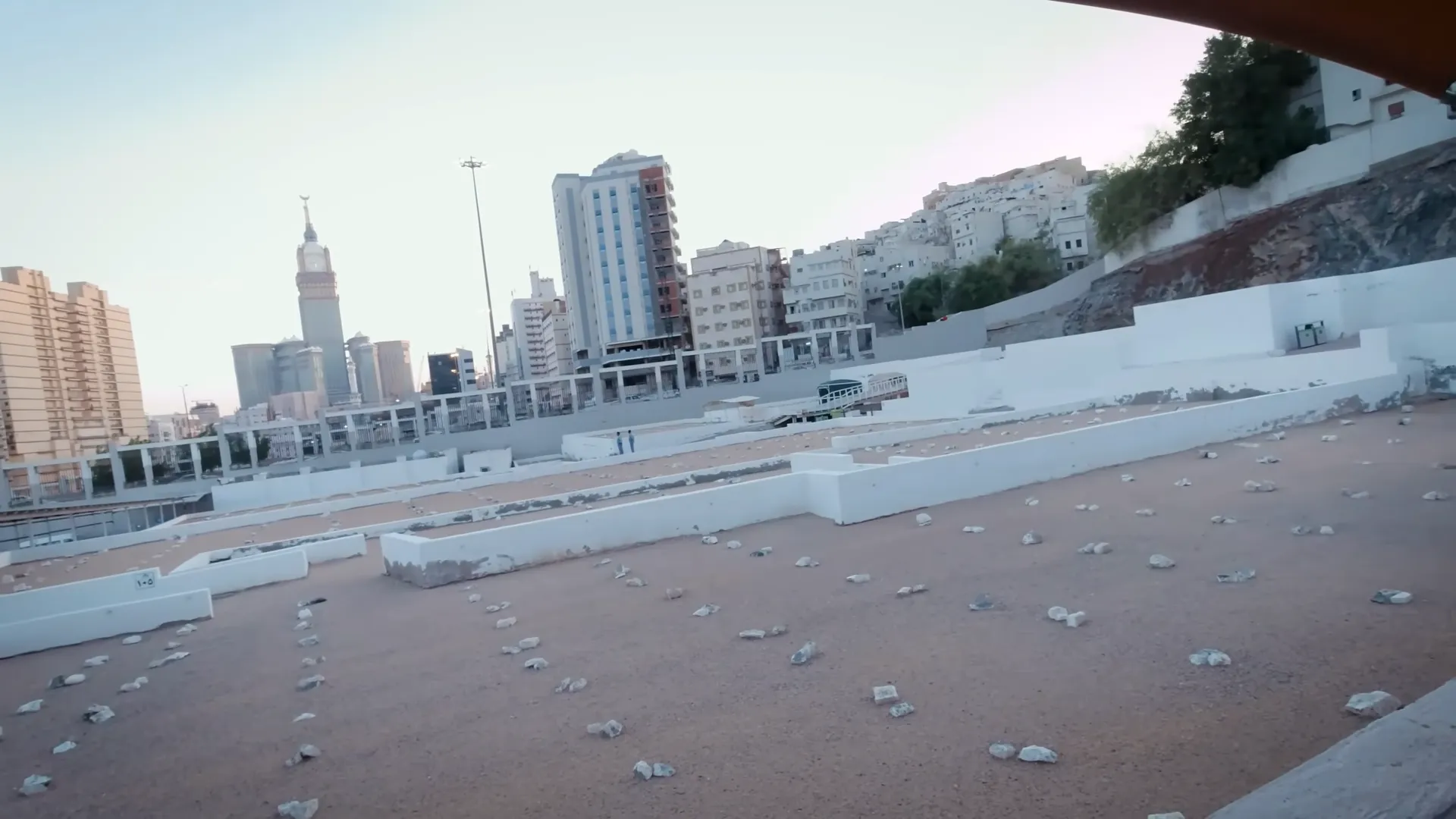
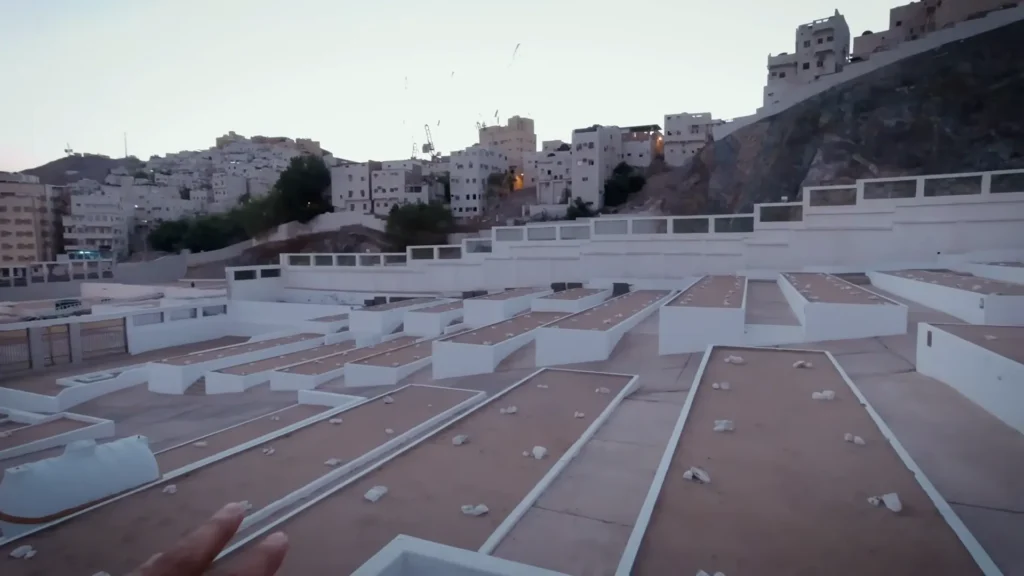
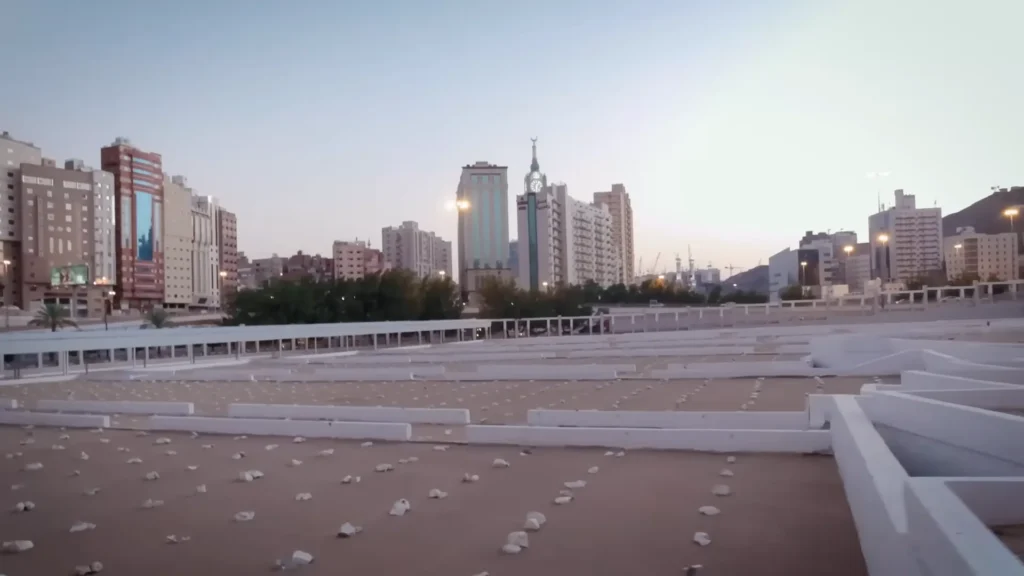
A white wall surrounds the area. Only a few stones mark the place where these cherished people are now laid to rest. Despite its simplicity, or maybe because of it, the place is a shaky weight. Tourists from all over the world still come to the site, many who cry, to walk through the sand, which is the source of many a piece of history. There is a calming silence; it’s not a roar but speaks softly to your soul.
The experience of visiting Jannat al-Mu’alla is not just a place to visit for culture. It’s an emotional journey through the earliest roots of Islam and an opportunity to remind ourselves that sacrifice, love, and faith will never be forgotten.
Why Jannat al-Mu’alla Still Matters Today
Let’s face it. Amid Hajj or Umrah, many pilgrims ignore Jannat al-Mu’alla, believing it’s a fenced-off zone within the city. It’s not far from the reality. This is the most sacred cemetery, the place where the Prophet Muhammad’s (PBUH) most beloved family members were laid to rest -those whose lives shaped the early days of Islam.
Khadijah bint Khuwaylid, the Prophet’s (PBUH) first and most beloved wife, is resting here. She wasn’t just a wife. She was his anchor of emotion, his very first friend, and the first person to believe in him after he fell trembling from the Cave of Hira. Her grave once stood beneath a stunning dome but was destroyed in the 1925 demolition. However, the ground still holds her footprint.
Just beside her is Qasim, the son of their family who passed away in the infant stage. Not far away is Abdullah, another one of the children of the Prophet (PBUH), affectionately known as al-Tahir or al-Tayyib. There’s also Abu Talib, the uncle who guarded the Prophet (PBUH) with ferocity even though the Quraysh were against him. We should not forget Abdul Muttalib, the grandfather who nurtured his son with dignity and love after he was orphaned.
If you are standing by the white wall, don’t just walk by. Pause. Breathe. Reflect. It’s where the foundations of faith are laid to rest, where sacrifice, love, and loyalty rest in peace and dignity. No signs, no domes, and no noise. Pure legacy.
Historical Significance of Jannat al-Mu’alla
A Sanctuary Before Islam
Jannat al-Mu’alla has been a sacred place for centuries before the dawn of Islam came over Makkah. Its reputation as a burial ground of utmost importance goes back to pre-Islamic Arabia when the inhabitants of Makkah were already devoted to it. They believed that the valley connected to their ancestral lineage and tribal honor, which made burial here a symbol of respect and dignity.
It wasn’t just a piece of land but an area where the city’s heart was respected. When Islam was introduced, that quiet reverence grew into something more. The Prophet Muhammad’s (PBUH) grandparents were buried in the area, which anchored the place in both a spiritual and emotional tradition. That deep history gives Jannat al-Mu’alla a unique character. It’s not just a cemetery but a thread in the web of early Islamic identity.
While many modern-day visitors pass by without knowing the whole history, historians and scholars consider it one of the most ancient cemeteries continuously maintained throughout the Islamic world. Its legacy isn’t just in the people buried there but in how people have seen it. This wasn’t a random choice for burial. Jannat al-Mu’alla was always intended to carry the weight of memories. The respect it earned before Islam was only amplified after the revelation, making it an ordinary graveyard to an eternal representation of faith and enduring.
The Year of Sorrow
Jannat al-Mu’alla is where the heartbreak of Prophet Muhammad (PBUH) was written into the sands of the past, in one year of utter devastation that he was betrayed by two of the most beloved individuals in his life: his adored wife Khadijah and his guardian uncle Abu Talib.
This time in history is called the Year of Sorrow, and its emotional significance is hard to ignore. When pilgrims go to their burial places today, they’re not just paying tributes. They follow the Prophet’s journey through loss, grief, and unwavering pity. Khadijah, his first ally and the first to accept Islam, was more than just a wife.
She was his strength when the world was doubting him. Her grave is buried in Jannat al-Mu’alla, an ominous reminder of love that remained strong in the face of opposition from others. Just a few steps away lies Abu Talib, who, despite not having acknowledged Islam publicly, protected his nephew from danger until his death. His devotion to the Prophet gave him breathing room and space to speak and to live.
When you are standing close to these two graves, You can feel the pain of the Prophet’s loneliness after his departure. In the same place, you can feel the emergence of his power. Jannat al-Mu’alla isn’t just a cemetery. It’s a silent witness to one of the most difficult and spiritually significant chapters of the life of Prophet Muhammad.
Ottoman Structures and the 1925 Demolition
In the Ottoman era, several notable graves at Jannat al-Mu’alla were decorated with elaborate domes and tombs. Pilgrims would gather to pray or reflect and occasionally even hold Mawlid celebrations. The situation changed in 1925 when the tombs of pilgrims were lowered according to the Wahhabi interpretation of Islam. The destruction was a source of great sorrow, particularly in Shia Muslims, who still grieve the loss at the annual commemorations referred to as Yaum-e-Gham -which is the Day of Sorrow.
What’s left is a humble. An unpainted wall. Plain ground. Yet the power hasn’t waned. For many, it’s more sacred, not cluttered by monuments and adorned by memories.
Notable Figures Buried in Jannat al-Mu’alla
Here are a few of the most important individuals that are buried in Jannat al-Mu’alla:
- Khadijah bint Khuwaylid – Wife of Prophet Muhammad (PBUH)
- Abdul Muttalib – Grandfather of the Prophet (PBUH)
- Abu Talib – Uncle and protector of the Prophet (PBUH)
- Qasim & Abdullah – Sons of the Prophet (PBUH)
- Asma bint Abu Bakr – The daughter and companion of Abu Bakr
- Abdullah Ibn al-Zubayr – Early Muslim leader
- Abd al-Rahman ibn Abu Bakr – The son of Abu Bakr, an early warrior
- Attab Ibn Asid – A young governor who was appointed by the Prophet (PBUH)
- Imdadullah Muhajir Makki – Indian Sufi scholar and author of “Faisla Haq”
- Muhammad Alawi al-Maliki – Famous Sunni scholar from the 20th century.
- Abu Turab al-Zahiri – Saudi clergyman who influences the Gulf
- Rahmatullah Kairanwi – Indian scholar known for interfaith dialogue
- Mulla Ali Qari Herawi is a renowned figure for her Tafseer, Fiqh, and Hadith works
- Ahmad Mashhur al-Haddad – Yemeni scholar active across Africa and Arabia
- Sheikh Ismail Mahamud Cigaal – Respected Somali Islamic scholar
- Qasim ibn Muhammad – Eldest son of the Prophet (PBUH)
- Abdullah ibn Muhammad – Youngest son of the Prophet (PBUH)
- Qusayy Ibn Kilab – The great Ancestor of the Prophet (PBUH)
- Hashim ibn Abd Manaf – the founder of the Hashemite clan
- Abd Manaf ibn Qusayy – Great-great-grandfather of the Prophet (PBUH)
Quick Reference Table of Prominent Graves
🕋 Notable Figures Buried in Jannat al-Mu’alla
| Name | Relationship to Prophet (PBUH) | Notable Contribution |
|---|---|---|
| Khadijah bint Khuwaylid | Wife | First believer, supporter of Islam |
| Abdul Muttalib | Grandfather | Leader of Quraysh, raised the Prophet |
| Abu Talib | Uncle | Protected the Prophet in Makkah |
| Qasim & Abdullah | Sons | Passed in childhood |
| Asma bint Abu Bakr | Companion | Early Muslim, supporter of Hijrah |
| Abdullah ibn al-Zubayr | Nephew of Aisha | Led resistance against Umayyads |
| Abd al-Rahman ibn Abu Bakr | Son of Abu Bakr | Fought in key battles of early Islam |
| Attab ibn Asid | Governor | Appointed as first governor of Makkah |
| Muhammad Alawi al-Maliki | Scholar | Influential 20th-century Sunni cleric |
How to Visit Jannat al-Mu’alla
Jannat al-Mu’alla is approximately a 15-minute walk away from Masjid al-Haram. If you’re departing from the Marwa Gate, walk past the birthplace of the Prophet (PBUH) and continue under the flyover. Before getting to the cemetery, you’ll go by Masjid al-Shajarah and Masjid al-Jinn.
Taxis will be charged between 10 and 15 SAR. The road is longer due to one-way streets, but it’s still just 10 minutes. Men are permitted inside; women can stand and look from the road.
You Can Also Read
- Jabal Abu Qubais: Sacred History, Hidden Stories & Spiritual Significance
- Mountains in Makkah: Sacred Peaks, Stories & Visitor Guide
- Jabal Thawr 2025 Guide: Cave of Refuge, Miracles & Visitor Tips
- Holy Sites in Makkah: 2025 Guide to Sacred Places Every Pilgrim Should Visit
- Tomb of Prophet Muhammad صلى الله عليه وسلم: Hidden Facts, History & Sacred Significance (2025 Guide)
Jannat al-Mu’alla FAQs: Real Answers to What Pilgrims Ask Most
❓ Frequently Asked Questions – Jannat al-Mu’alla
What exactly is Jannat al-Mu’alla, and why is it important in Islam?
It’s an important cemetery in Makkah, known as the burial place of Khadijah (RA) and several family members of the Prophet (PBUH). It’s considered the second most sacred Islamic graveyard after Jannat al-Baqi.
What is the burial place in Jannat al-Mu’alla?
Notable burials include Khadijah bint Khuwaylid, Abdul Muttalib, Abu Talib, Qasim and Abdullah, Asma bint Abu Bakr, and others.
Where exactly is Jannat al-Mu’alla located?
Just north of Masjid al-Haram, near Masjid al-Jinn, about a 10-minute walk from the Grand Mosque.
Can women enter Jannat al-Mu’alla?
No, but they can view it respectfully from the roadside that overlooks the cemetery.
Why were the tombs in Jannat al-Mu’alla destroyed?
In 1925, the tombs were demolished under Ibn Saud’s orders due to Wahhabi views opposing shrine construction, similar to Jannat al-Baqi.
Is there a cost to visit Jannat al-Mu’alla?
No, it’s free to access and open all year.
How do I reach Jannat al-Mu’alla from Masjid al-Haram?
Walk north past the Marwa Gate and Masjid al-Jinn. It’s midway along the white-walled area beside the road.
Are any of the Prophet’s companions buried there?
Yes, companions like Asma bint Abu Bakr, Abdullah ibn al-Zubayr, and Attab Ibn Asid are buried there.
What makes Jannat al-Mu’alla different from Jannat al-Baqi?
Jannat al-Mu’alla is in Makkah and holds the Prophet’s family; Jannat al-Baqi in Madinah became the primary cemetery after the Prophet’s time.
Is it okay to make du’a at Jannat al-Mu’alla?
Yes, many scholars support reciting du’a for the deceased at sacred burial sites like this one.
What is the name of this famed graveyard in Makkah?
It’s called Jannat al-Mu’alla, also known as Al-Hajun, the final resting place of Khadijah and others close to the Prophet (PBUH).
Who is buried in Jannat al-Mu’alla?
Khadijah, Abdul Muttalib, Abu Talib, Qasim, Abdullah, Asma bint Abu Bakr, early scholars, and martyrs of Islam.
Where is Jannat al-Mu’alla?
It’s in Makkah, about a 15-minute walk north of Masjid al-Haram, near Masjid al-Jinn.
Where is Khadijah buried?
Sayyidah Khadijah (RA) is buried in Jannat al-Mu’alla, beneath what was once a dome, removed in 1925.
What exactly is Jannat al-Mawa?
Jannat al-Mawa refers to a garden in Paradise mentioned in the Qur’an. It’s not the same as Jannat al-Mu’alla.
What is the distance between Jannat al-Mu’alla and Masjid al-Haram?
Roughly 1 kilometer away. It’s about 10–15 minutes on foot or under 10 minutes by car.
Can I find pictures of Jannat al-Mu’alla?
Yes, but most show the white outer wall and surrounding area due to the absence of marked graves and religious restrictions.
Is there an Urdu story about Jannat al-Mu’alla?
Yes. Many Urdu books and websites detail its early significance, demolition, and the honored people buried there.

Farrukh Farooqi has been living in Sharaya, Makkah, Saudi Arabia since 2010. With over 14 years of firsthand experience witnessing the sacred journey of millions of pilgrims, Farrukh specializes in providing practical, insider tips for Hajj and Umrah travelers. His work blends real-world observations, the latest Saudi updates, and essential crowd management strategies — helping pilgrims and worshippers plan smarter, stay safer, and experience a spiritually fulfilling journey across the Holy Cities.


