
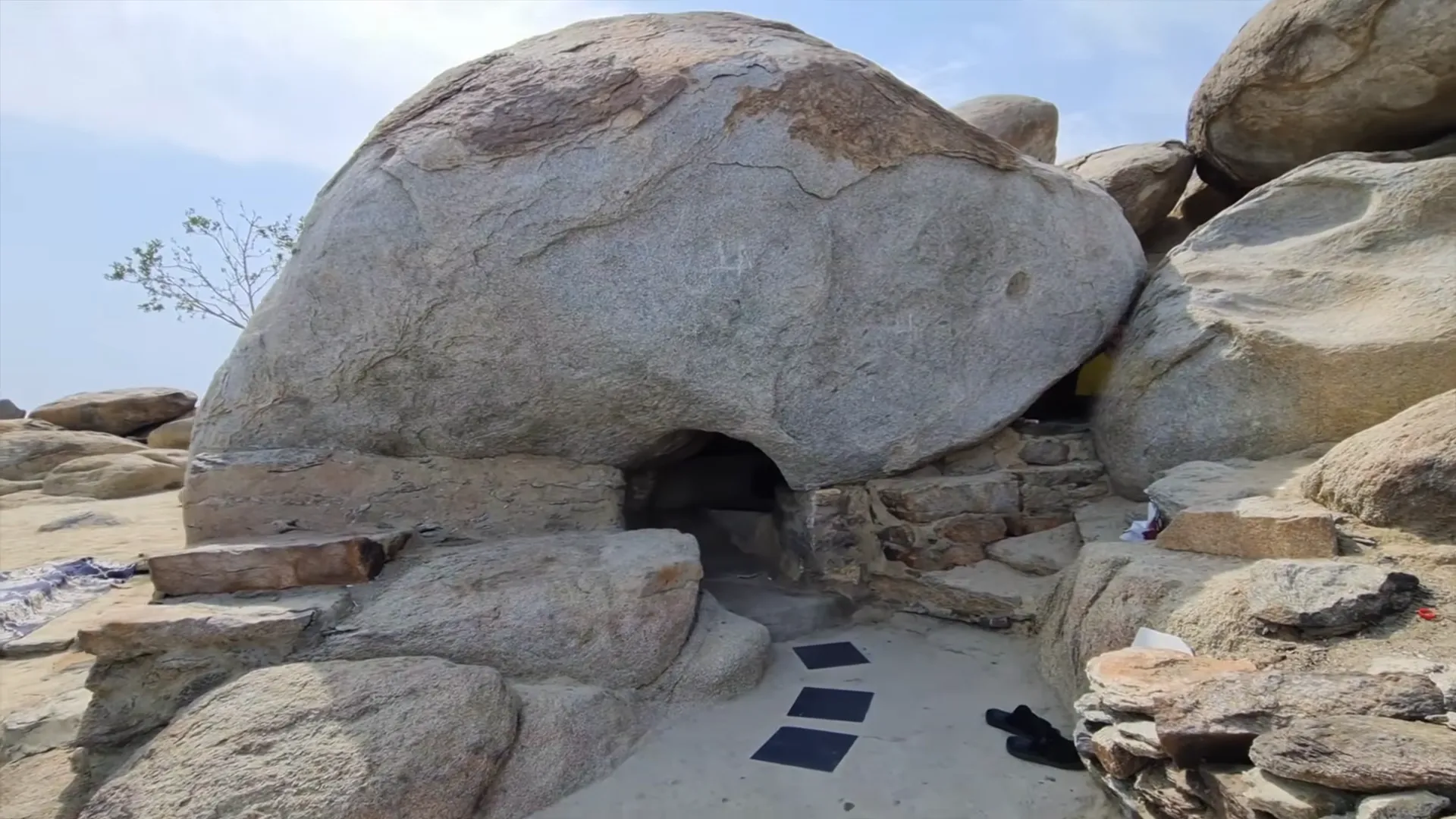
Jabal Thawr 2026 Guide: Cave of Refuge, Miracles & Visitor Tips
🟧 TL;DR – Jabal-e-Thawr
Jabal-e-Thawr is a revered mountain in the south of Makkah, known for its sacred Cave of Thawr where Prophet Muhammad ﷺ and Abu Bakr (RA) hid during the historic Hijrah journey to Madinah. Allah protected them with miraculous signs — a spider’s web and a dove’s nest covering the entrance — confusing the Quraysh assassins sent to kill them.
Though not part of the Hajj rituals, Jabal-e-Thawr remains a powerful Ziyarat destination and symbol of faith, reliance on Allah, and patience in hardship. In 2026, upgraded visitor paths and preservation efforts make it more accessible while protecting its legacy. To stand before this cave is to feel history — not just observe it.
Let’s be honest, not every mountain tells a story that stirs your heart. But Jabal Thawr (جبل ثور)? That place holds something different. Something raw. You feel it the moment you look up at its jagged path cutting into the sky just south of Makkah. It’s not just another rocky hill, it’s a symbol of faith under fire.
What is Jabal Thawr? (The Story That Changed Everything)
So here’s the thing. You’ve probably heard people talk about the Hijrah, the migration of Prophet Muhammad ﷺ from Makkah (مكة المكرمة) to Medina. It’s recited in classrooms, khutbahs, and lectures across the world. It marked the beginning of the Islamic calendar, the transformation of a persecuted group into a thriving Ummah.
But most people don’t realise that the most critical turning point didn’t happen when the Prophet ﷺ arrived in Medina (المدينة المنورة). It happened before He even left the outskirts of Makkah. And it happened not in motion, but in stillness in a cave called Ghar Thawr (غار ثور), nestled inside the rugged folds of Jabal Thawr.
Located approximately 4 kilometres south of Masjid al-Haram, Jabal Thawr towers over the dry Makkah valley at about 750 metres high. It’s not an easy climb. The trail is steep, rocky, and exposed to harsh desert sun. There are no official guides, no polished signs, no shortcuts. And that’s not a flaw. That’s the essence of it. This wasn’t a site chosen for convenience or comfort. This was a place of hiding, silence, and absolute dependence on Allah. You don’t stumble upon Jabal Thawr by accident.
You go there on purpose, and with purpose. The Prophet ﷺ didn’t choose it randomly. He and Abu Bakr (RA) went south, away from the expected route to Medina, in a brilliant move to confuse the Quraysh (قريش) trackers. Everyone assumed He would head directly north. Instead, he delayed his journey and took shelter in the very last direction his enemies would expect inside this raw, jagged mountain.
And that’s what makes Jabal Thawr such a pivotal part of the Hijrah. Not just because it was a physical hiding spot, but because it was a spiritual battlefield. It’s where fear and faith collided. It’s where the Prophet ﷺ and Abu Bakr (أبو بكر) (RA) chose to sit quietly for three days and three nights, trusting that Allah would protect them while the Quraysh scoured the desert like wolves on a hunt.
The cave inside Jabal Thawr wasn’t spacious. It wasn’t designed for comfort. It was dark, tight, and uncomfortable. But it became a shield because of their trust. It became a lesson because of their patience. And it became history because of what it symbolised that when you have sincere tawakkul, Allah sends His protection in forms no one would expect, not even spiders and doves.
Today, Jabal Thawr isn’t just a mountain. It’s a memory carved into the soul of Islam. A monument of trust, strategy, sacrifice, and stillness. And if you ever climb it, your legs might ache, your breath might shorten, but your heart will understand something words can’t quite explain. This mountain held a miracle. And somehow, that miracle still echoes in the silence at the top.
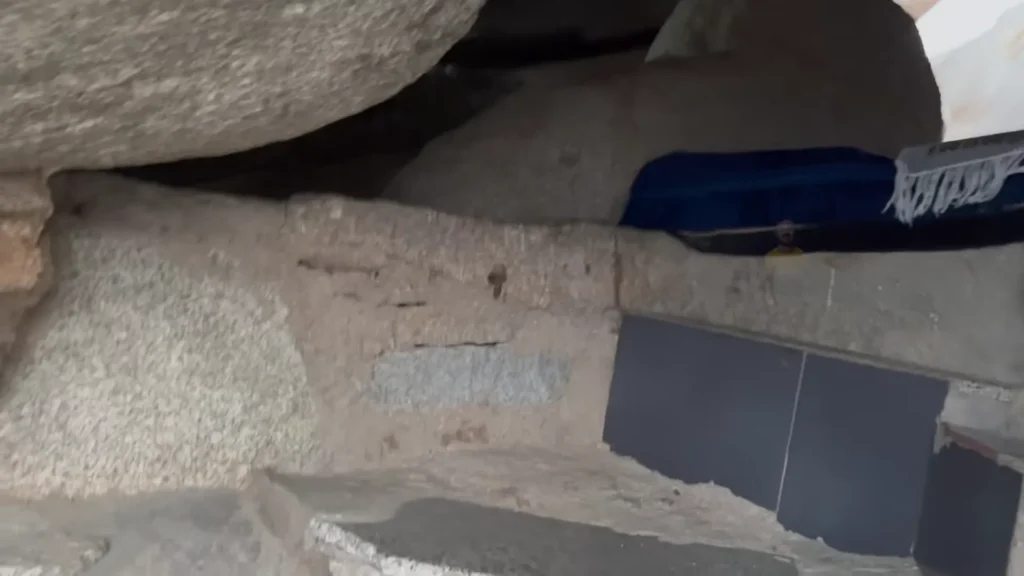
Why Did the Prophet ﷺ Choose This Cave?
Here’s what most people miss: Jabal Thawr wasn’t located anywhere near the typical route to Medina. In fact, it was positioned in the completely opposite direction. While the logical path for anyone escaping from Makkah would’ve been a straight northern track toward Yathrib, the old name for Medina, the Prophet ﷺ deliberately turned southward, toward a place that looked like a dead end.
That decision wasn’t based on fear or panic. It was pure strategy. Calm, intentional, and divinely inspired. The Prophet ﷺ knew that the Quraysh, in their fury, would expect him to rush toward his companions in Medina. They’d place scouts and spies along the northern roads. They’d send horsemen galloping ahead to block him from reaching safety. So he did the unexpected. He went where no one thought to look.
Jabal Thawr, rising sharply in the southern edges of Makkah, wasn’t an easy hiding place. It required climbing, effort, and exposure. But it offered one critical advantage: time.
Time to let the heat of the pursuit die down. Time to plan the next move. Time to trust in Allah while the storm raged outside. And inside its cave, Ghar Thawr, the Prophet ﷺ and his loyal companion Abu Bakr (RA) found that sliver of safety they needed. Not because it was hidden well, but because Allah Himself protected it.
Now think about that. The most important man in Islam, the final Messengerﷺ, could have asked for anything. A horse. An army. A protective caravan. But instead, he quietly climbed a mountain with one friend, hid in a dark cave, and waited with complete faith that help would come.
And help did come, in the most subtle way imaginable. As the Quraysh drew near, with weapons in hand, Allah commanded a spider to spin a web across the cave’s mouth. Not long after, a dove flew down, built a nest, and laid its eggs right at the entrance. To any enemy tracker, this was clear proof that no one had entered the cave in days. So they turned back.
That’s the brilliance of it. The Prophet ﷺ didn’t run. He outsmarted. He didn’t panic. He planned. He didn’t rely on muscle. He relied on trust. Choosing Ghar Thawr wasn’t a desperate last-minute decision. It was a masterstroke that turned a cave into a stronghold.
And that moment that silence behind a spider’s web changed the course of history. If you’ve ever felt surrounded, like every option is blocked, the story of why the Prophet ﷺ chose this cave reminds you: sometimes the path to victory starts by stepping in the opposite direction of where fear expects you to go.
The Role of Abu Bakr (RA)
If you’ve ever had a friend who would go through fire for you, someone whose loyalty doesn’t need to be proven because it already lives in their action, that’s the kind of friendship Abu Bakr al-Siddiq (RA) had with the Prophet Muhammad ﷺ. This wasn’t just companionship.
This was devotion born out of sincerity, trust, and love that ran deeper than words. When the Prophet ﷺ decided to hide inside the Cave of Thawr, it wasn’t just a tactical move. It was a moment that demanded complete reliance, and Abu Bakr (RA) stood ready not behind, not beside, but ahead.
He didn’t wait to be told what to do. He took the lead. As they arrived at the cave, Abu Bakr (RA) immediately entered first to make sure it was safe for the Prophet ﷺ. There were no flashlights, no guide ropes, no clean stone paths. Just raw earth, sharp rocks, and hidden threats in every dark corner. One by one, he searched the cave with his hands, feeling along the ground, the walls, and the cracks. He found holes in the stone and tore parts of his own clothes to plug them, not because someone told him to, but because he couldn’t bear the thought of anything harming the Prophet ﷺ, not even a hidden insect or breeze of cold air.
But in his carefulness, one hole went unnoticed. And in that hole, a snake waited.
When it struck, the pain was instant. Deep. Burning. But Abu Bakr (RA) didn’t cry out. He didn’t jump or shake. He didn’t even shift his leg.
Because at that moment, the Prophet ﷺ was resting, his blessed head gently placed on Abu Bakr’s lap. And waking him? That wasn’t an option. Even in the grip of that venom, his focus wasn’t his own suffering, it was the Prophet’s ﷺ safety.
The pain became unbearable. Silent tears rolled down his face, not from weakness, but from the silent choice to bear pain so that his beloved ﷺ could sleep in peace. And those tears, those drops of pain, gently landed on the Prophet’s ﷺ blessed cheek, waking him.
When the Prophet ﷺ looked up and saw Abu Bakr’s face, contorted in silent agony, He (PBUH) asked what had happened. Abu Bakr quietly explained, and what happened next is a moment that has been remembered for over a thousand years. The Prophet ﷺ touched the wound with his saliva, and by the will of Allah, the pain was gone. Just like that. The bite. The venom. The burning. Gone.
This wasn’t folklore. It wasn’t exaggerated for drama. It was real. It was witnessed. It was recorded. And to this day, it remains one of the most profound examples of sacrifice, loyalty, and love in Islamic history.
When we talk about Abu Bakr (RA) being the best of companions, we don’t just say it because of his titles or lineage. We say it because of this. Because he lived it. Because in a dark cave, in a moment no one else saw, he proved it not with words, but with pain that he chose to endure in silence, out of love for his Prophet ﷺ.
Ghar Hira vs Ghar Thawr – What’s the Difference?
| Feature | Ghar Hira (Jabal al-Nour) | Ghar Thawr (Jabal Thawr) |
|---|---|---|
| Location | North-east of Makkah | South of Makkah |
| Altitude | ~600m | ~750m |
| Key Event | First Quranic revelation | Refuge during Hijrah |
| Prophet’s Companion | None | Abu Bakr (RA) |
| Number of Days Spent | Short moment | Three days and nights |
Ghar Hira was about receiving the message. Ghar Thawr was about protecting the Messenger.
The Cave of Thawr: Night by Night Breakdown
Okay, so what really happened inside that tight, dark cave? Let’s walk through it night by night.
Day One – The Disappearance
The Prophet ﷺ left Ali (RA) in his place in Makkah. It bought them time. Abu Bakr (RA) and the Prophet ﷺ reached the cave at night. The mountain path was harsh. No lights. No roads. Just raw stone and silence. Inside, they settled down. Abu Bakr stayed awake, guarding.
Day Two – The Bite and the Healing
That night, the snake incident happened. Imagine the pain. A venomous snake bites your foot, and you can’t move. And then the miracle: the Prophet ﷺ heals him with his saliva. Yes, really. The pain instantly faded.
Day Three – Divine Protection Unfolds
This part? Gives you goosebumps. As the Quraysh soldiers closed in, they reached the mouth of the cave. Literally feet away. Had they looked slightly downward… they would’ve seen the Prophet ﷺ andAbu Bakr. But they didn’t. Why?
Because a spider, by Allah’s command, had spun a fresh web at the entrance. And a dove laid her eggs in a nest nearby. The guards saw it. And figured: “No one’s been in there for ages.” They turned back.
That’s the miracle. Not the web. Not the dove. But the perfect illusion convinced their enemies to walk away.
The Quote That Lives On
When Abu Bakr panicked, the Prophet ﷺ told him something that would echo through time:
📖 Surah At-Tawbah – Ayah 40
🔹 Arabic:
إِلَّا تَنصُرُوهُ فَقَدْ نَصَرَهُ ٱللَّهُ إِذْ أَخْرَجَهُ ٱلَّذِينَ كَفَرُوا۟ ثَانِىَ ٱثْنَيْنِ إِذْ هُمَا فِى ٱلْغَارِ إِذْ يَقُولُ لِصَـٰحِبِهِۦ لَا تَحْزَنْ إِنَّ ٱللَّهَ مَعَنَا ۖ فَأَنزَلَ ٱللَّهُ سَكِينَتَهُۥ عَلَيْهِ وَأَيَّدَهُۥ بِجُنُودٍۢ لَّمْ تَرَوْهَا وَجَعَلَ كَلِمَةَ ٱلَّذِينَ كَفَرُوا۟ ٱلسُّفْلَىٰ ۗ وَكَلِمَةُ ٱللَّهِ هِىَ ٱلْعُلْيَا ۗ وَٱللَّهُ عَزِيزٌ حَكِيمٌ
🔹 Transliteration:
Illā tanṣurūhu faqad naṣarahullāhu idh akhrajahul-ladhīna kafarū thāniyathnayn idh humā fil-ghār, idh yaqūlu liṣāḥibihī lā taḥzan inna Allāha maʿanā, fa’anzalallāhu sakīnatahu ʿalayhi wa ayyadahū bijunūdin lam tarawhā, wa jaʿala kalimata alladhīna kafarū as-suflā, wa kalimatullāhi hiya al-ʿulyā, wallāhu ʿazīzun ḥakīm.
🔹 English Translation (Plain & Emotional):
If you do not support him (the Prophet), Allah has already supported him when the disbelievers drove him out, as one of two, when they were in the cave, and he said to his companion: “Do not grieve, indeed Allah is with us.” Then Allah sent down His calm upon him and strengthened him with forces you did not see, and made the word of the disbelievers lowest, while the word of Allah is supreme. And Allah is All-Mighty, All-Wise.
🕋 When and Why Was This Revealed?
This verse refers to the exact moment when Prophet Muhammad ﷺ and Abu Bakr (RA) were hiding in the Cave of Thawr during the Hijrah to Medina. Quraysh assassins were only feet away. Abu Bakr, out of fear for the Prophet’s safety, whispered in worry.
That’s when the Prophet ﷺ turned to him and said,
لَا تَحْزَنْ إِنَّ اللَّهَ مَعَنَا
🔁 Transliteration:
Lā taḥzan, innallāha maʿanā
📖 Translation:
It was a moment of absolute faith in the face of fear. The verse was revealed to affirm that Allah was always protecting His Messenger, even when it looked like the enemies were closing in.
💡 Why It Still Matters
This ayah isn’t just historical. It’s personal. It’s for anyone who feels cornered.
Anyone is overwhelmed by the odds.
It reminds us: Even in a cave, even when escape seems impossible, Allah is with you.
Let me know if you’d like a calligraphy image version, a downloadable text card, or an audio recording for teaching purposes. It’s not just a quote. It’s a belief. A lifeline for anyone who’s ever felt cornered and alone.
Timeline from Makkah to Madinah (Including Cave Stop)
Here’s how the journey unfolded:
🕊️ Day 0 – Prophet ﷺ leaves Makkah secretly
🐍 Day 1 – Reaches Ghar Thawr, Abu Bakr bitten
🕸️ Day 2 – Quraysh almost find them, web & nest miracle
📢 Day 3 – Quraysh give up; Asma (RA) brings food
🐪 Day 4 – They begin their journey to Medina
No GPS. No convoy. Just faith, grit, and patience.
Visiting Jabal Thawr in 2026 – What Pilgrims Need to Know
Have you ever seen a place that doesn’t look like much at first… but when you know the story behind it, it hits you differently? Jabal Thawr is one of those places.
It’s not polished. There’s no fancy gate. No escalator to the top. Just a long, steep climb that pulls you back into one of the most critical turning points in Islam. And honestly? That’s what makes it so powerful.
Planning Your Visit to Jabal Thawr (2026 Edition)
If you’re headed to Makkah this year for Hajj or Umrah, you might be wondering:
“Can I visit Jabal Thawr while I’m there?”
The answer? Absolutely. And here’s everything you need to know before you go.
Where is Jabal Thawr Located?
Jabal Thawr is located in the Misfalah district near the Sharaya district, about 4 kilometres south of the Grand Mosque (Masjid al-Haram). That’s roughly a 15–20 minute drive, depending on traffic.
🧭 Tip: Use a local ride-hailing app or hotel taxi to get dropped off at the base of the mountain trail. It’s easier than trying to walk from central Makkah, especially in the summer heat.
Climbing the Mountain – What to Expect
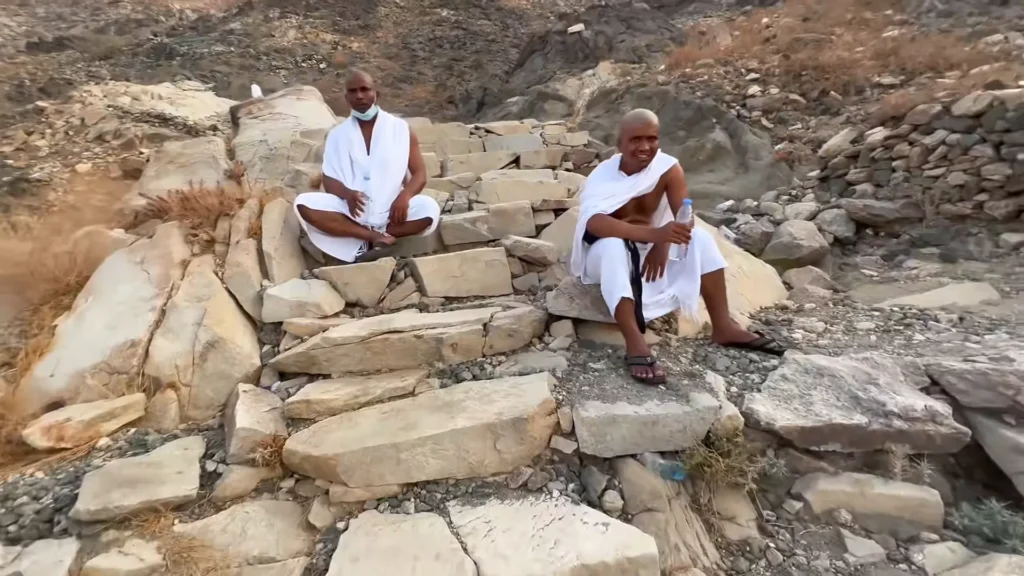
Let’s be real: This climb isn’t for the faint-hearted.
There are 1,200+ rugged stone steps, and no, they’re not all even or comfortable. The slope is steep, and there’s minimal shade.
⚠️ Average time to reach the top?
🧍♂️ Regular walkers: 45–60 minutes
💪 Fit climbers: 25–30 minutes
But here’s the deal: every step feels worth it, especially once you see the cave entrance up close. It’s not a tourist gimmick. It’s raw, ancient, and still surrounded by silence.
What to Pack and Wear
Let’s be honest. If you go up without preparing, you’re going to regret it halfway up. Here’s a quick packing list:
✅ Water bottle (at least 1.5L)
✅ Cap or kufi
✅ Sunglasses
✅ Non-slip shoes or sandals
✅ A small towel (you’ll sweat!)
✅ Flashlight if climbing early morning or late evening
✅ Dua book or notes (many pause near the cave for reflection)
Is Jabal Thawr Part of Hajj?
No, visiting Jabal Thawr is not a required ritual for Hajj or Umrah.
But it is a highly recommended Ziyarat site. Just like people visit Jabal al-Nour or Masjid Quba, many pilgrims choose to climb Jabal Thawr to reflect on the Hijrah and the sacrifices made during those three hidden nights. You’ll often find people sitting outside the cave, reading Surah At-Tawbah quietly, or making dua with tears in their eyes. It’s a humbling spot.
Why Jabal Thawr Still Matters Today
Now this is where things get personal. In 2026, when everything is digital, fast, and optimised, it’s hard to imagine two people hiding in a cave for three days, with no food deliveries, no phone to check if the coast is clear, no GPS to plan the next move. Yet they waited. They trusted. They were protected.
A Symbol of Patience and Tawakkul
The story of Ghar Thawr is really about one thing: trusting Allah when things look impossible. You might not be fleeing an enemy, but we’ve all had moments where life feels like a chase, anxiety, danger, hopelessness. That’s when this cave reminds you:
If Allah can hide a prophet behind a spider’s web, He can protect you too.
A Reminder of Friendship That’s Rare
Let’s be real. Loyalty like Abu Bakr’s isn’t easy to find anymore.
He didn’t just tag along. He risked his life, got bitten, suffered, and said nothing all to protect the one man he believed in most. If there’s a lesson in that, it’s this:
Pick friends who bring you closer to your faith, not your fears.
A Real-Time Connection to Prophetic History
Standing at the mouth of Ghar Thawr, you’re not just visiting a place. You’re stepping into a scene from the Hijrah. A chapter of history that shaped Islam’s future. And the air? It’s dry. The rocks? Still sharp. The silence? Deep. But your heart? It won’t feel empty up there.
The Cultural District Project (New in 2026)
Here’s something new that competitors didn’t tell you. In 2026, the Saudi Ministry of Culture announced an upgrade to the Jabal Thawr experience.
They’re building a cultural visitor centre at the base of the mountain, complete with:
- A Migration Museum with visual storytelling
- 3D dioramas of the Quraysh manhunt
- A viewing deck showing the cliff edge where guards stood
- QR code signs for mobile dua guidance
The project will span 127,000+ square meters and aims to help visitors reflect, learn, and connect to the legacy of Hijrah on a deeper level. Construction is expected to be completed in late 2026.
Miracles of Jabal Thawr – The Moments That Changed Everything
There are places where miracles happened. Then there are places where you can feel them. Jabal Thawr isn’t just a site. It’s a living memory of divine intervention wrapped in dust, stone, silence, and belief. You’ve probably heard snippets of the story. But trust me, the real story goes deeper.
The Bite, The Tears, The Healing – A Miracle in the Dark
Alright, picture this. It’s night. The Prophet ﷺ is asleep on the lap of Abu Bakr (RA) inside the tight space of the cave. Not much light. Not much room. And suddenly… a snake strikes. Right on Abu Bakr’s foot. Sharp. Venomous. Painful. He didn’t scream. Didn’t kick. Didn’t even move. Why? Because the Prophet ﷺ was asleep on his lap. And disturbing him might alert the enemy nearby. So Abu Bakr stayed still.
But the tears? They couldn’t be controlled. They streamed down his face, dripping onto the Prophet ﷺ’s cheek. That’s when the Prophet ﷺ woke up, saw the pain in his companion’s eyes and did something extraordinary. He took his saliva, touched it to the bite and just like that, the pain disappeared. Gone. No doctor. No antidote. Just the barakah of a Prophet.
The Web That Fooled Warriors
You might think a spider’s web is fragile. It tears in seconds. But this one? It saved a Prophet. As the Quraysh search party reached Ghar Thawr, they were intense, aggressive, and ready to kill. And they stood just steps away from the entrance. Now here’s the wild part.
The spider, by Allah’s command, had spun a web across the cave entrance, making it look untouched. Right next to it, a dove’s nest with freshly laid eggs. To any rational soldier, this meant one thing:
“No way anyone went in there. This place hasn’t been disturbed.” And so… they turned back. Just like that. Allah saved the Prophet ﷺ and Abu Bakr, not with a sword but with the softest creatures on earth. Let that sink in.
Quraysh’s Plot: Timeline of the Chase
Most people know the cave story. But what led up to it? That’s the part that shows how intense things were. Let’s walk through it.
Quraysh Meeting in Dar al-Nadwah
After years of frustration with the Prophet’s ﷺ message, the Quraysh held a high-stakes meeting.
The plan?
- Kill the Prophet ﷺ, once and for all.
- Spread the blame among multiple tribes so no one person would take the fall.
But Allah had other plans. The Angel Jibreel (AS) informed the Prophet ﷺ of the plot. He instructed Ali (RA) to sleep in his place, covered in the green cloak, while the Prophet ﷺ slipped out under the cover of night.
The Escape Begins
With Abu Bakr by his side, the Prophet ﷺ set out on a route almost no one would expect, south, not north. They reached Ghar Thawr under the stars, guided only by trust, not GPS. And for three nights, they waited while search parties circled Makkah and bounty posters promised a reward for bringing him back dead or alive.
The Turning Point – Surah At-Tawbah (9:40)
One of the most emotionally charged verses in the Quran is directly tied to this event.
“Do not grieve, for Allah is with us.” (Surah At-Tawbah – 9:40)
This wasn’t just spiritual comfort. It was certainty in the face of fear. Imagine being in a cave. Knowing warriors are outside. And still saying: “Allah is with us.” That’s the kind of faith that shook history.
Du’as and Reflections from Pilgrims at Jabal Thawr
Let me tell you something I heard from a man who climbed Jabal Thawr last year. He said, “I didn’t even make it inside the cave. I just sat on the steps. And I cried. Not because I was tired. But because I felt like I was sitting in someone else’s moment, a moment bigger than me.” That’s what this mountain does to you.
The Most Common Du’as People Make Here
- “O Allah, protect me like You protected Your Prophet.”
- “Grant me patience like Abu Bakr (RA).”
- “Keep me hidden from harm in the way only You can.”
- “Don’t let fear rule my heart. Let faith win.”
People don’t just snap selfies here. They cry. They whisper. They remember. And they ask for strength, the kind of strength that doesn’t always show up on the outside.
Real Stories from Real Pilgrims
A woman from Malaysia said she hiked it barefoot, just to feel every step as the Prophet ﷺ might have. A young man from Turkey paused halfway and sat crying, not because he was sad, but because he suddenly realised the weight of his own mother’s sacrifices.
A group of teens from the UK left a small handwritten note near the cave entrance: “Thank you for staying strong. Because of you, we have Islam.”
This isn’t a tourist spot. It’s a heartbeat.
Full Timeline: From Quraysh’s Plot to Madinah Arrival
Sometimes, understanding the sequence makes everything click. Here’s how the Hijrah unfolded around Jabal Thawr:
Before the Cave
- Quraysh planned the Prophet’s ﷺ assassination.
- Angel Jibreel warns him.
- Ali (RA) sleeps in the Prophet’s place.
- Prophet ﷺ escapes with Abu Bakr (RA) at night.
During the Cave
- Day 1: Arrival and entry into Ghar Thawr.
- Day 2: Snake bite miracle.
- Day 3: Spider web and dove nest protect the cave.
- Asma (RA) brings food; Abdullah (RA) gathers intelligence.
- enemy’s search fails due to divine deception.
After the Cave
- Prophet ﷺ and Abu Bakr leave the cave at night.
- They are guided by a hired tracker, Abdullah ibn Urayqit.
- On the way, Umm Ma’bad‘s goat is blessed with milk.
- Suraqah ibn Malik tries to capture them but is foiled.
- Arrival in Quba, then finally Medina.
You can feel the rhythm now, can’t you? From hiding to hope, from fear to freedom.
Lessons from Jabal Thawr for 2026 Life
Alright, real talk. What does a dusty cave in the Saudi mountains have to do with your life right now? More than you think.
🟩 H3: Fear is Real — But So is Faith
Abu Bakr (RA) was scared. That’s human.
But he didn’t let fear stop him from doing the right thing. And neither should you. Whether it’s a job you’re nervous to apply for, a sin you’re trying to escape, or a person you’re afraid to forgive, the message from Jabal Thawr is loud: Do it. And let Allah take care of the rest.
Loyalty Can Save Lives
This one hits hard. Who do you keep around you?
Are they people who will climb a mountain for you? Or pull you off the path?
Abu Bakr didn’t hesitate. And in return? He became the second of the two mentioned in the Qur’an. That kind of loyalty changes destinies.
Miracles Don’t Have to Be Loud
No lightning. No angels with swords. Just a web, an egg, and a moment of trust. You might be waiting for a “big sign.” But sometimes, protection looks ordinary until it saves your life.
🟧 Final List – Top 7 Visitor Tips for Climbing Jabal Thawr (✅ Human-Only Advice)
- Go early — before the sun drains your energy.
- Take breaks — there’s no shame in pausing.
- Don’t rush it — this isn’t a race.
- Make dhikr while climbing — it keeps you focused.
- Be respectful at the cave — it’s not a tourist photo op.
- Help others down — the descent is harder than it looks.
- Make a du’a at the top — you’re literally closer to the sky.
Yep. That’s all the stuff your tour guide probably won’t tell you.
Visual Comparison Table – Sacred Caves of Makkah
| Site Name | Location | Event | Obligation | Key Miracle |
|---|---|---|---|---|
| Jabal Thawr | South of Makkah | Refuge during Hijrah | ❌ Not part of Hajj | Web, dove, snake healing |
| Jabal al-Nour | North-east of Makkah | First Quranic revelation | ❌ Not part of Hajj | Angel Jibreel’s appearance |
You Can Also Read
Jabal Thawr FAQ: Climbing Guide, Islamic Meaning & Cave Story
❓ What is Jabal Thawr in Islam?
Jabal Thawr is a mountain near Makkah where Prophet Muhammad ﷺ and Abu Bakr (RA) hid during the Hijrah for three days, protected by a spider’s web and a dove’s nest.
❓ How do I reach the Cave of Thawr?
Take a taxi to the Misfalah district in Makkah. From the base, you’ll need to climb over 1,200 rocky steps to reach the cave.
❓ What miracle happened at Jabal Thawr?
A spider spun a web, and a dove laid eggs at the cave entrance. It fooled the Quraysh search party into thinking no one was inside, saving the Prophet ﷺ.
❓ Did a snake really bite Abu Bakr (RA)?
Yes, and despite the pain, he didn’t move. The Prophet ﷺ healed the bite with his saliva, and the pain vanished instantly.
❓ Is it compulsory to visit Jabal Thawr during Hajj?
No, it’s not part of Hajj rituals. But it’s a highly recommended site for reflection and ziyarat.
❓ How long is the climb to Jabal Thawr?
It takes 30 to 60 minutes, depending on your pace. It’s steep, but worth it.
❓ Can women visit Jabal Thawr?
Yes, many women climb the mountain, though it requires good stamina and modest hiking gear.
❓ What’s the best time to visit Jabal Thawr?
Go early morning or late afternoon. Avoid midday sun due to the lack of shade on the trail.
❓ What Quran verse mentions the cave of Thawr?
Surah At-Tawbah (9:40) references it: “Do not grieve, for Allah is with us.”
❓ Can I pray inside the Cave of Thawr?
While space is tight, many visitors offer two rak’ah or make du’a quietly near the entrance.
❓ What is the full story of the Cave of Thawr?
The Cave of Thawr is where Prophet Muhammad ﷺ and Abu Bakr (RA) hid for three days during the Hijrah to Medina, escaping a Quraysh assassination plot.
A spider spun a web, and a dove laid eggs at the cave entrance, protecting them from discovery. This event, marked in the Quran (Surah At-Tawbah 9:40), is a timeless lesson in patience, trust in Allah, and divine protection.
❓ Are there any photos of the Cave of Thawr?
Yes, many visitors and pilgrims have shared photos of the Cave of Thawr online. These images show the narrow stone entrance, the view from the summit of Jabal Thawr, and the rocky path leading up to the cave.
While photography is allowed, pilgrims are reminded to maintain respect and humility at this sacred site.
❓ What is the history of the Cave of Thawr?
The history of the Cave of Thawr dates back to the Hijrah of Prophet Muhammad ﷺ, when he and Abu Bakr (RA) hid there for three nights.
During that time, Quraysh soldiers were actively hunting him down. The cave served as a refuge and symbol of faith under threat. Today, it is recognised as a key moment in early Islamic history.
❓ Is the Cave of Thawr mentioned in Wikipedia accurate?
The Cave of Thawr Wikipedia entry provides a brief overview, but it often lacks the depth of Islamic sources and emotional insight found in firsthand pilgrimage accounts.
For the spiritual significance, timeline, and emotional reflections, reading articles written from an Islamic perspective provides a more meaningful understanding.
❓ How do you pronounce Thawr Cave correctly?
The correct pronunciation of Thawr in Arabic is “Thaw-r” (ثور), with the “Th” sound similar to “think”, followed by a soft rolling “r”.
It’s important when reciting or teaching Islamic history to use the authentic Arabic pronunciation, especially when referencing significant places like Ghar Thawr.
❓ What is the history of Jabal e Soor in Islam?
Jabal e Soor is another name for Jabal Thawr, the mountain that housed the Cave of Thawr. Its history is central to the Hijrah, where the Prophet ﷺ stayed in hiding for three days with Abu Bakr (RA).
The event is known for the miraculous spider web and dove nest that protected them from the Quraysh. It remains one of the most emotional and strategic events in Islamic migration history.
Final Reflection – More Than a Mountain
Here’s the truth. Jabal Thawr isn’t just a climb. It’s not just a chapter in your guidebook. It’s a moment frozen in time where courage met fear, and faith met reality. If you’ve ever felt trapped, scared, or alone… this story is for you. Because the lesson from Jabal Thawr is simple, but life-changing:
“When the world feels against you… Allah is with you.” And honestly? That’s all you ever need.

Farrukh Farooqi has been living in Sharaya, Makkah, Saudi Arabia since 2010. With over 14 years of firsthand experience witnessing the sacred journey of millions of pilgrims, Farrukh specializes in providing practical, insider tips for Hajj and Umrah travelers. His work blends real-world observations, the latest Saudi updates, and essential crowd management strategies — helping pilgrims and worshippers plan smarter, stay safer, and experience a spiritually fulfilling journey across the Holy Cities.


