
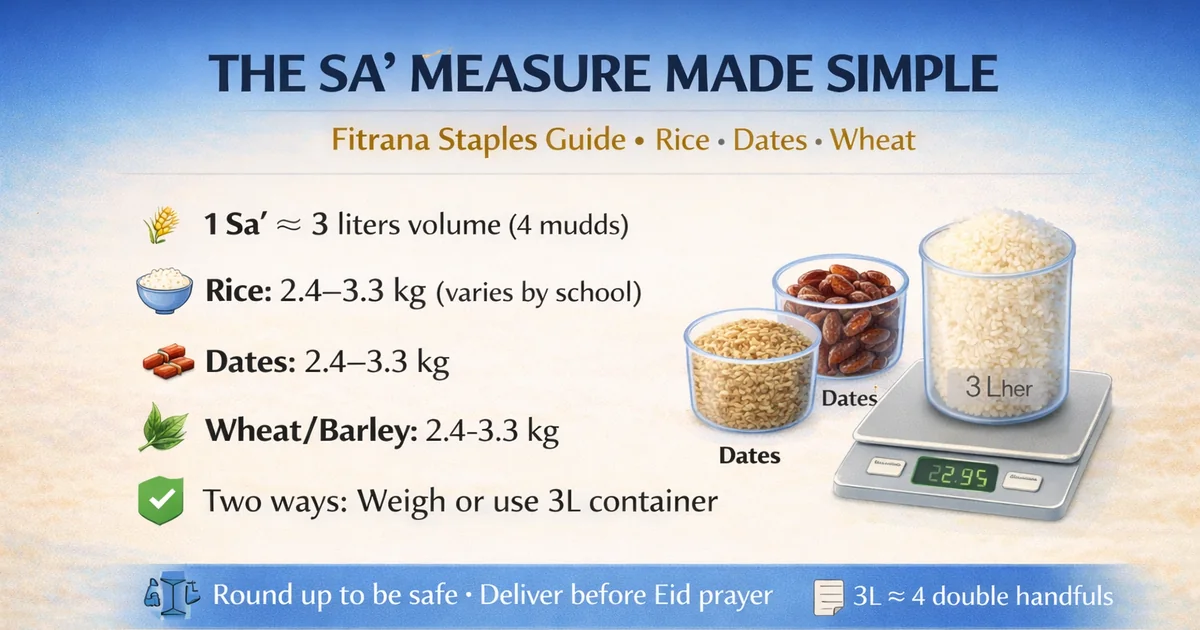
Sa Measure for Fitrana Staples: The Sa’ Measure Made Simple (Rice, Dates, Wheat)
Sa’ is one of those words that makes people panic for no reason.
Because it sounds “technical.”
But it’s really just a measuring container idea from daily life—like saying, “Fill this bowl, not that spoon.”
If you’re giving staple food zakat al fitr yourself (rice, dates, wheat/barley), you need two things: a clear measuring method and a clean packing habit. That’s it.
I’ll keep this Saudi-home friendly. No arguing. No “gotcha” comments. Just a safe way to measure without under-doing it.
✅ TL;DR – sa measure for fitrana staples
A sa’ is a traditional measure used for Zakat al-Fitr food. Many guides translate it into a few kilograms of a common staple (like rice or dates), but exact conversions can vary slightly by method. If you’re giving food yourself, measure carefully (rounding up is safer), pack cleanly, label it clearly, and deliver before Eid prayer.
If you’re not giving food yourself and you’re paying online instead, use your Saudi guides here: online fitrana saudi step-by-step and fitrana timing before eid prayer.
And if you want a household total (count × amount), use Fitrana calculator — it saves time when you’re tired in the last nights of Ramadan.
what “sa’” means (simple)
What “sa’” means: it’s a traditional volume measure used for the food-based Zakat al-Fitr. People used a known container, not a digital scale. Today, we still treat it like “one container amount per person,” even if we translate it into one sa in kg for convenience.
Here’s the simplest everyday picture.
sa’ is like a family-size bowl. Not a spoon. Not a pinch. A proper bowl that actually feeds someone.
So when you hear “one sa’ per person,” think: “enough staple food that feels real, not symbolic.”
Some classic details often mentioned in learning circles:
1 sa’ = 4 mudd (mudd is a smaller measure, like a smaller container). People sometimes describe mudd with “two hands held together” as a rough teaching image, but don’t turn that into a strict science experiment. It’s a learning shortcut, not a lab rule.
And yes, you’ll also hear volume numbers (like “around a few liters”). Different calibrations exist historically, so you’ll see slight differences across references and schools. That’s normal.
If you’re asking, is sa exactly 3 kg — the honest answer is: not exactly. Sa’ is volume, and the weight changes with the food type and the method used to convert. That’s why we use “safe habits” like careful measuring and (when unsure) a small round-up.
One-sentence rule that keeps you safe: avoid under-measuring fitrana.
Micro-scenario: You’re measuring rice and someone says, “Just guess.” Don’t. This is one of the easiest worship acts to do neatly with a little care.
best staples to use in saudi homes
Best staples in Saudi homes: pick a staple that is actually useful, commonly eaten, easy to pack, and easy to distribute. In most Saudi households, rice is the easiest. Dates can work too. Wheat/barley is also mentioned in many discussions, especially when talking about classic staples.
Let’s keep this practical.
Rice is usually the simplest option because it’s clean to pack, stores well, and most recipients can cook it easily. This is why rice sa measure is the most searched phrase in Saudi Ramadan season.
Dates are beloved, but think like a giver and a receiver: are the dates good quality, not half-dry leftovers from the back of the pantry? If yes, dates sa measure can be a meaningful staple.
Wheat/barley shows up in classical lists. If you’re using it, pack it well and label it clearly. People searching wheat sa measure often want a simple answer: “Can I use it?” In many teaching settings, it’s mentioned as a staple option—just make sure it’s clean, edible, and packaged properly.
Can i donate flour as fitrana? People ask this a lot because flour is common. In some communities it’s treated like a practical staple. If you’re doing this, keep it sealed and clean, and make sure the recipient can actually use it. When in doubt, rice is the easiest “no confusion” staple.
What is the easiest staple for fitrana?
Rice.
It’s the least messy, easiest to measure, and easiest to distribute in food baskets.
Micro-scenario: You’re choosing between rice and dates. Your child says, “Dates are Sunnah, so only dates!” Smile and say: “Dates are beautiful, but the goal is feeding people well. Rice is also real food.” (Then you can point them to explain fitrana to kids.)
two measuring methods (scale vs container)
Two measuring methods: you can measure sa’ by weight using a weighing scale, or by volume using a simple measuring container. Because sa’ is a volume measure, the container method matches the original idea, while the scale method feels easier for modern kitchens. Either can work—just don’t under-measure.
I’ll give you both methods the way I teach beginners at home.
Method 1: Scale method (simple modern way)
If you’re searching one sa in kg, you’ll see different numbers depending on the food type and the conversion used. Many guides place common staples roughly in the “a few kg” range, and some people choose a higher figure to be extra safe.
Beginner-safe habit: choose one trusted reference you follow consistently, and when you’re unsure, rounding up is safer than rounding down.
Micro-scenario: Your scale battery dies at midnight. Don’t panic. Use the container method below.
Method 2: Container method (closest to the original idea)
This is the measure without scale method. Many teaching guides explain sa’ as roughly “a few liters” total volume, often taught as about 4 repeated fills of a smaller container (because 1 sa’ = 4 mudd).
Practical home version: take a known container (a measuring jug, a big measuring cup, or a clean container with a known volume), and fill your staple in repeated equal fills until you reach the “sa’ total” your household follows.
Beginner-safe habit: keep the container level each time, don’t press down the rice, and don’t leave big air gaps on purpose.
Now a very human warning (I say this every year): don’t turn sa’ into a fight.
Different schools and references mention slightly different conversions because the history of measuring vessels is not one perfectly standardized factory product. You’re not being “weak” if you choose a safe method and follow it consistently.
My students always ask, “So what number is correct?”
And I always answer: “The safest mistake is giving a little extra, not a little less.”
packing and delivery checklist
Packing and delivery checklist: the goal is clean food, clear labeling, and on-time delivery to eligible recipients before the Eid prayer deadline. Measuring is only half the job. If you pack badly or deliver late, you lose the whole purpose.
Here are the practical steps I tell families (and yes, I’ve made some of these mistakes myself when I was younger).
- Choose your staple (rice is easiest in Saudi homes; dates/wheat are possible if packed well).
- Measure carefully using scale or container. If unsure, round up to avoid under-measuring.
- Pack cleanly in sealed bags (no ripped corners, no open sacks).
- Label clearly: “Zakat al-Fitr / Fitrana – staple food – 1 person” (or however many persons are inside the bag).
- Deliver before Eid prayer through a mosque/community distribution point or a trusted local channel.
How to label food donation fitrana: keep it short and clear. The label isn’t for decoration. It helps the distribution team avoid mixing categories.
Micro-scenario: You pack three bags, but you forget which bag is for how many people. Label them immediately. Future-you will thank you.
Story-like example (because this happens a lot):
One brother once packed rice in a hurry and left the bags open “just for a minute.” Then the car ride happened, the bag shifted, rice spilled everywhere, and the whole thing became a messy cleaning session instead of worship. He felt embarrassed and almost gave up. We fixed it with one simple change: sealed bags, proper labels, and packing the night before. The next year he said, “It felt like a clean act of worship, not a stressful errand.”
If you’re paying online instead of packing food, don’t mix categories. Use: online fitrana saudi step-by-step and the trust filter page how to choose trusted fitrana charity ksa.
And if your family is confused about who to include in the count, link this: pay fitrana for family saudi.
faqs (rounding, substitutes)
FAQs: These answers are short and practical, especially for people searching “sa measure quick reference” right before Eid.
📘 sa measure for fitrana staples FAQs
how to measure one sa for fitrana at home?
Show Answer
Use either a kitchen scale (weight method) or a known container (volume method). If you’re unsure about conversions, don’t under-measure—rounding up a little is safer.
sa measure for rice fitrana explained (simple)
Show Answer
Rice is the easiest staple in many Saudi homes. Measure your chosen “sa’ equivalent” carefully, pack it cleanly, and deliver before Eid prayer.
is sa exactly 3 kg?
Show Answer
Not exactly. Sa’ is a volume measure, and the weight changes by food type and conversion method. That’s why many people focus on careful measuring and a small round-up to avoid under-measuring.
can i use measuring cups for sa?
Show Answer
Yes, the container method is a home-friendly way because sa’ was originally based on volume. Use a consistent container and repeat equal fills, then pack cleanly.
rice vs dates for fitrana staple choice
Show Answer
Rice is usually easiest to pack and cook. Dates can work if they’re good quality and properly packed. Choose what is actually useful for recipients in your area.
sa measure for wheat/barley
Show Answer
Wheat/barley is mentioned as a staple option in many discussions. If you use it, measure carefully, seal it well, label clearly, and deliver before Eid prayer.
how to avoid under-measuring fitrana?
Show Answer
Pick one measuring method and stick to it. Don’t “eyeball” the amount. If you’re uncertain about conversions, a small round-up is safer than rounding down.
how to pack fitrana food donation?
Show Answer
Use sealed, clean bags. Label as Zakat al-Fitr / Fitrana and note how many people the bag covers. Pack earlier so you’re not rushing on Eid night.
what is the eid deadline for food fitrana?
Show Answer
The common rule taught is to deliver Fitrana before Eid prayer. See: fitrana timing before eid prayer.
can i pay online instead of giving food myself?
Show Answer
Yes. If paying online, choose the correct Zakat al-Fitr category and pay early enough for distribution before Eid prayer. Use: online fitrana saudi step-by-step.

Farrukh Farooqi has been living in Sharaya, Makkah, Saudi Arabia since 2010. With over 14 years of firsthand experience witnessing the sacred journey of millions of pilgrims, Farrukh specializes in providing practical, insider tips for Hajj and Umrah travelers. His work blends real-world observations, the latest Saudi updates, and essential crowd management strategies — helping pilgrims and worshippers plan smarter, stay safer, and experience a spiritually fulfilling journey across the Holy Cities.


