
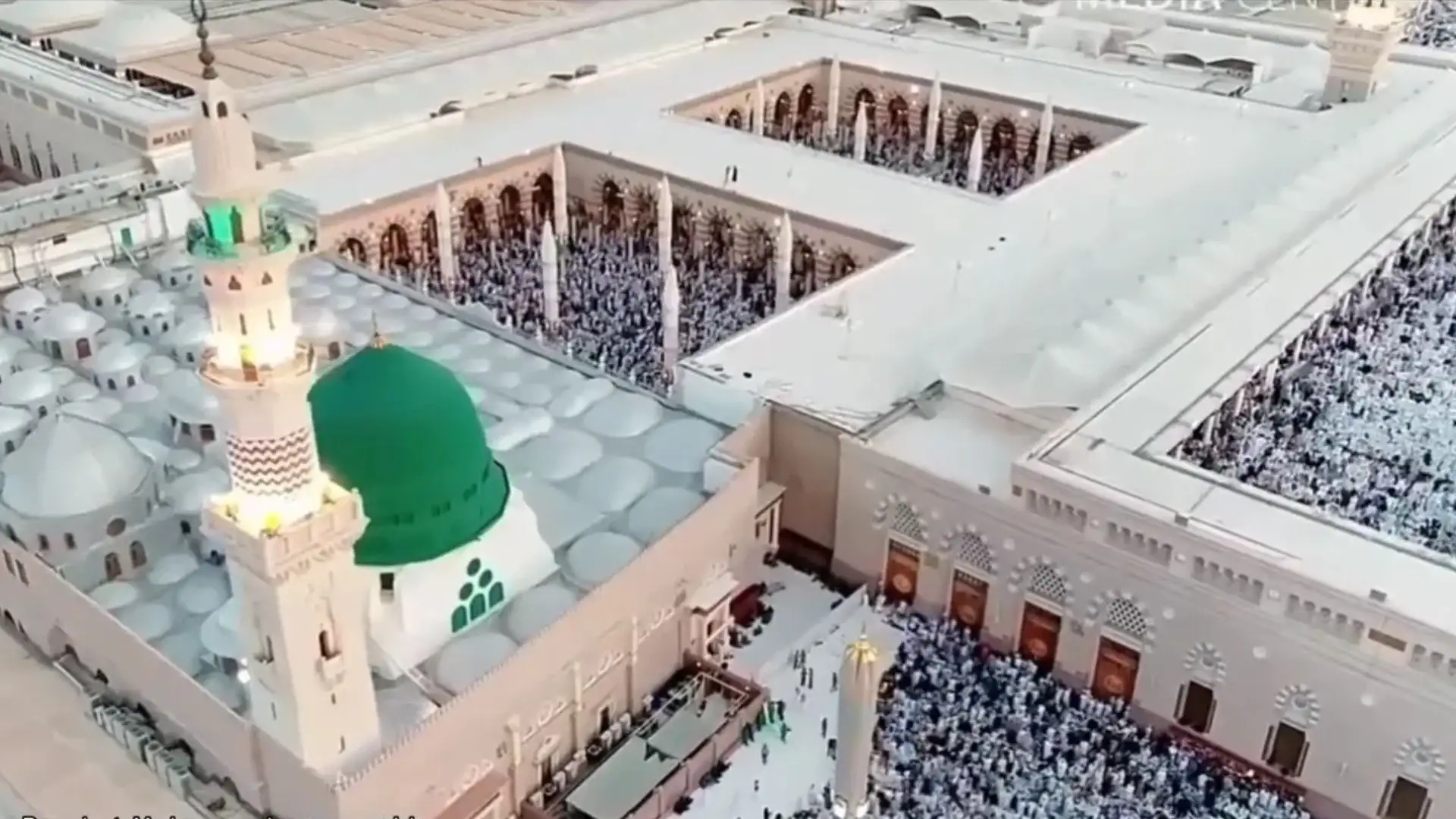
Gates of Masjid al-Nabawi: Names, History, and Spiritual Significance (2026 Guide)
Gates of Masjid al-Nabawi (أبواب المسجد النبوي) aren’t just entrances.
They’re spiritual thresholds walked by millions of souls and once passed through by Prophet Muhammad Himself. Imagine being at Bab as-Salam, the Gate of Peace, as the call to prayer echoes off the marble walls and the scent of Madinah’s breeze enthrals your soul. It’s not just the mosque.
You’re entering a living Islamic history.
✅ TL;DR – Gates of Masjid al-Nabawi
The gates of Masjid al-Nabawi in Medina total 42 in 2026, each with its unique designation, architectural identity, and spiritual significance. From the ancient Bab as-Salam and Bab Jibril to modern extensions like Bab Malik al-Fahad, these gates are more than physical entry points — they reflect Islamic history, cultural diversity, and the Prophetic legacy.
Every gate represents a key value: peace, patience, knowledge, and community. This guide uncovers the meanings, design elements, historic expansions, and ritual practices so your visit to Masjid al-Nabawi becomes not just physical — but deeply spiritual.
What Are the Gates of Masjid al-Nabawi? (Overview for First-Time Pilgrims)
If it’s your first time visiting the Prophet’s Mosque, the massive construction of the Prophet’s Mosque could be overwhelming.
There are 42 gates in the present. Some are simple, and some are extravagant. An identification number and a name identify each, and some are reserved for women, some for males, and some are accessible to both.
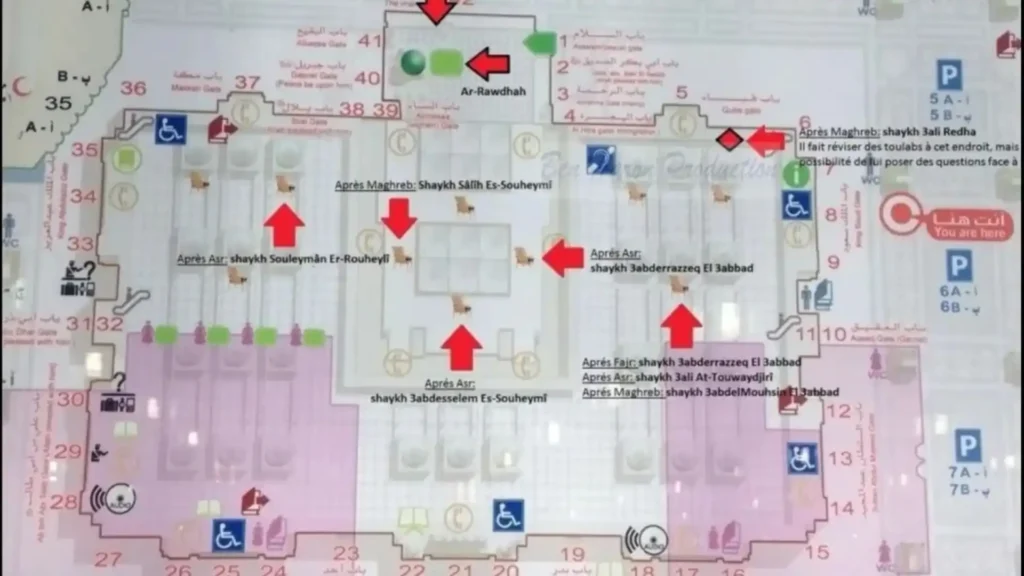
How Many Gates Does Masjid al-Nabawi Have?
There are 42 gates at Masjid al-Nabawi.
Three were only found during the Prophet’s time, and the remainder were added in the Umayyad, Ottoman, and Saudi expansions.
Why Do These Gates Matter?
Since they’re not random.
Each gate’s name tells an event, or a Sahabi or the location or virtue such as patience or peace. The names were chosen to link your spiritual goal to the space you go through.
Historical Evolution of the Gates (From the Prophet’s Era to Today)
Gates Built by Prophet Muhammad ﷺ
During the time of the Prophet in the time of the Prophet, there were only three gates in existence:
- Bab as-Salam (باب السلام) (Gate of Peace)
- Bab Abu Bakr
- Bab ar-Rahmah (باب الرحمة) (Gate of Mercy)
They were built using palm trunks and walls of mud. But spiritually? They were massive.
Caliphal Expansions
Caliph Umar al-Khattab made significant structural changes, and later caliphs reacted similarly. The Ottomans particularly contributed elaborate tilework, calligraphy, a calligraphy style, and structural expansions that defined the gates’ sweeping aesthetic.
Saudi Contributions
The first major Saudi expansion began in the 1950s under King Saud and was then followed by King Fahad and others, bringing the gate count up to 42. Some gates are equipped with multiple entrances, including escalators, elevators, and minarets.
Names and Meanings of the Gates (Deep Dive into Arabic, Culture, and Symbolism)
Some names are obvious, and others carry deep historical or spiritual meaning.
Gates Named After Companions of the Prophet ﷺ
- Bab Bilal (باب بلال): after the first Muazzin, Bilal ibn Rabah
- Bab Ali ibn Abi Talib (باب علي بن أبي طالب): cousin and son-in-law of the Prophet
- Bab Abu Bakr: First Caliph
- Bab Umar ibn al-Khattab (باب عمر بن الخطاب): second Caliph
- Bab Uthman ibn Affan (باب عثمان بن عفان): third Caliph
- Bab Abu Dhar al-Ghifari (باب أبو ذر الغفاري): known for his piety
Gates Named After Virtues or Themes
- Bab as-Salam: Peace
- Bab ar-Rahmah (باب الرحمة): Mercy
- Bab al-Sabr (باب الصبر): Patience
- Bab al-Aqeeq: Named after the Aqeeq Valley
Gates Named After Locations
- Bab Makkah (باب مكة): direction of Makkah
- Bab Quba: a nearby village with Masjid Quba
- Bab al-Baqi: leads to Jannat al-Baqi cemetery
Architectural Features and Spiritual Themes of Key Gates
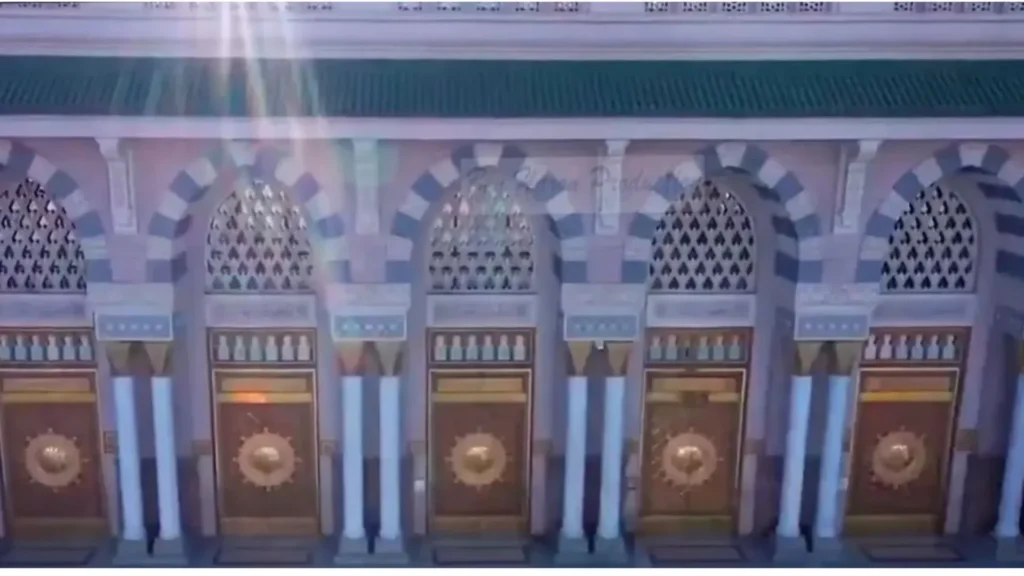
Let’s look at five gates with high spiritual and architectural impact.
Bab as-Salam (Gate of Peace)
Gate 1. It’s often the first gate pilgrims seek.
Located on the northwestern side, it’s near the Rawdah and is deeply tied to the Sunnah of entering the mosque in peace.
Spiritual tradition: Many silently recite duas as they pass, asking Allah for inner peace.
You Can Also Read
Bab Jibril (باب جبريل) (Gate of Revelation)
Located near the Prophet’s tomb, this is the gate where Angel Jibril would enter to deliver revelations. Known as Bab un-Nabi too.
It has calligraphy and motifs that reflect this angelic link.
Worshippers often feel a special closeness to divine revelation when entering through it.
You Can Also Read
Bab al-Baqi (باب البقيع)
Close to Jannat al-Baqi, this gate is commonly used for funeral processions.
It connects directly with the graveyard of the Sahaba, making it symbolically linked to remembrance and legacy.
You Can Also Read
Bab Malik al-Fahad
A modern gate, massive in size, with three large portals. Built during the Saudi expansion, it’s the main northern entrance and one of the busiest.
Bab Umar ibn al-Khattab
Situated on the northwest side, it gives access to the library within Masjid al-Nabawi.
This gate is associated with knowledge and leadership, symbolising the strength of the Islamic state under Caliph Umar’s rule.
Rituals and Traditions Linked to Specific Gates
Here’s the cool part. The gates aren’t just architectural landmarks.
They’ve got rituals tied to them.
- Silent prayers at Bab as-Salam and Bab Jibril
- Meet-up traditions — families arrange to gather at familiar gates
- Dua spots — pilgrims pause for special supplications at gates like Bab Bilal and Bab al-Baqi
Community and Cultural Impact of the Gates
Local Connection
For locals, these gates are part of daily life.
Gate names are used in directions, market references, and even school field trips.
Global Symbolism
Each gate becomes a shared experience for millions of Muslims.
From Indonesia to Canada, everyone entering through Bab Makkah or Bab Jibril carries a memory tied to that gate.
A Place to Connect
Even during busy Ramadan nights or Hajj season, pilgrims arrange to meet at specific gates, like old friends using the same landmarks across centuries.
Preservation and Modernisation Efforts
Conservation Initiatives
Saudi Arabia’s efforts include the restoration of original calligraphy, the use of heritage-preserving materials, and digitising gate blueprints for future generations.
Modern Adjustments
Some gates now include elevators, roof access escalators, and security checkpoints without compromising historical integrity.
Balancing Act
The challenge is real. How to preserve the historical identity while serving millions of pilgrims during peak times?
So far, the balance seems to hold, just barely.
List – 10 Most Spiritually Important Gates to Visit During Ziyarat
- Bab as-Salam: Entry to Rawdah, peace and sunnah
- Bab Jibril: Linked to revelation
- Bab al-Baqi: Closest to the graveyard of the companions
- Bab Bilal: Honours the first Muazzin
- Bab Abu Bakr: Reminder of the Prophet’s best friend
- Bab ar-Rahmah: Gate of Mercy
- Bab Umar ibn al-Khattab: Access to the library
- Bab Uthman ibn Affan: For visiting the northeast women’s area
- Bab Makkah: Direction of the Kaaba
- Bab al-Sabr: Symbol of patience during Hajj
Names and Numbers of the 42 Gates of Masjid al-Nabawi
| Gate Number | Gate Name | Meaning / Who It’s Named After |
|---|---|---|
| 1 | Bab as-Salam | Peace |
| 2 | Bab Abu Bakr | Companion of the Prophet |
| 3 | Bab ar-Rahmah | Mercy |
| 4 | Bab al-Hijra | Migration |
| 5 | Bab Quba | Nearby village |
| 6 | Roof Access Gate | Escalator access |
| 7–9 | Bab Malik al-Saud | King Saud |
| 10 | Bab Imam Bukhari | Hadith scholar |
| 11 | Bab al-Aqeeq | Aqeeq valley |
| 12–14 | Bab al-Majeedi | Ottoman Sultan |
| 16–18 | Bab Umar ibn al-Khattab | Second Caliph |
| 19 | Bab Badr | Battle of Badr |
| 20–22 | Bab Malik al-Fahad | Former King |
| 23 | Bab Uhud | Battle of Uhud |
| 24–26 | Bab Uthman ibn Affan | Third Caliph |
| 28–30 | Bab Ali ibn Abi Talib | Fourth Caliph |
| 31 | Bab Abu Dhar al-Ghifari | Companion |
| 32 | Bab Muslim | Hadith scholar |
| 33–35 | Bab Abdul Aziz | Saudi King |
| 36 | Roof Escalator Gate | Rooftop access |
| 37 | Bab Makkah | Direction to Makkah |
| 38 | Bab Bilal | First Muazzin |
| 39 | Bab un-Nisa | Gate of Women |
| 40 | Bab Jibril | Angel Gabriel |
| 41 | Bab al-Baqi | Cemetery of the Companions |
| 42 | Bab ul-Aimmah | Imams (also called Bab al-Janazah) |
❓ FAQs About Gates of Masjid al-Nabawi
What are the 42 gates of Masjid al-Nabawi used for?
They’re entry and exit points, each with spiritual, historical, and architectural significance.
Which gate is Bab Jibril, and what’s special about it?
It’s Gate 40, believed to be the gate Angel Jibril entered to bring revelation.
Can women use any gate to enter Masjid al-Nabawi?
Some gates are women-only, like Bab un-Nisa, but many are open to all.
Where is Bab as-Salam located?
On the northwestern corner, often used for Rawdah visits.
Which gate leads to Jannat al-Baqi?
Bab al-Baqi is closest to the cemetery.
How many gates were there during the Prophet’s lifetime?
Only three: Bab as-Salam, Bab Abu Bakr, and Bab ar-Rahmah.
Which gate should I use for Rawdah access?
Use Bab as-Salam or Bab Jibril for best access.
What’s the story behind Bab al-Sabr?
It represents patience and perseverance during tough times.
Is Bab Bilal still in use?
Yes, and it’s named after the first Muazzin of Islam, Bilal ibn Rabah.
Which gate has a minaret and grand Ottoman design?
Bab al-Majeedi and Bab Malik al-Fahad have ornate structures and towers.
What is gate 37 in Masjid al-Nabawi?
Gate 37 is Bab Makkah, located on the southern side of the mosque’s second Saudi expansion. It marks the directional connection between Medina and the Kaaba.
You Can Also Read
- Rawdah Pillars: Names, History & Meaning of Each Column
- Rawdah for Women: Timings, Access & Etiquette (2025 Update)
- Hadiths and Quranic Verses About Rawdah: Full Collection with Sources
- Rawdah Permit Guide: Nusuk Hacks, Errors & Real Experiences
- Why Rawdah Is Called the Garden of Paradise (حديقة الجنة)
- Rawdah Etiquette: What Not to Do Inside the Garden of Paradise
- Masjid al-Qiblatayn: The Mosque Where the Qibla Changed Forever
- Mount Uhud: The Sacred Mountain That Loved the Prophet ﷺ
- Garden of Salman Al Farsi (R.A.): 300 Date Palms and the Story of Freedom

Farrukh Farooqi has been living in Sharaya, Makkah, Saudi Arabia since 2010. With over 14 years of firsthand experience witnessing the sacred journey of millions of pilgrims, Farrukh specializes in providing practical, insider tips for Hajj and Umrah travelers. His work blends real-world observations, the latest Saudi updates, and essential crowd management strategies — helping pilgrims and worshippers plan smarter, stay safer, and experience a spiritually fulfilling journey across the Holy Cities.


