

Rawdah (Riyad al-Jannah) in Madinah 2026: Complete Guide + Permit Tips
Rawdah in Madinah is more than just a sacred space; it’s a spiritual heartbeat inside Masjid al-Nabawi. Located between the Prophet Muhammad’s ﷺ house and pulpit, the Rawdah is referred to in authentic hadith as a garden from Paradise, making it one of the holiest places in Islam.
Praying inside the Rawdah brings unmatched reward, with many scholars saying your duas are more likely to be accepted here. Pilgrims often offer two rakahs of nafl prayer, recite salawat, and make heartfelt supplications. The word Rawdah itself means “garden,” symbolising peace, divine mercy, and nearness to the Prophet ﷺ.
For anyone performing Ziyarat in Madinah, visiting the Rawdah is not just recommended, it’s a deeply emotional and spiritually transformative experience.
✅ TL;DR – Rawdah Meaning & What to Do Inside
The Rawdah in Islam is the sacred area inside Masjid al-Nabawi, between the Prophet Muhammad’s ﷺ house and his pulpit, referred to in hadith as a garden from Paradise. It’s a place where prayers carry immense reward, and heartfelt duas are believed to be more readily accepted.
When you’re inside the Rawdah, you should pray two rak‘ahs of nafl, send peace on the Prophet ﷺ, and make sincere du‘a. The word Rawdah itself means “garden,” symbolising divine beauty and tranquillity. Visiting this space is not just a ritual, it’s a spiritual privilege.
What Is the Rawdah? (Definition + Spiritual Promise)
Understanding the Real Meaning of Rawdah (Riyad al-Jannah)
Let’s begin by defining what Rawdah (Arabic: الروضة — meaning “The Garden“, also spelt as “Rawdah” or “Raudah” in transliteration) actually means. It’s not just a definition but also the heart of it. The term “Rawdah” comes from Arabic and literally translates to “a garden.” But this isn’t any ordinary garden.
The Prophet Muhammad identified this space between his home as well as the pulpit within the Masjid al-Nabawi as a “garden from the gardens of Paradise.”
This isn’t a symbolic language. Scholars from all generations have agreed that this particular location is unique among all other places on Earth. When you step into the Rawdah, you’re in a location that was described by the Prophet Himself as being part of Jannah. This alone alters everything. You’re not just a visitor to a mosque. You’re at a sacred intersection between Earth and the afterlife.
The Physical Location Inside Masjid al-Nabawi
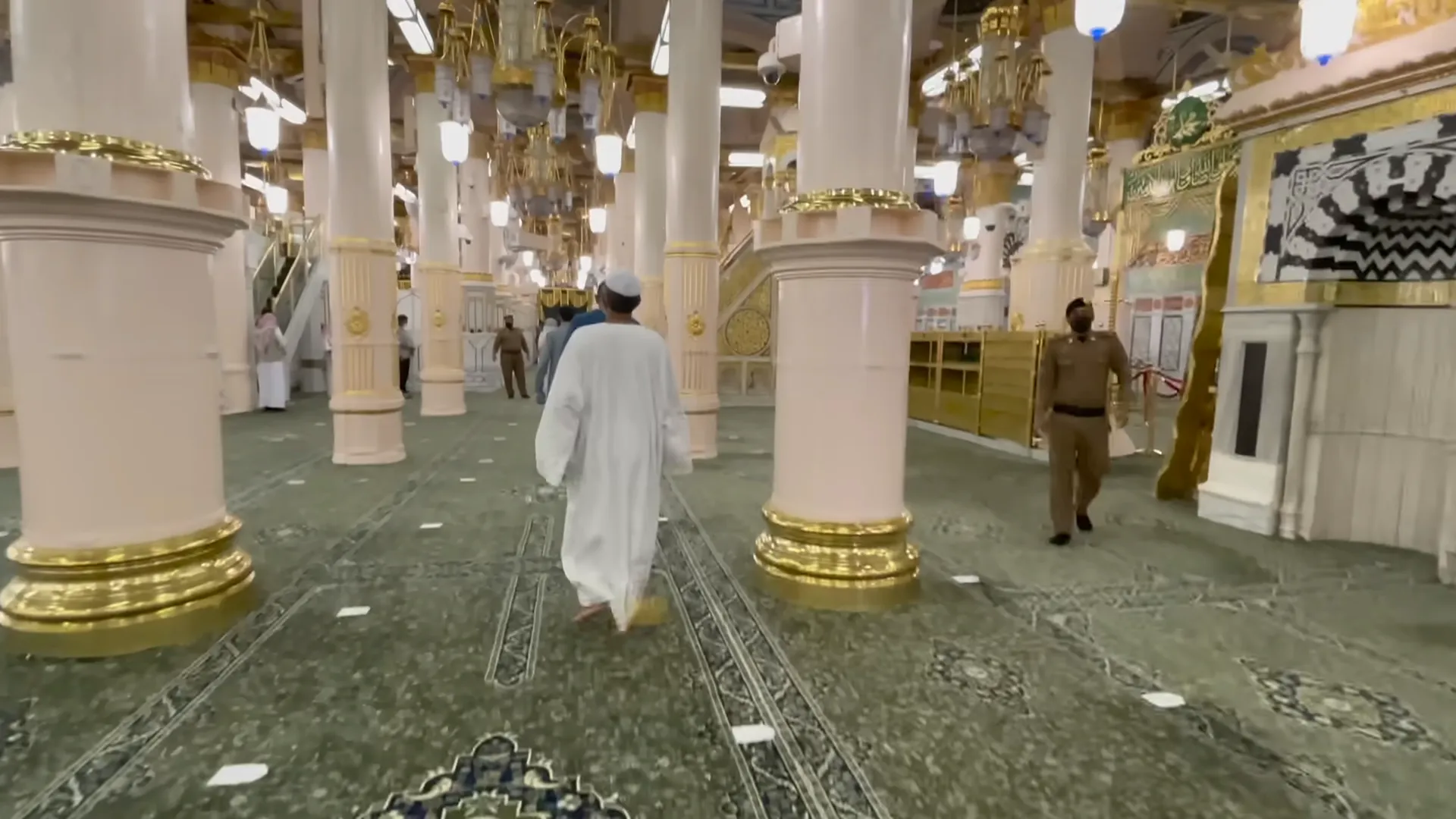
The Rawdah is a particular area of the Prophet’s Mosque. It is located between two historical landmarks: the Prophet’s tomb, which was his residence, and the minbar or pulpit from which he used to preach. Today, this heavenly area is adorned by a distinct green carpet, which sets it apart from the red-carpeted areas of the mosque.
With a size of the length of 22 meters and width of 15 meters, this tiny space can be extremely overcrowded. However, its spiritual significance surpasses its physical dimensions. It’s not just the space that is important. It’s the way in which space is represented.
Why the Rawdah Is Spiritually Special
Now, you may ask, “What’s so unique about praying here versus anywhere else in the mosque?” The answer lies in intent as well as the history of the place and the reward. The Prophet stated that this place is not just blessed, but that prayers that are performed in the Rawdah are more likely to be accepted.
Many believe that it is a direct channel to the mercy of God. When you make two rak’ahs during the Rawdah, it’s more than just a ritual. It’s a profoundly emotional moment that is described by many as life-changing. You feel lighter. You cry but don’t know the reason. You bond in an unimaginable manner that no other space appears to allow.
Prophetic Hadiths That Define the Rawdah’s Importance
Multiple authentic hadiths confirm the value of the Rawdah. In Sahih al-Bukhari, the Prophet stated, “Between my house and my pulpit is a garden from the gardens of Paradise.” Other narrations speak of the pulpit as being physically connected to Paradise. These assertions aren’t merely metaphorical. According to a lot of experts, the land itself is sacred and could return to Paradise on the Day of Judgement. It’s not just a fanciful belief. It’s a part of deeply grounded Islamic theology.
The Role of the Rawdah in Islamic Legacy
The Rawdah is more than a sanctified location. It’s a living piece of Islamic history. This is the place where the Prophet was with his companions. He led prayers. The place where many significant moments of early Islam were played out. The pillars that originally stood in front of the mosque were simply palm trunks.
These positions are identified by columns of marble, each with its own story. The area surrounding the Rawdah includes the Pillar of Repentance, the Pillar of Delegations, and the Pillar of Aisha, each with spiritual and historical weight. When you walk into the Rawdah, you’re walking through the stories that have been passed down for more than 1,400 years.
Why Every Muslim Dreams of Praying in the Rawdah
If you’ve visited Madinah, you’re aware of the euphoria that builds when your time slot to go into the Rawdah is near. People from all over the globe shed tears before they even step inside. This isn’t about the hype. It’s all about the heart. Everyone would love to have the chance to be in the sacred garden, raise their hands, and utter duas that they’ve kept for a long time. Some have their list. Others pray spontaneously. But all have hope. That’s the power of Rawdah–it transforms the invisible into feel tangible.
The Green Carpet and the Rawdah’s Symbolism
When your feet meet the green carpet of the Rawdah, there’s a moment when something changes. This is more than colour. The green colour has become a symbol of the spiritual zone. Worshippers are slowing down. Voices lower. The tears flow freely. Rules don’t govern the area but are instead controlled by reverence.
Even when the crowd is pushing and the time isn’t long, it is commonplace for people to pause just enough to allow the moment to soak in. This carpet has seen many tears, sneers and confessions that are whispered. There’s no magic. It’s spiritual gravity.
Why the Rawdah Remains Timeless in 2026
Despite all the applications, permits, crowd control systems, and changing laws, the Rawdah itself hasn’t changed. Its core remains unchanged. That’s why, even in 2026, it continues to draw millions. The online tours and digital filters could recreate what’s real. Physically present during the Rawdah is more than just prayer. It’s about being present. You feel small in comparison to something eternal. You feel you’re sinning. You feel your longing. And, somehow, you leave feeling better.
Common Misunderstandings About the Rawdah
Many people believe that they need to perform the mandatory salah during the Rawdah or that their Umrah isn’t valid unless they go to it. It’s not the case. Rawdah visits are highly recommended sunnah, but it is not a fardh. It’s not a checklist item. It’s a chance to be spiritual.
If you don’t make it through due to time or other circumstances, you’ve not failed. The most important thing is the truthfulness of your intentions and the faith that you have in your heart. Even a prayer in the Rawdah will bring you tremendous rewards. Don’t let misinformation ruin the enjoyment of your visit.
Final Thoughts on the Rawdah’s Place in the Heart of Islam
The Rawdah isn’t only a part of Masjid al-Nabawi. It’s a place that’s changed the hearts of people and their stories. It embodies everything excellent about Islamic worship: humility, sincerity, longing, and love. When you enter it, you’re not simply entering a building. You’re entering into a promise. The glimpse of something higher that’s waiting for you in the future. Once you’ve prayed there, the inside of you changes. You can remember what’s important. You go away, but a portion of your soul remains.
Key Features of Rawdah in Masjid al-Nabawi (2026 Facts for Pilgrims)
| Feature | Detail (2026) |
|---|---|
| Location | Between the Prophet’s ﷺ house and original minbar |
| Size | ~22 meters (length) × ~15 meters (width) |
| Meaning of “Rawdah” | Arabic for “garden” – represents peace and divine mercy |
| Hadith Source | Sahih al-Bukhari 1196 & Sahih Muslim 1391 |
| Spiritual Status | Referred to as a “garden from Paradise” |
| Prayer Type Recommended | 2 rak‘ahs nafl, heartfelt duas, and reciting salawat |
| Permit Requirement (2026) | Mandatory via Nusuk or Tawakkalna, limited yearly access |
| Best Visiting Time | After Fajr or late night for peaceful access |
| Color of Carpet | Green, unlike the red used in rest of the mosque |
| Historical Significance | Chosen by Prophet ﷺ himself as his burial site |
Quran Verses and Hadiths About Rawdah in Madinah
✅ Hadith References:
- Sahih al-Bukhari, Hadith 1196
(Book of Hajj, Hadith: Between my house and my pulpit is a garden from the gardens of Paradise) - Sahih Muslim, Hadith 1391
(Also reports the same narration about Rawdah being from the gardens of Jannah)
✅ Quran Verses (Referenced Indirectly or Contextually):
- While no direct Qur’anic verse names the Rawdah, the concept of Jannah (Paradise) and reward for prayer are supported by:
- Surah Al-Baqarah (2:277) — reward for those who pray and give charity.
- Surah Al-Tawbah (9:108) — referring to the mosque founded on piety (linked by scholars to Masjid Quba and by extension to Masjid al-Nabawi’s sanctity).
Why Visit the Rawdah? (Spiritual Intent & Benefits)

Visiting the Rawdah isn’t just about checking a box; it’s about connecting with your faith at its core. Here’s what makes it special:
- Spiritual weight: Every act of worship done here, dua, dhikr, Quran recitation, or salawat, is magnified.
- Hadith rewards: Praying here is compared to praying in Jannah. The Prophet ﷺ even said the reward can equal two accepted Hajj.
- Companion stories: Some Sahaba built homes nearby just to be close to this holy ground.
You feel it in the silence. In the tears. In the unity.
Permit System Explained – Nusuk & Tawakkalna
Since 2023, entry into the Rawdah requires a digital permit. Here’s how it works:
Why is a permit needed
To avoid dangerous crowding and give fair access, the Saudi authorities use the Nusuk and Tawakkalna apps.
Step-by-step permit booking
- Download the Nusuk app.
- Register using your Umrah/Hajj visa or local ID.
- Choose “Praying in the Noble Rawdah” from the menu.
- Select a time slot (often gone in minutes).
- You’ll receive a digital permit QR code.
Timings for men and women
- Men: 12:30 AM to Dhuhr & 11:30 AM to Isha
- Women: 5:30 AM to 11 AM & 9:30 PM to 12:30 AM
Note: Most visitors are allowed only once per year.
Permit Hacks, Tips & Common Pitfalls
Slot timings
- Slots typically open after Jumuah on Fridays. Log in 5 minutes before to secure.
Common booking problems
- App errors
- No slots available
- Gender-specific confusion (women’s area has limited Rawdah zone)
Pro tips for visiting
- Arrive 30 minutes early
- Wear modest attire (especially women)
- Queue calmly; use Gate 37
- Keep the QR code handy for quick scanning
Visiting the Rawdah – Etiquette & Flow
What to do inside
- Offer two rakahs nafl, ideally behind the Pillar of Aisha
- Ask for forgiveness at the Pillar of Tawbah
- Send salawat abundantly
- Make an intense dua
Manners
- Don’t push, scream, or crowd
- Respect elders, especially women
- Make room for others. It’s not just your Jannah
Understanding the Sacred Chamber (Rawdah Mubarakah)
Who is buried there?
- Prophet Muhammad ﷺ
- Abu Bakr
- Umar
You can see their faces’ alignment through three distinct viewing holes in the gold grill.
Rules of behaviour
- No salah in front of the graves
- Send peace and salawat only
- No shouting or picture-taking
Authority & Preservation Efforts
The Kingdom of Saudi Arabia has taken meticulous care:
- Liquid gold coating on the pulpit
- Inox marble on the mihrab
- White marble columns in Rawdah
- Green carpets to mark the Rawdah zone
Only the most pious workers are assigned to this area.
Alternatives If You Miss the Permit
Pray near the Rawdah
Even outside the marked area, praying within Masjid al-Nabawi equals 1,000 prayers elsewhere.
Other spiritual sites
- Quba Mosque: the first mosque in Islam
- Masjid Qiblatain: where the Qibla changed
- Uhud Mountain: site of martyrdom and the Prophet’s loss
Sincere dua matters most
Allah sees your heart wherever you stand.
You Can Also Read
- Rawdah for Women: Timings, Access & Etiquette (2025 Update)
- Rawdah Pillars: Names, History & Meaning of Each Column
- Ziyarat Places in Medina: Complete 2025 Guide for Every Pilgrim
- Hadiths and Quranic Verses About Rawdah: Full Collection with Sources
- Rawdah Permit Guide: Nusuk Hacks, Errors & Real Experiences
- Why Rawdah Is Called the Garden of Paradise (حديقة الجنة)
- Rawdah Etiquette: What Not to Do Inside the Garden of Paradise
- Rawdah Etiquette: What Not to Do Inside the Garden of Paradise
- Jannat ul Baqi: The Sacred Cemetery of Madinah (2025 Guide)
- Masjid al-Qiblatayn: The Mosque Where the Qibla Changed Forever
Rawdah in Madinah FAQs: Your Top Questions Answered
🕌 FAQs – Rawdah in Masjid al-Nabawi
Can women visit the Rawdah?
Yes, women can visit the Rawdah during designated hours. Permits are required.
How often can I book a Rawdah permit?
Currently, you can book only once per year through Nusuk or Tawakkalna.
What time does Rawdah open today?
Timings vary. For men: 12:30 AM to Dhuhr. For women: 5:30 AM to 11 AM and 9:30 PM to 12:30 AM.
Do I need Nusuk and Tawakkalna both?
Nusuk is the primary app for Rawdah permits. Tawakkalna may be needed for entry passes in some cases.
Is photography allowed inside the Rawdah?
No. Taking photos or videos is strictly prohibited in the Rawdah.
What if I miss my Rawdah slot?
You can pray near the Rawdah area or try again next week when new slots open.
How long is each Rawdah visit?
Most visitors get around 10 minutes in the Rawdah due to high demand.
Where is Gate 37 in Masjid Nabawi?
Gate 37 is on the southern courtyard, often used for Rawdah entry for both men and women.
Can I pray two rak‘ahs behind Aisha’s Pillar?
Yes, this is highly recommended if space allows — especially behind the Pillar of Aisha.
Does praying in the Rawdah count as Hajj?
No, but the reward is immense and may equal two accepted Hajj according to hadith.
What is Rawdah in Islam?
The Rawdah is short for Riyad al-Jannah, located between the Prophet’s ﷺ house and minbar inside Masjid al-Nabawi. It’s called a “garden from Paradise” in authentic hadith.
What happens if you pray in Rawdah?
Your salah is performed in a place linked to Jannah. Scholars say duas made in Rawdah are more likely to be accepted. It’s a deeply spiritual experience.
What does the word Rawdah mean?
The word Rawdah means “garden” in Arabic. In Islam, it refers to the blessed space inside Masjid al-Nabawi tied to divine peace and mercy.
What do you do during Rawdah?
Pray 2 rak‘ahs of nafl, recite salawat, make du‘a, and reflect in silence. Your sincerity is what counts most.

Farrukh Farooqi has been living in Sharaya, Makkah, Saudi Arabia since 2010. With over 14 years of firsthand experience witnessing the sacred journey of millions of pilgrims, Farrukh specializes in providing practical, insider tips for Hajj and Umrah travelers. His work blends real-world observations, the latest Saudi updates, and essential crowd management strategies — helping pilgrims and worshippers plan smarter, stay safer, and experience a spiritually fulfilling journey across the Holy Cities.


