
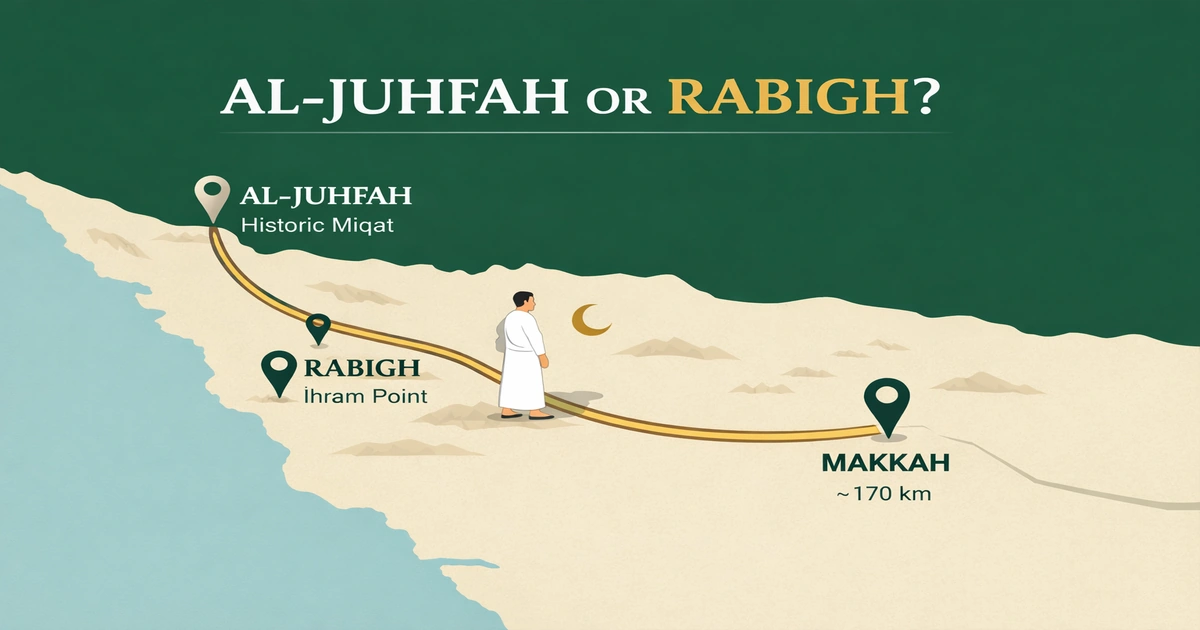
Al-Juhfah Miqat: Location, Distance from Makkah, Rabigh Link, and Who Uses It
Al-Juhfah miqat is the historic ihram boundary for pilgrims coming from the west and northwest, especially the Levant, Egypt, and parts of North and West Africa. In practical travel today, many pilgrims enter ihram at Rabigh, which is linked to miqat al-juhfah and commonly used as the working stop for this route.
If you’re trying to figure out where is al-juhfah miqat, who uses it, and whether rabigh miqat is the same thing, the short answer is simple: the historic miqat is Al-Juhfah, but many modern pilgrims prepare for ihram at Rabigh because it is easier and serves the same route in practice.
For the full overview of all boundaries, see miqat for hajj.
✅ TL;DR – al-juhfah miqat
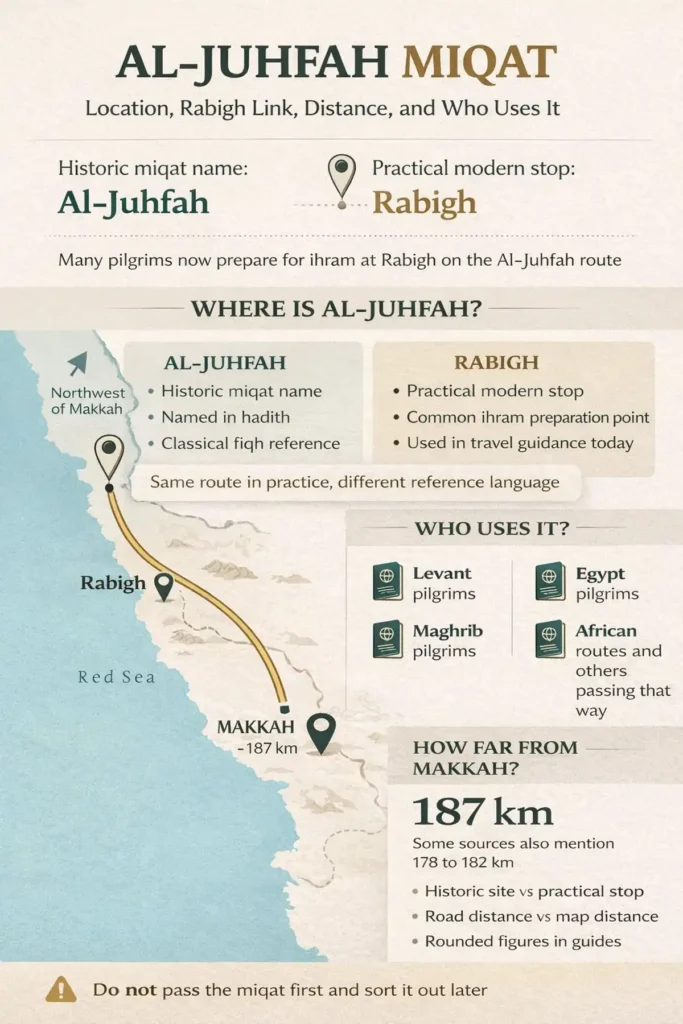
Al-Juhfah miqat is the historic ihram point for pilgrims coming from the Levant, Egypt, the Maghrib, and many African routes. It lies northwest of Makkah near Rabigh. Many pilgrims now enter ihram at Rabigh instead, which is why people often search for rabigh miqat or miqat near Rabigh.
What is Al-Juhfah miqat?
What is Al-Juhfah miqat? Al-Juhfah miqat is one of the Prophet’s designated mawaqit for people heading to Makkah for Hajj or Umrah. It is the traditional ihram point for people of al-Sham and others passing that western route. In modern use, many pilgrims prepare at Rabigh, which is tied to the same miqat path.
Al-Juhfah miqat is a designated ihram point for Hajj and Umrah
Miqat al-juhfah is not just a spot on a map. Think of it like a spiritual checkpoint: once you reach it, ordinary travel ends and your pilgrimage state begins. If you intend Hajj or Umrah and pass that boundary, you should already be ready to enter ihram there.
🕌 Hadith About Al-Juhfah
Arabic:
وَقَّتَ رَسُولُ اللَّهِ صَلَّى اللَّهُ عَلَيْهِ وَسَلَّمَ لِأَهْلِ الْمَدِينَةِ ذَا الْحُلَيْفَةِ وَلِأَهْلِ الشَّامِ الْجُحْفَةَ …
Transliteration:
Waqqata Rasulullahi sallallahu ‘alayhi wa sallama li-ahli al-Madinati Dhal-Hulayfah wa li-ahli ash-Shami al-Juhfah …
Meaning:
The Messenger of Allah ﷺ fixed Dhul-Hulayfah for the people of Madinah and Al-Juhfah for the people of al-Sham, and these miqats also apply to others who pass by them intending Hajj or Umrah.
That wording matters. It shows that juhfah miqat is not limited to one nationality only. It also covers those who travel along that route.
Who uses Al-Juhfah miqat today
Today, the people most commonly linked with al-juhfah miqat are travelers coming from western and northwestern approaches to Makkah. That includes pilgrims historically tied to the Levant and Egypt, and it also includes many travelers from North and West Africa or those whose route lines up with that direction.
My students always ask this part: “Do I need to belong to a certain country?” No. The route matters more than the passport. If your path passes that miqat line, the ruling follows the route.
Why many pilgrims now enter ihram at Rabigh instead
Al-Juhfah rabigh is one of the most searched combinations for a reason. Many pilgrims now say Rabigh miqat because the historic site of Al-Juhfah is no longer the main practical stop people use. In real travel planning, enter ihram at Rabigh is the phrase most people follow.
That doesn’t mean the original miqat disappeared from Islamic discussion. It means the working place used by pilgrims shifted in practice.
📚 You Can Also Read: niyyah for hajj and umrah
Where Is Al-Juhfah Miqat Located?
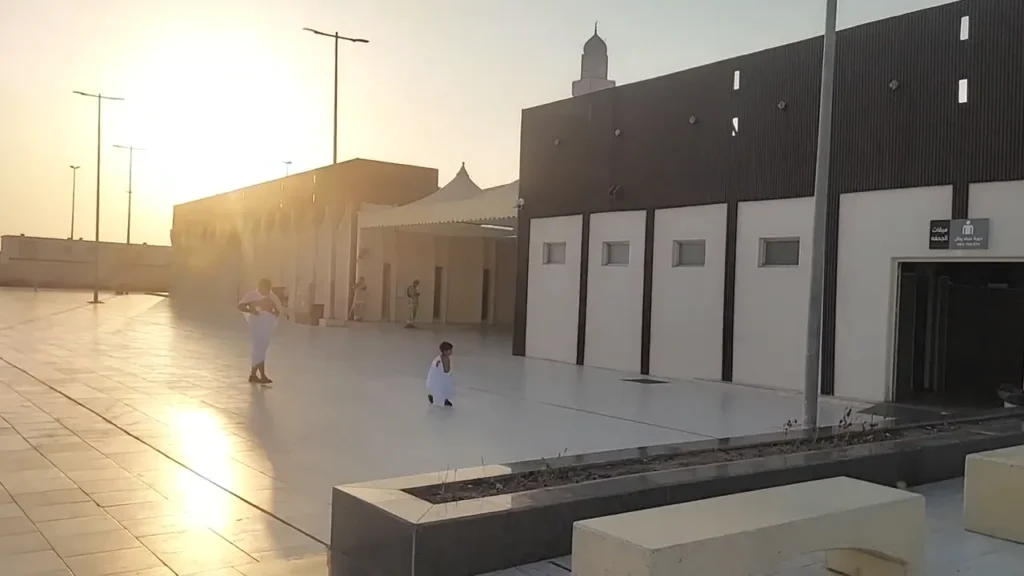
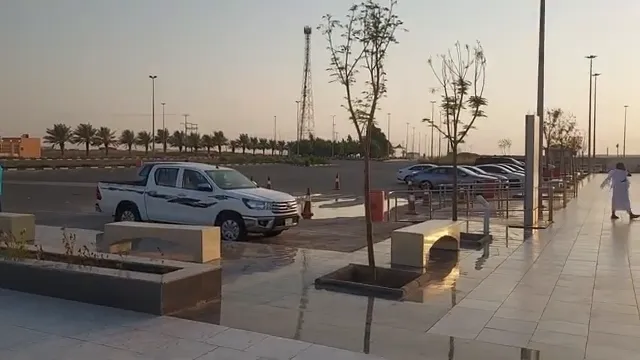
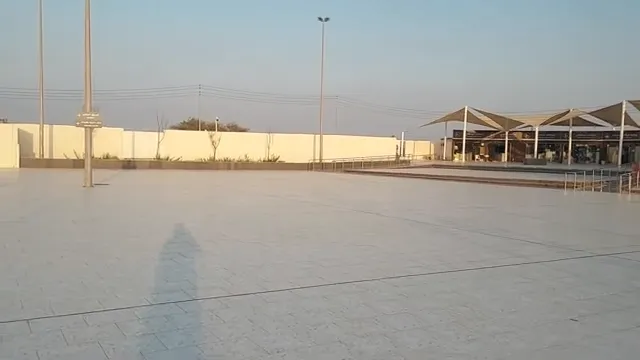
Where is Al-Juhfah miqat located? Al-Juhfah location is northwest of Makkah, near Rabigh and not far from the Red Sea side of the western route into the Hijaz. That is why many people also search for miqat near red sea or miqat near rabigh.
Al-Juhfah location northwest of Makkah
Al-Juhfah sits in the northwest direction from Makkah. Official Saudi sources today describe it as one of the five major mawaqit and place it close to modern Rabigh. Older references speak about the historic village itself. Newer pilgrim materials often speak in route-based language.
Al-Juhfah near Rabigh: what that means for pilgrims
For pilgrims, “near Rabigh” means this: when people discuss rabigh ihram point, rabigh mosque miqat, or miqat rabigh, they are usually talking about the practical place used for the Al-Juhfah miqat route.
So don’t get lost in map language.
The easiest way to think about it is this: historic Al-Juhfah is the original name and legal reference; Rabigh is the place many pilgrims use today when preparing for ihram.
Is Al-Juhfah on the Madinah–Makkah route?
Yes, historical descriptions place Al-Juhfah on the route between Madinah and Makkah, though it is especially tied to the coastal-western approach rather than the direct Madinah miqat used by people leaving Madinah itself. That is why a pilgrim starting from Madinah usually uses Dhul Hulayfah, while a pilgrim approaching from the west may be linked with miqat al-juhfah.
📚 You Can Also Read: dhul hulaifah
Al-Juhfah Miqat Distance from Makkah
How far is Al-Juhfah from Makkah? You’ll see different figures online, especially 178 km, 180 km, 182 km, and 187 km. The clean way to handle this is simple: 187 km is the figure used in current official Saudi Hajj guidance for Al-Juhfah miqat distance, while older and historical references often give nearby measurements for the village site itself.
How far is Al-Juhfah from Makkah?
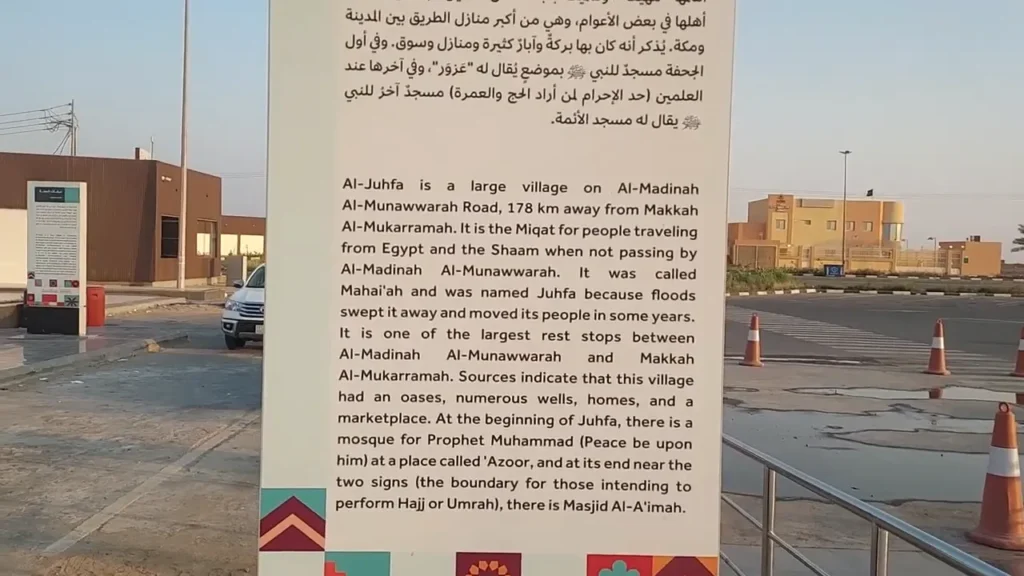
The safest figure to use for readers today is that Al-Juhfah is about 187 km from Makkah. Some trusted Saudi historical material also mentions about 178 km for the village. Both numbers point to the same general zone northwest of Makkah, but they are not measuring the exact same practical reference point every time.
Why some sources mention 178 km, 180 km, or 187 km
This confuses a lot of beginners.
The reason is usually one of these:
- Historic site vs practical stop: one source measures the old village, another measures the modern pilgrim point.
- Road distance vs straight-map distance: not every source uses the same method.
- Rounded figures: some writers round up or round down for easier reading.
So if you see al-juhfah distance from makkah written as 178, 180, 182, or 187 km, don’t panic. The key point is the same route zone near Rabigh, northwest of Makkah.
Rabigh distance vs historic Al-Juhfah distance
Rabigh distance figures can also differ because people may be referring to the town, the mosque stop, or the miqat line connected with Al-Juhfah. In pilgrim guidance, Rabigh is often treated as the practical place of ihram for this miqat route, even though the historical name remains Al-Juhfah.
I used to mix this up all the time when I was learning, because one book spoke like a historian and another spoke like a travel guide. Both were “right,” but they were measuring different things.
📚 You Can Also Read: spatial temporal miqat
Who Uses Al-Juhfah Miqat?
Who uses Al-Juhfah miqat? Traditionally, it is the miqat for the people of the Levant and those who come by that direction. Scholars and official guidance also connect it with Egypt and with pilgrims from the Maghrib and parts of Africa whose routes align with that western path.
Miqat for Levant pilgrims
Miqat for levant pilgrims is the clearest classical use of Al-Juhfah miqat. The hadith specifically names al-Sham, which historically covers the Levant region. So if you are asking who this miqat was assigned to first in the Prophetic wording, this is the main answer.
Miqat for Egypt pilgrims
Miqat for egypt pilgrims is also commonly linked with miqat al-juhfah in fiqh explanations and modern pilgrim teaching. That is why so many Hajj and Umrah guides list Egypt alongside al-Sham when talking about juhfah miqat.
Miqat for Maghrib and Africa pilgrims
Miqat for maghrib pilgrims and miqat for africa pilgrims are also widely tied to this route. In plain words, if your path into Makkah comes through that western side and passes that miqat line, Al-Juhfah or the practical point at Rabigh becomes relevant.
Can other travelers use Al-Juhfah if they pass that route?
Yes. This is one of the most important beginner points. Miqats are not closed clubhouses for one ethnic group. If another traveler passes that route intending Hajj or Umrah, the ruling applies to them too.
For example:
- If you arrive from the west by sea, that route may connect you with Al-Juhfah.
- If your flight path aligns with that miqat line, you should be ready before crossing it.
- If you are already inside the miqat boundary, your ruling changes to your place of start.
Is Rabigh the Same as Al-Juhfah Miqat?
Is Rabigh the same as Al-Juhfah miqat? In historical language, they are not exactly the same place name. In practical pilgrimage use today, they are closely linked, and many scholars and official guides treat Rabigh as the workable point for the Al-Juhfah miqat route.
Historic Al-Juhfah vs the practical ihram point at Rabigh
This is the clean distinction: Al-Juhfah is the historic miqat named in the Prophetic tradition, while Rabigh is the place many pilgrims now use for entering ihram on that route. Some scholars describe Rabigh as effectively standing in for Al-Juhfah in modern practice because it is easier for people.
Why pilgrims often say Rabigh miqat
Because that is what many buses, travel guides, and pilgrim conversations use in real life. A traveler may never hear “historic village of Al-Juhfah,” but they will hear “prepare at Rabigh miqat.” So the phrase stuck.
Can you enter ihram at Rabigh for Al-Juhfah miqat?
Yes. In modern practical use, pilgrims commonly enter ihram at Rabigh for the Al-Juhfah route. That is one of the biggest reasons searchers type things like can pilgrims enter ihram at Rabigh or is Rabigh the same as Al-Juhfah.
📚 You Can Also Read: masjid aisha
How to Enter Ihram at Al-Juhfah or Rabigh
How to enter ihram at Al-Juhfah or Rabigh? The rule is simple: get ready before crossing the miqat, make your intention at the right point, and begin talbiyah without delaying until after you have passed the boundary.
When to make niyyah before crossing the miqat
You should not cross the miqat line intending Hajj or Umrah and then decide to sort it out later. Wear your ihram garments in advance if needed, then make the formal intention and start talbiyah when you reach the miqat point or just before crossing it, depending on your route and travel method.
That’s the part most people miss.
Putting on the cloth early is one thing. Actually entering ihram with intention and talbiyah is the real start.
What pilgrims usually do at the miqat mosque
At a masjid miqat al-juhfah stop or practical mosque in Rabigh, pilgrims usually:
- Wash or make wudu if possible.
- Wear ihram garments before the crossing point.
- Pray if there is a prayer time or if they wish to pray nafl.
- Make niyyah for Hajj or Umrah.
- Start talbiyah and continue their journey.
🕋 Common Ihram Reminder
There is no need to make things dramatic. Be ready, know your route, make your intention at the right point, and begin talbiyah calmly. The biggest beginner mistake is waiting until after the miqat has already been crossed.
What if you are arriving by air or sea from the west?
If you are arriving by air or sea from the west, you should be prepared before your route crosses the miqat line. In flights, this often means wearing the garments earlier and making niyyah when you are near the line announced by crew or known through your travel plan. By sea, the same rule applies: don’t wait until after you have passed the miqat route.
Micro-scenario: you’re on a flight, half-asleep, and the cabin announcement comes earlier than expected. That’s why experienced pilgrims change before boarding or well before the approach.
📚 You Can Also Read: talbiyah in hajj and umrah
Al-Juhfah Miqat in History
Al-Juhfah miqat in history is not just a legal point. It was also a real settlement on an important travel route. Historical Saudi references describe it as an inhabited village with wells, homes, and market activity, which helps explain why it remained known to pilgrims for centuries.
Why Al-Juhfah was originally called Mahya‘ah
Older historical writing says Al-Juhfah was originally called Mahya‘ah. This earlier name appears in traditional accounts tied to the settlement before the later name became more famous.
How the flood changed its name to Al-Juhfah
According to Saudi historical references, it came to be called Al-Juhfah after a flood swept through the area and carried people away. That image is strong, and honestly, it is one of those names that sounds like history left a mark on the land itself.
Why Al-Juhfah remained important in the Prophetic era
Al-Juhfah remained important because it sat on a major route and was one of the Prophet’s designated mawaqit for Hajj and Umrah. That gave it both geographic value and lasting religious importance.
One longer story makes this easier to picture. Imagine an early pilgrim caravan moving toward Makkah from the northwest. They are not reading road signs, app maps, or group chats. They know the route by land, wells, stopping points, and the rulings attached to them. A miqat like Al-Juhfah was not a random dot. It was where travel changed shape. Ordinary movement turned into sacred movement, and that mattered to every pilgrim in the group, from the scholar to the man carrying water skins.
Al-Juhfah Miqat FAQs
What is Al-Juhfah miqat?
Al-Juhfah miqat is one of the designated ihram boundaries for those intending Hajj or Umrah. It is the historic miqat for people of al-Sham and for others who pass that route toward Makkah.
Where is Al-Juhfah miqat located?
Al-Juhfah location is northwest of Makkah, near Rabigh and linked with the western route toward the Haram.
How far is Al-Juhfah from Makkah?
The most practical modern figure used in official Saudi guidance is about 187 km from Makkah, while some historical references mention around 178 km for the village site.
Who uses Al-Juhfah miqat?
Miqat al-juhfah is associated with pilgrims from the Levant, Egypt, the Maghrib, and many African routes, as well as anyone whose path passes through that direction.
Is Rabigh the same as Al-Juhfah?
Historically, they are not the exact same place name. In practical modern pilgrimage use, Rabigh is commonly used for the Al-Juhfah route, which is why many people say rabigh miqat.
Can pilgrims enter ihram at Rabigh?
Yes. In modern practice, pilgrims commonly enter ihram at Rabigh for the Al-Juhfah miqat route.
Is Al-Juhfah miqat for Hajj and Umrah only?
Yes. The ruling of entering ihram there applies when a traveler intends Hajj or Umrah and passes that miqat route.
Is Jeddah the miqat instead of Al-Juhfah?
Not for travelers who must enter ihram before crossing an outer miqat. Jeddah has its own rulings for residents and for people whose intention begins from there, but it is not a general replacement for outside pilgrims approaching through an established miqat route.
Can Europeans or North Americans use Al-Juhfah miqat?
If their route aligns with that western approach and they pass that miqat line, then yes, the ruling can apply by route, not by ethnicity.
What is the safest beginner rule for Al-Juhfah or Rabigh?
Be ready early, know your route, and do not cross the miqat while still undecided about your ihram start.
📊 al-juhfah miqat: historic site vs practical Rabigh use
This table clears up the confusion many pilgrims have when they see Al-Juhfah in fiqh books but Rabigh in modern travel talk.
🗺️ Show Al-Juhfah / Rabigh Comparison Table
| Point | What it means | Why pilgrims mention it |
|---|---|---|
| Al-Juhfah | Historic miqat named in hadith and fiqh | Used in Islamic rulings and classical descriptions |
| Rabigh | Practical modern ihram point linked to Al-Juhfah route | Used in travel talk, buses, guides, and mosque stops |
| 178–187 km figures | Different measurements of related points in the same zone | Explains why sources show slightly different distances |
| Who uses it | Levant, Egypt, Maghrib, Africa, and others on that route | Route matters more than nationality alone |
Related Articles
- masjid al shajarah in madinah
- masjid al jiranah
- masjid al hudaibiyah
- hajj al tamattu
- hajj al qiran
- hajj al ifrad
- what are fard wajib and sunnah of hajj
Al-Juhfah Miqat Location and Rabigh Route Guide

Farrukh Farooqi has been living in Sharaya, Makkah, Saudi Arabia since 2010. With over 14 years of firsthand experience witnessing the sacred journey of millions of pilgrims, Farrukh specializes in providing practical, insider tips for Hajj and Umrah travelers. His work blends real-world observations, the latest Saudi updates, and essential crowd management strategies — helping pilgrims and worshippers plan smarter, stay safer, and experience a spiritually fulfilling journey across the Holy Cities.


