
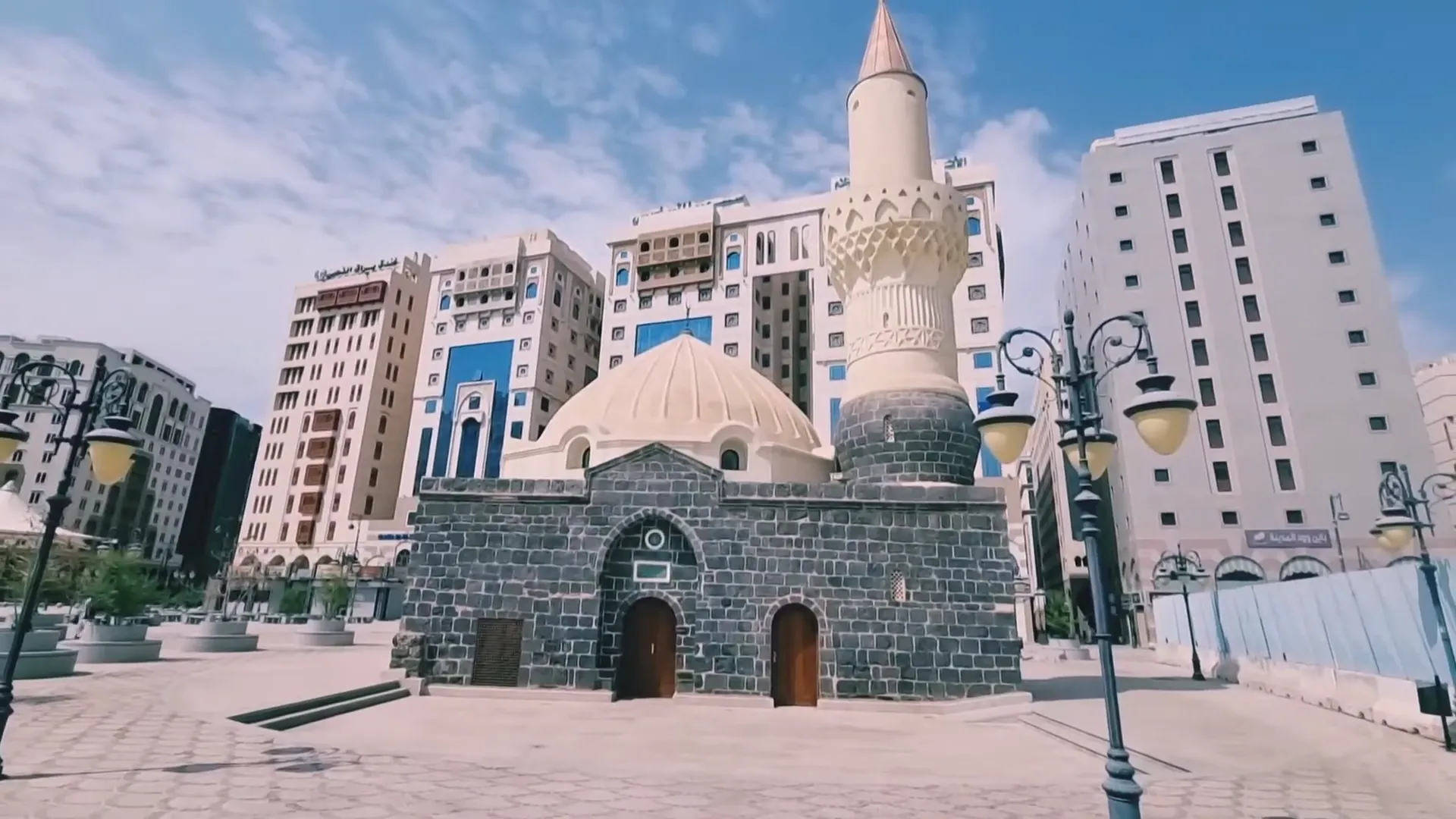
Masjid Abu Bakr Siddiq in Madinah: 2026 Guide to the Prophet’s Eid Prayer Site
You might’ve passed it without ever realising its story. Just a short walk from the majestic Masjid an-Nabawi, gently placed within a quiet corner of Madinah’s historical core, stands a mosque with deep emotional roots. It’s not crowded. No towering golden domes. But the moment you stand there, something shifts.
This is where the Prophet Muhammad ﷺ once offered Eid prayer. And after Him, His closest companion, Abu Bakr Siddiq (RA), continued that tradition, right on this very ground.
✅ TL;DR – Masjid Abu Bakr Siddiq in Madinah
Masjid Abu Bakr Siddiq is a humble yet spiritually rich mosque southwest of Masjid an-Nabawi, where the Prophet Muhammad ﷺ led Eid prayers, later followed by Abu Bakr Siddiq (RA) during his caliphate.
With its Ottoman design, black stone walls, and tranquil setting in Al-Manakhah, it’s a sacred place for anyone seeking reflection, history, and a deeper spiritual connection in Madinah.
What is Masjid Abu Bakr Siddiq (مسجد أبو بكر الصديق) in Madinah?
A Legacy Tied to the Prophet’s ﷺ Prayer
This mosque isn’t just another structure near Masjid an-Nabawi. It’s a continuation of prophetic worship, echoing the footsteps of two of Islam’s greatest figures, the Prophet Muhammad ﷺ and Abu Bakr Siddiq (RA).
Back in the early days of Madinah, the Prophet ﷺ would offer Eid prayers outdoors, in the wide open space of Al-Manakhah. After the Prophet’s passing, Abu Bakr (RA), as the first caliph, led Eid Salah at the same location.
That tradition alone gave the site its spiritual identity.
Over time, a mosque was built here and named in honour of Abu Bakr Siddiq (RA).
Today, it stands as one of the most quietly powerful landmarks in Madinah.
Historical Timeline of the Mosque
Origins in the Umayyad Era
Let’s go back in time for a moment.
The structure we see today wasn’t always there. But the land, the story, they go way back.
The original mosque was constructed during the Umayyad era, under the caliphate of Umar bin Abdul Aziz (RA), around 87 to 93 AH. That’s just decades after the Prophet’s time.
Later, in 1254 AH, Ottoman Sultan Mahmoud II restored and rebuilt the mosque.
Adding the beautiful ribbed dome and the Ottoman-style minaret that still stands today.
In the modern era, Saudi Arabia has taken great care to preserve it.
Kings Fahd, Abdullah, and Salman all initiated restorations, making sure it remained accessible and respected as a heritage site.
Architectural Beauty and Features
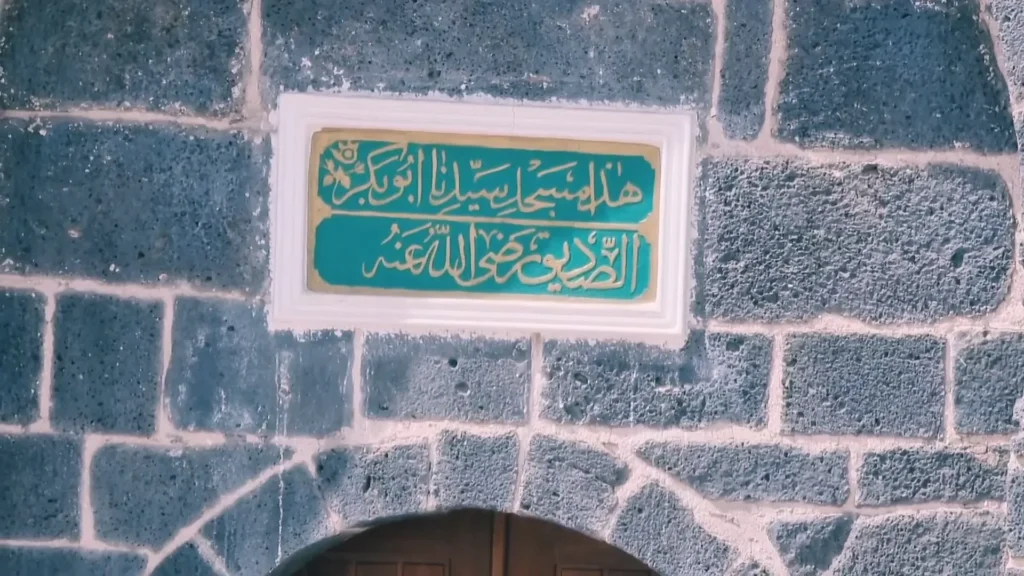
At first glance, Masjid Abu Bakr Siddiq seems humble. But look closer.
It’s built in a square shape, measuring around 78 to 80 square meters. The walls are constructed from black basalt stones, giving them a bold, historical appearance.
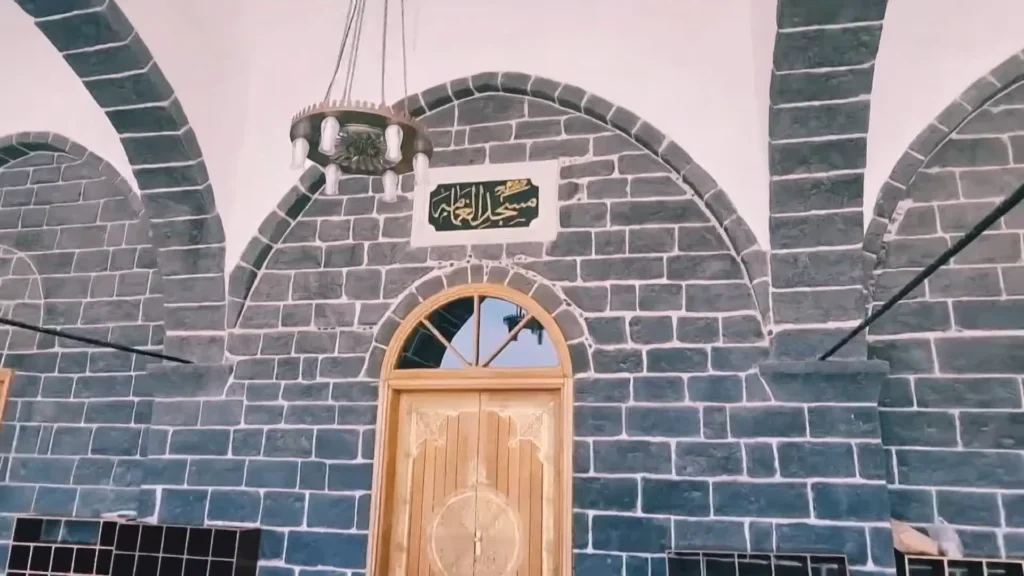
Inside, it’s painted white, simple, spiritual, and reflective of early Islamic aesthetics.
There’s a single minaret, about 15 meters tall, designed in a way that mirrors the Bab as-Salam Minaret of Masjid Nabawi. The dome, standing at 12 meters, is ribbed in a classical Ottoman style.
The contrast between the black stone exterior and the whitewashed interior creates a powerful mood shift.
One that invites quiet prayer and deep reflection.
Location and Accessibility in 2026
Exact Placement in Madinah
If you’re visiting Masjid an-Nabawi, you’re already close.
Masjid Abu Bakr Siddiq is just 455 meters southwest of the Prophet’s Mosque.
Even better? It’s only 50 meters away from Masjid al-Ghamamah, another Eid prayer site tied to the Prophet ﷺ.
The mosque lies in the Al-Manakhah prayer zone, where open-air prayers were once performed before any walls stood here.
Today, it’s fully accessible. Most Ziyarat tours include it, and it’s open throughout the day.
There’s wheelchair access, and signage in Arabic and English guides you.
Best time to visit? Early morning before sunrise, or late evening after Isha, when the area is quiet and meditative.
Spiritual Significance for Pilgrims
Following the Prophet’s ﷺ Eid Tradition
Here’s the part that hits home. This mosque isn’t just historically important. It’s spiritually moving.
The Prophet ﷺ prayed Eid here. That alone makes it sacred.
But when you stand on that same ground, where Abu Bakr Siddiq (RA) continued that prophetic tradition, it connects you to something deeper.
Many pilgrims pray two rakahs of gratitude here.
Others pause and make dua, remembering how Abu Bakr (RA) helped carry the message of Islam forward during its most fragile years.
One of his famous quotes still echoes here: “The worst sin is to take your sin lightly.”
Reflect on that while you stand here. It hits differently.
Nearby Sacred Sites to Visit
Walking Distance from Masjid Abu Bakr Siddiq
One of the best things about visiting Masjid Abu Bakr Siddiq is how close it is to other historical gems in Madinah.
You can walk to:
- Masjid al-Ghamamah – Just 2 minutes away
- Masjid an-Nabawi – About 5 minutes on foot
- Old Madinah Market (Suq area) – Traditional bazaar steps away
This proximity makes the area feel like a spiritual cluster, a compact circle of Islamic history waiting to be explored on foot.
Preservation Efforts Under Saudi Arabia
Inclusion in the Madinah Heritage Program
Saudi Arabia has officially listed Masjid Abu Bakr Siddiq as a heritage mosque. It’s part of the Madinah Historic Mosques Rehabilitation Project, which aims to preserve sacred spaces for future generations.
It was restored in 1411 AH under King Fahd, again in 1434 AH under King Abdullah, and once more in recent years under King Salman, as part of the kingdom’s Vision 2030 Islamic heritage program.
The architectural integrity was maintained throughout, preserving the Ottoman features and historical layout.
📌 FAQs about Masjid Abu Bakr Siddiq in Madinah
Where is Masjid Abu Bakr Siddiq located in Madinah?
It’s southwest of Masjid an-Nabawi, near Masjid al-Ghamamah in the Al-Manakhah area.
Did the Prophet Muhammad ﷺ really pray Eid here?
Yes, he offered Eid Salah here. Abu Bakr (RA) later continued this practice.
Why is the mosque named after Abu Bakr (RA)?
Because he led Eid prayers here after the Prophet’s ﷺ death, continuing the Sunnah.
How far is Masjid Abu Bakr Siddiq from Masjid an-Nabawi?
It’s about 455 meters away — roughly a 5-minute walk.
What is the architectural style of Masjid Abu Bakr?
It features black basalt walls, a ribbed Ottoman dome, and a tall minaret.
Can visitors pray at Masjid Abu Bakr Siddiq today?
Yes, it is open to all visitors. Many people pray two rak’ahs here.
Is Masjid Abu Bakr part of Madinah’s Ziyarat tour?
Yes, most guided tours include it along with other historic mosques.
What’s the history of its restoration under Saudi rule?
It has been restored several times, most recently under King Salman as part of Madinah’s heritage care project.
Was the mosque built during the Prophet’s ﷺ lifetime?
No, the physical structure came later, but the prayer site was used during his life.
What duas or prayers can be made at this site?
Any personal du’a is welcome. Many reflect on the legacy of early Islam and make du’a for strength and forgiveness.
What is the history of Masjid Abu Bakr?
The mosque stands on the spot where the Prophet ﷺ prayed Eid. Abu Bakr (RA) continued this Sunnah. It was built during the time of Umar bin Abdul Aziz, restored by the Ottomans in 1254 AH, and maintained by the Saudi government. Its legacy makes it a key spiritual landmark in Madinah.
Is Abu Bakr Sunni or Shia?
Hazrat Abu Bakr (RA) is recognized as the first Caliph in Sunni Islam and one of the most respected companions. While Shia Muslims honor him, they differ in views on succession. He is especially linked to Sunni leadership history.
Where is Hazrat Abu Bakr buried?
He is buried inside Masjid an-Nabawi beside the Prophet Muhammad ﷺ and Umar ibn al-Khattab (RA), in the sacred Rawdah area.
Key Historical Facts About Masjid Abu Bakr Siddiq in Madinah
- Eid prayers were offered here by the Prophet ﷺ and Abu Bakr (RA)
- Built during the Umayyad rule by Umar bin Abdul Aziz
- Renovated by Ottoman Sultan Mahmoud II in 1254 AH
- Restored under Saudi kings: Fahd, Abdullah, and Salman
- Features black basalt stonework and white interior
- Proximity to Masjid al-Ghamamah enhances its historical value
- Part of the Al-Manakhah open prayer ground tradition
Quick Facts About Masjid Abu Bakr Siddiq (RA) in Madinah
| Feature | Details |
|---|---|
| Arabic Name | مسجد أبو بكر الصديق |
| Location | Southwest of Masjid an-Nabawi, near Masjid al-Ghamamah |
| Built During | Caliph Umar bin Abdul Aziz’s rule (87–93 AH) |
| Ottoman Renovation | 1254 AH by Sultan Mahmoud II |
| Area | Approximately 78–80 square meters |
| Minaret Height | About 15 meters |
| Dome Height | 12 meters |
| Architectural Style | Ottoman with ribbed dome and basalt walls |
| Distance from Masjid Nabawi | Around 455 meters |
| Spiritual Value | Eid prayer site of Prophet ﷺ and Abu Bakr RA |
If you’re planning your Ziyarat in Madinah, don’t just stop at the main gates of Masjid an-Nabawi.
Walk a few minutes more. Visit the site where the Prophet ﷺ offered Eid prayer, and where Abu Bakr (RA) carried that tradition forward. It’s one of the most profound spiritual stops you’ll make. Let it sink in.
You’re not just visiting a mosque. You’re standing on legacy.
You Can Also Read
- Rawdah Pillars: Names, History & Meaning of Each Column
- Rawdah for Women: Timings, Access & Etiquette (2025 Update)
- Hadiths and Quranic Verses About Rawdah: Full Collection with Sources
- Rawdah Permit Guide: Nusuk Hacks, Errors & Real Experiences
- Why Rawdah Is Called the Garden of Paradise (حديقة الجنة)
- Rawdah Etiquette: What Not to Do Inside the Garden of Paradise
- Masjid al-Qiblatayn: The Mosque Where the Qibla Changed Forever
- Mount Uhud: The Sacred Mountain That Loved the Prophet ﷺ
- Garden of Salman Al Farsi (R.A.): 300 Date Palms and the Story of Freedom
- Masjid al-Shajarah in Madinah: 2025 Guide to the Miqat of Dhul Hulayfah
- Masjid al-Ijabah in Madinah: Story Behind the Prophet’s Answered Duas (2025 Ziyarat Guide)

Farrukh Farooqi has been living in Sharaya, Makkah, Saudi Arabia since 2010. With over 14 years of firsthand experience witnessing the sacred journey of millions of pilgrims, Farrukh specializes in providing practical, insider tips for Hajj and Umrah travelers. His work blends real-world observations, the latest Saudi updates, and essential crowd management strategies — helping pilgrims and worshippers plan smarter, stay safer, and experience a spiritually fulfilling journey across the Holy Cities.


