
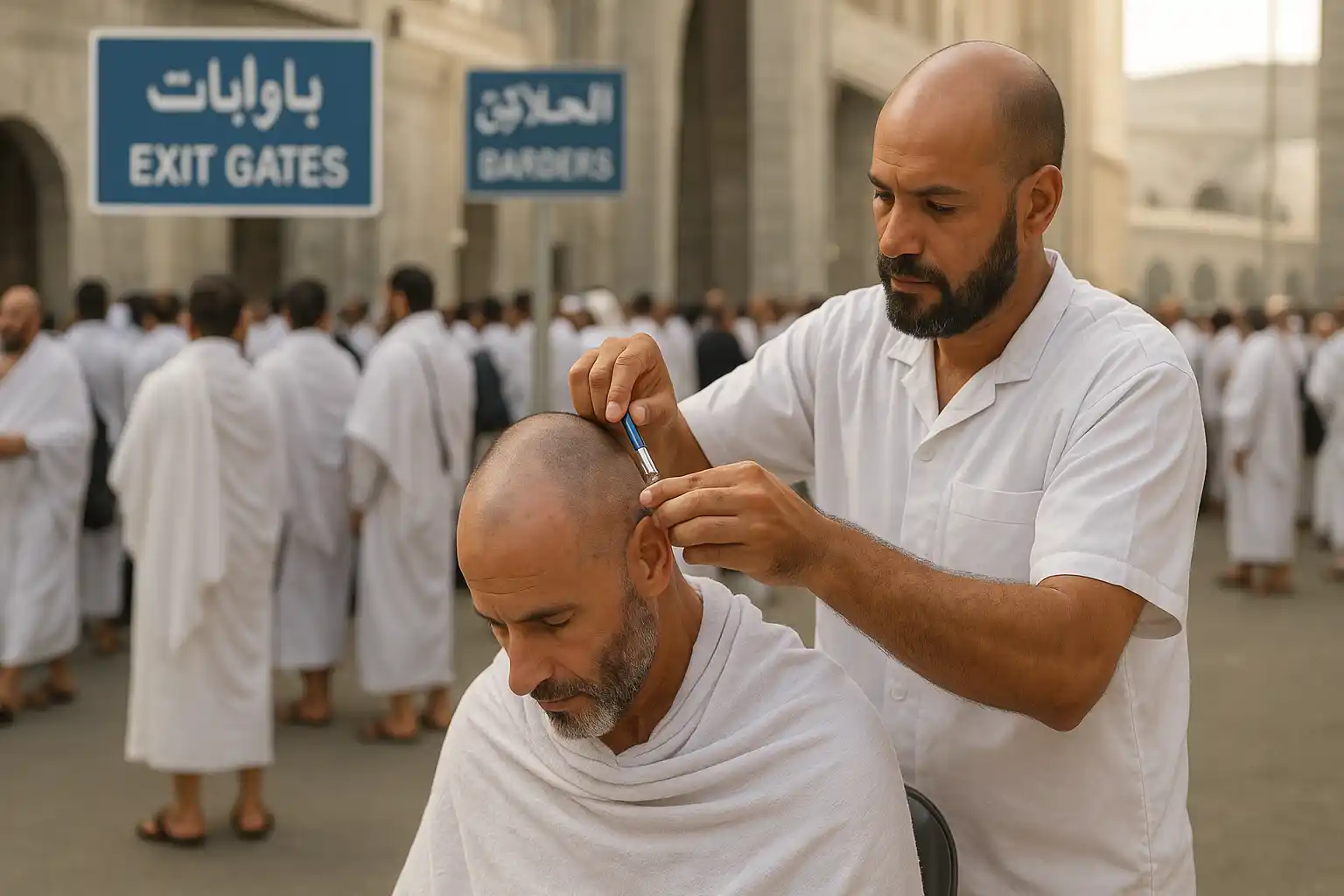
Halq & Taqsir: Ritual Head Shaving and Trimming Guide (Hajj & Umrah 2026)
Halq & Taqsir mark the spiritual conclusion of your Hajj or Umrah. After all the walking, the heat, the prayers, this final act is where ego is trimmed and submission is made visible.
Whether you choose to shave your head completely (Halq) or trim it slightly (Taqsir), this moment carries centuries of meaning and divine reward.
🟧 TL;DR – Halq & Taqsir
Halq & Taqsir refer to the act of shaving or trimming the hair at the end of Umrah or Hajj. Men may choose Halq (complete shave) or Taqsir (short trim), though Halq carries a higher reward during Hajj.
Women are only permitted to perform Taqsir by trimming roughly a fingertip’s length of hair. This act is a powerful symbol of humility and submission, and it must be done after Tawaf and Sa’i before exiting the state of Ihram.
🕋 What Is Halq & Taqsir in Islam?
In the context of Hajj and Umrah, Halq means shaving the entire head, while Taqsir means trimming a small portion of the hair. Both are part of the final step of pilgrimage and are required to exit the state of Ihram.
These acts are not about personal grooming. They symbolise the removal of vanity and ego. The Prophet Muhammad ﷺ said:
“O Allah! Have mercy on those who shave their heads.”
The Companions asked, ‘And those who cut their hair short, O Messenger of Allah?’
He replied, “And those who cut their hair short.”
(Sahih Bukhari 1728)
This Hadith reflects a higher reward for those who perform Halq, but still acknowledges Taqsir as valid and rewarded.
🧠 Why Is Hair Removal Part of Hajj and Umrah?
Hair symbolises adornment and pride. Removing it is a sign of leaving behind worldly beauty for the sake of Allah. In both Hajj and Umrah, after completing Sa’i, pilgrims must either:
- Shave the head (Halq)
- Trim the hair (Taqsir)
This act is required to exit Ihram, making it a fardh (obligatory) act in Hajj and Umrah.
For men, both Halq and Taqsir are valid, but Halq is superior during Hajj. For women, only Taqsir is allowed.
🛐 Step-by-Step Guide to Performing Halq or Taqsir
Whether you’re performing Halq or Taqsir, the steps are simple but must be done in the correct sequence.
✅ After completing Tawaf and Sa’i:
- Intend to exit the Ihram and seek Allah’s acceptance.
- Find a licensed barber within the Haram boundary (for men).
- If doing Halq, ensure the entire head is shaved clean.
- If doing Taqsir, ensure hair is trimmed evenly from all parts of the head.
- For women, gather hair in a small ponytail and trim one fingertip’s length (~1 inch).
- Do not delay the ritual unnecessarily.
- Say Bismillah before cutting or shaving.
After this, you are officially released from Ihram. Men may now wear stitched clothing, and normal restrictions are lifted.
👳 Halq vs. Taqsir: Which Is Better?
While both fulfil the requirement, the Prophet ﷺ gave extra merit to those who completely shave their heads.
He made du’a three times for those who did Halq, and only once for those who chose Taqsir.
If you are performing Umrah during Hajj (Tamattu), scholars recommend Taqsir after Umrah and Halq after Hajj, so you can save hair for the final act.
📊 Visual-Style Table – Comparing Halq & Taqsir
📊 Halq vs Taqsir – Ritual Comparison Table
| Aspect | Halq | Taqsir |
|---|---|---|
| Definition | Complete head shave | Short trimming of hair |
| Gender Allowed | Men only | Men & Women |
| Reward (per hadith) | Higher reward | Valid, but lesser reward |
| Required in | Hajj & Umrah (for men) | Hajj & Umrah (for all) |
| For Women? | Not permitted | Mandatory |
| Tools Used | Razor or trimmer | Scissors or trimmer |
| Symbolic Meaning | Humility, full submission | Modesty, discipline |
⚠️ Common Mistakes to Avoid
- ❌ Cutting hair before completing Sa’i
- ❌ Using an unsanitary barber or sharing razors
- ❌ Performing Taqsir from one side only
- ❌ Trimming too little or too much (for women)
- ❌ Shaving outside the Haram boundary (for Hajj)
Make sure to follow proper hygiene and order.
Once done, all Ihram restrictions are lifted except for intimacy during Hajj (until sacrifice is complete).
FAQs for Halq & Taqsir
❓ Frequently Asked Questions – Halq & Taqsir
What is Halq and Taqsir in Umrah?
Halq means shaving the entire head, while Taqsir means trimming a small portion of the hair. Both are performed at the end of Umrah as part of exiting Ihram.
Can women perform Halq?
No, women are only allowed to perform Taqsir by trimming a fingertip’s length of hair. Shaving the head is not permitted for females.
Is Halq better than Taqsir?
Yes, Halq carries more reward based on authentic Hadith. The Prophet ﷺ made dua three times for those who shaved their heads and once for those who trimmed.
When should I perform Halq or Taqsir?
You should do Halq or Taqsir only after Tawaf and Sa’i are complete. Doing it before invalidates the act of Ihram exit.
How much hair should I cut in Taqsir?
For men, short trimming from all parts of the head is required. For women, about one fingertip’s length (~1 inch) is sufficient.
Can I do Halq myself?
Yes, but during Hajj or Umrah, it is preferred to use a licensed barber within the Haram boundary to ensure proper hygiene and ritual order.
Can I use a trimmer for Halq?
Yes, a clean electric trimmer is acceptable for Halq if it removes hair completely. It is ideal to remove hair down to the skin.
What happens if I skip Halq or Taqsir?
Skipping Halq or Taqsir means your Ihram is not properly exited, and the ritual remains incomplete. This may require Dam (penalty).
Can I do Taqsir for someone else?
No, each pilgrim must perform Halq or Taqsir on themselves. You can assist a child, but adults must do it for themselves or with a professional’s help.
Where can I find barbers near the Jamarat or Haram?
Licensed Hajj barbers are located near the Jamarat Bridge and at designated gates of Masjid al-Haram. Always choose barbers approved by authorities for safety and Shariah compliance.

Farrukh Farooqi has been living in Sharaya, Makkah, Saudi Arabia since 2010. With over 14 years of firsthand experience witnessing the sacred journey of millions of pilgrims, Farrukh specializes in providing practical, insider tips for Hajj and Umrah travelers. His work blends real-world observations, the latest Saudi updates, and essential crowd management strategies — helping pilgrims and worshippers plan smarter, stay safer, and experience a spiritually fulfilling journey across the Holy Cities.


