
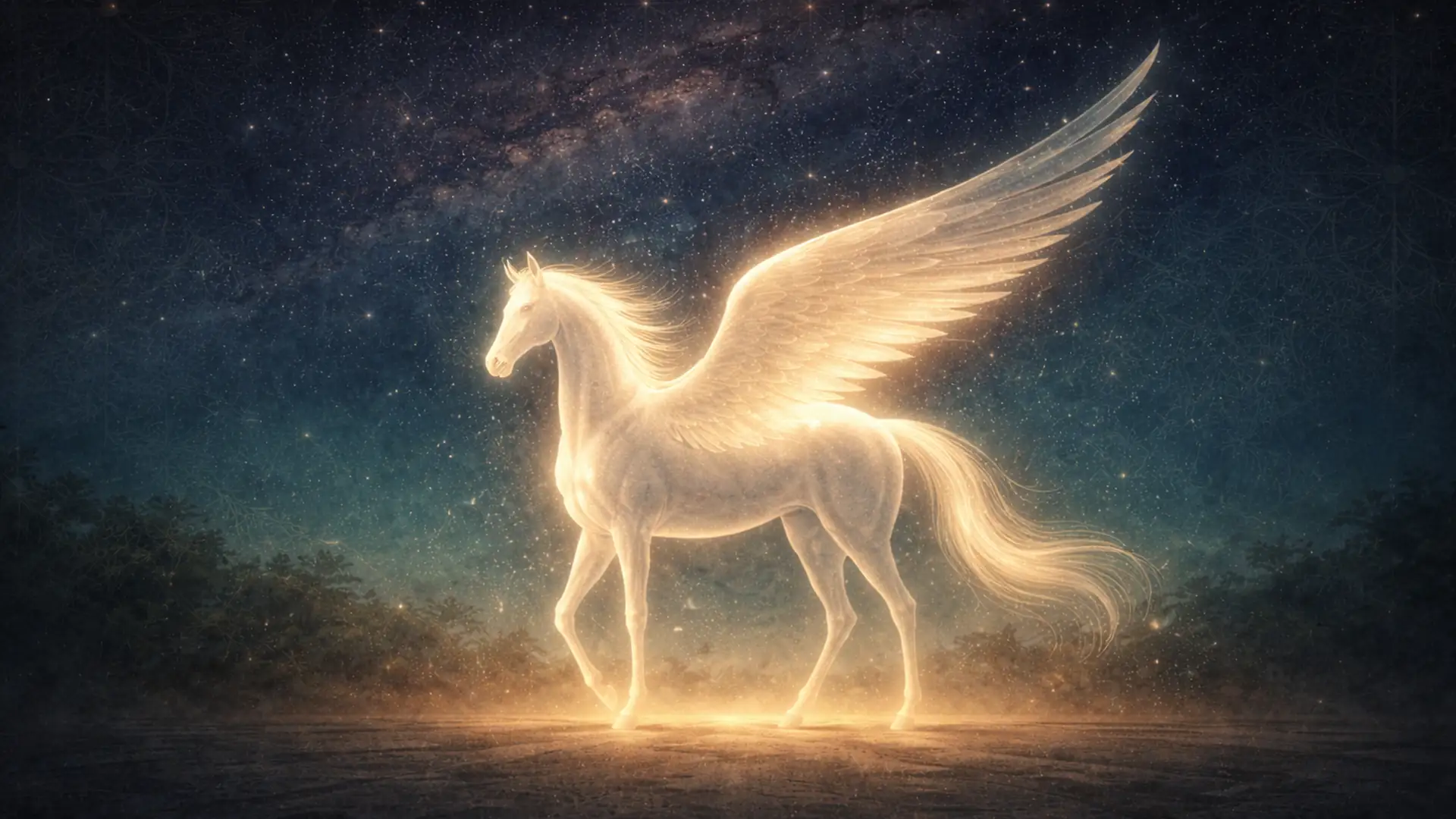
what is Buraq in Islam: What We Know (and What We Don’t)
People love asking about Buraq because it feels visual. Like you can “picture” Isra if you can picture the mount.
But Buraq is also one of those topics where stories grow legs. A simple report turns into a full fantasy movie over time.
So let’s keep it clean: what’s proven, what’s possible, and what’s just talk.
✅ TL;DR – What is Buraq in Islam
Buraq is described in authentic reports as a special mount used in the Isra part of the journey. The safest approach is to repeat the core description and avoid extra “creative details” that aren’t clearly established.
What’s proven is limited. What people add is often speculation. Keep your words humble when details aren’t confirmed.
What is Buraq in Islam (in beginner-friendly words)
What is Buraq in Islam? Think of Buraq as a special means Allah provided for the Isra journey. If you want an everyday analogy without turning it into a cartoon: it’s like Allah providing a “one-night transport” that doesn’t follow normal travel limits, because the event itself is a miracle.
Notice what I did there: I didn’t try to “explain” how it works. Miracles don’t need our engineering.
I used to get stuck on the image too, when I was learning.
Then I realized the point isn’t the animal. The point is Allah’s power.
What’s proven (safe to say)
The safe core is simple. Strong narrations describe Buraq as a mount connected to the night journey. A commonly repeated summary in Islamic teaching is that it was between the size of a donkey and a mule, and it is described in a way that shows it was not an ordinary riding animal.
That’s enough for a beginner-level explanation.
Here’s what you can say without turning it into a fairy tale:
- Buraq is tied to the Isra portion of the journey.
- It is described as a special mount, not a normal animal people ride every day.
- The description indicates unusual speed or reach, which fits the miracle nature of Isra.
- Beyond the core, details are limited, so we stay careful.
What does “al-Buraq” mean?
People often connect the name to brightness or lightning-like speed. The important thing is not the language debate. The practical takeaway is: the name itself signals something fast and extraordinary, matching the miracle tone of the night journey.
Micro-scenario: someone says, “So it was basically a spaceship?” A calm answer: “No need for that. Islam presents it as a special mount for a miracle journey. We don’t have to force modern labels on it.”
What’s speculation (be careful here)
Speculation is when people speak confidently about details that are not clearly established, like exact colors, exact face shape, wings in a specific style, or a full “character description” like you’re describing a movie creature.
Here’s a simple rule: if you can’t trace the detail to a solid report, don’t teach it like it’s fact.
One sentence that saves you: “Some people mention extra details, but the firm information is limited.”
Common myths that often get added
These pop up a lot in casual talks. Treat them as “maybe someone said it,” not “Islam says it”:
- Over-detailed appearance (exact colors, exact features, “artist-level” description)
- Confident claims about wings in a specific design
- Exact routes and stops described like a travel vlog
- Extra dramatic scenes added to make audiences cry
That doesn’t mean every extra detail is automatically false. It means you don’t present it as proven.
Why Muslims still believe it, even with limited details
This is important for beginners: Islamic belief doesn’t depend on having a full “Wikipedia-level” profile of Buraq. The belief rests on the reliability of the core narrative of Isra and Mi‘raj, and the fact that miracles are possible for Allah.
We don’t worship Buraq. We don’t build faith on Buraq. It’s part of a larger sign.
And signs don’t need to satisfy our curiosity to be true.
What the Buraq discussion teaches you today
This topic teaches a hidden lesson: how to speak about Islam with honesty.
Some people think honesty means “I know everything.” No. Real honesty is saying, “This part is clear, and that part is not.” That protects your faith and your tongue.
Three practical takeaways for your own Islamic learning
Try these three habits whenever you learn a story tied to the unseen:
- Separate core vs extras. Core stays, extras stay optional.
- Use humble wording. “It’s reported…” “The firm point is…” “Allah knows best…”
- Don’t argue about images. Focus on the worship lesson, not the fantasy picture.
Five quirky beginner mistakes (and quick fixes)
Mistake 1: Asking for “proof” like it’s a science lab experiment. Quick fix: Remember: miracles aren’t normal events. Ask about authenticity, not lab tests.
Mistake 2: Sharing an Instagram drawing and saying “this is exactly Buraq.” Quick fix: Say: “This is an artist’s imagination, not a confirmed picture.”
Mistake 3: Getting into fights about color, wings, and face features. Quick fix: Say: “The firm reports are limited. Let’s keep it respectful.”
Mistake 4: Turning Buraq into the main point of Isra. Quick fix: Keep the focus on Allah’s power and the honor of the Prophet’s journey.
Mistake 5: Mocking the story because details are limited. Quick fix: Limited details don’t mean false. They mean Allah didn’t make that detail central for guidance.
A short story of a beginner mistake (and the simple fix)
A young guy once argued with his friend for 20 minutes about whether Buraq had wings.
He was loud, confident, and honestly a bit rude.
Afterward he asked me, “So… what’s the correct answer?”
I said, “The correct answer is: we stick to what’s reliable and we don’t build faith on extra details.”
He paused and said, “So I fought over a detail that doesn’t change my prayer at all?”
I nodded. He smiled, embarrassed. “Yeah… that was dumb.”
A gentle note about differences of opinion
Muslims agree on the miracle of Isra and Mi‘raj and accept the unseen as part of faith. Scholars may discuss how narrations are gathered and how descriptions are summarized. That’s normal. The safe practice is to keep to the core and avoid bold claims about uncertain details.
Ending: the safest way to talk about Buraq
If you remember one rule, remember this: don’t speak with certainty where the information is limited.
Say what’s firm. Leave the rest to Allah.
📊 Buraq: Proven Points vs Speculation (Beginner Safe)
When asking what is Buraq in Islam, the safest approach is to separate what’s firmly reported from what’s often added in talks and social media. This table helps you speak accurately without turning the story into fantasy.
🐎 Show Full Buraq Authenticity Table
| Topic | What we can say safely | What’s often speculation |
|---|---|---|
| Role | A special mount linked to the Isra journey | Treating it like the main “point” of Isra |
| Nature | Not a normal animal, tied to a miracle event | Forcing modern labels (“spaceship” comparisons) |
| Description | A brief description exists in authentic teaching summaries | Exact colors, exact face details, “movie-level” visuals |
| Speed / reach | Described in a way that indicates extraordinary travel | Highly detailed routes and stops like a travel vlog |
| How to speak | Stick to the core; use humble wording for unknowns | Teaching uncertain details as guaranteed facts |
📘 What is Buraq in Islam FAQs
What is Buraq in Islam?
Show Answer
Buraq is described as a special mount connected to the Isra journey. The safest approach is to repeat the core and avoid adding extra details as “fact.”
What’s proven about Buraq?
Show Answer
That it is tied to the night journey and described as a special mount for a miracle event. Beyond the core, firm details are limited.
What parts are speculation?
Show Answer
Over-detailed appearance, exact colors, exact features, and dramatic scene additions that aren’t clearly established in reliable reports.
Is Buraq a “winged horse”?
Show Answer
Be careful with that phrase. Popular descriptions vary, and firm details are limited. It’s safer to say it’s a special mount linked to Isra.
Does Islam give a full physical description of Buraq?
Show Answer
No full “movie-like” profile. The strongest approach is to keep to brief established points and avoid confident extra imagery.
Why do people add so many extra details?
Show Answer
Because humans love visuals and dramatic storytelling. Over time, retellings can grow, especially in casual talks and social media.
Is believing in Buraq required for Muslims?
Show Answer
Muslims believe in the miracle of Isra and Mi‘raj as part of faith. Detailed “image debates” about Buraq are not the foundation of belief.
How should I respond if someone mocks the Buraq story?
Show Answer
Say calmly: Islam treats Isra as a miracle. Miracles don’t follow normal rules, and we don’t need to add speculation to defend the core.
Is it okay to share drawings of Buraq?
Show Answer
Yes, as long as you clearly say it’s artistic imagination, not a confirmed depiction.
What’s the main lesson of learning about Buraq?
Show Answer
Honesty in religious talk: say what’s firm, avoid bold claims where details are limited, and keep focus on Allah’s power and guidance.
What’s the safest one-line summary?
Show Answer
Buraq is a special mount linked to Isra; the firm details are limited, so don’t add extra claims as fact.


